Science News SciGuru.com |  |

- Phase-sensitive optical data transmission: a new frontier
- Bullied children three times more likely to self harm
- Abnormal Levels of Uric Acid in Teens Linked to High Blood Pressure
- Scientists Identify Brain Circuitry Associated with Addictive, Depressive Behaviors
- 24 new species of lizards discovered on Caribbean islands are close to extinction
- Pacific Islands May Become Refuge for Corals in a Warming Climate, Study Finds
| Phase-sensitive optical data transmission: a new frontier Posted: 30 Apr 2012 07:40 AM PDT Fibre-optic cables are becoming the backbone of the Internet, from the main trunk lines between cities, countries and continents to the network of cables running from telephone central offices to individual homes and mobile phone base stations. A pioneering approach to data transmission, supported by EU funding, promises to increase the capacity, range and efficiency of fibre-optic networks. |
| Bullied children three times more likely to self harm Posted: 30 Apr 2012 07:09 AM PDT  New research finds that children who are bullied in childhood are up to three times more likely to self harm up by the age of 12. The study, from researchers at King’s College London’s Institute of Psychiatry (IoP) was published on bmj.com. |
| Abnormal Levels of Uric Acid in Teens Linked to High Blood Pressure Posted: 30 Apr 2012 06:55 AM PDT Teens with high levels of uric acid appear to be at increased risk for high blood pressure, according to results of research from scientists at the Johns Hopkins Children's Center. |
| Scientists Identify Brain Circuitry Associated with Addictive, Depressive Behaviors Posted: 30 Apr 2012 06:42 AM PDT Scientists at the UCSF-affiliated Gladstone Institutes have determined how specific circuitry in the brain controls not only body movement, but also motivation and learning, providing new insight into neurodegenerative disorders such as Parkinson’s disease — and psychiatric disorders such as addiction and depression. |
| 24 new species of lizards discovered on Caribbean islands are close to extinction Posted: 30 Apr 2012 06:19 AM PDT  In a single new scientific publication, 24 new species of lizards known as skinks, all from islands in the Caribbean, have been discovered and scientifically named. According to Blair Hedges, a professor of biology at Penn State University and the leader of the research team, half of the newly added skink species already may be extinct or close to extinction, and all of the others on the Caribbean islands are threatened with extinction. |
| Pacific Islands May Become Refuge for Corals in a Warming Climate, Study Finds Posted: 29 Apr 2012 08:17 PM PDT Scientists have predicted that ocean temperatures will rise in the equatorial Pacific by the end of the century, wreaking havoc on coral reef ecosystems. But a new study shows that climate change could cause ocean currents to operate in a surprising way and mitigate the warming near a handful of islands right on the equator. As a result these Pacific islands may become isolated refuges for corals and fish. |
| You are subscribed to email updates from Science News from SciGuru.com To stop receiving these emails, you may unsubscribe now. | Email delivery powered by Google |
| Google Inc., 20 West Kinzie, Chicago IL USA 60610 | |








 Eugen Bleuler, born 30 Apr 1857, was a Swiss psychiatrist, who introduced the now current term (1908) to describe the disorder previously known as dementia praecox. For his studies of this disorder, he was one of the most influential psychiatrists of his time.
 What name did Bleuler give to dementia praecox, by which is now known?
 Robert Fitzroy (1805-1865) was the British naval officer who commanded the round the world voyage on which Charles Darwin sailed as the ship's naturalist. That voyage provided Darwin with much of the material on which he based his theory of evolution. When Fitzroy retired he devoted himself to meteorology. He devised a storm warning system that was the prototype of the daily weather forecast, invented a barometer, and published The Weather Book (1863).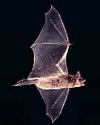
 On 30 Apr 1960, the oldest banded U.S. bat was identified, from the date read on the band. It was a female little brown bat (the most abundant bat species in the U.S.)
 If you enjoy this newsletter, the website, or wish to offer encouragement or ideas, please
