 | TODAY IN SCIENCE HISTORY NEWSLETTER - 10 JUNE |
| Feature for Today |
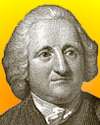 On 10 Jun 1706, John Dollond was born, the British maker of optical and astronomical instruments who developed (1758) and patented an achromatic (non-colour-distorting) refracting telescope. On 10 Jun 1706, John Dollond was born, the British maker of optical and astronomical instruments who developed (1758) and patented an achromatic (non-colour-distorting) refracting telescope.For a brief biography, read the chapter "John Dollond" from Men Worth Imitating (1871). |
| Book of the Day | |
| |

| Quotations for Today | |
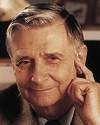 | "If history and science have taught us anything, it is that passion and desire are not the same as truth. The human mind evolved to believe in the gods. It did not evolve to believe in biology." - Edward O. Wilson, American biologist (born 10 Jun 1929)  |
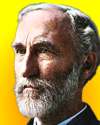 | "The history of science alone can keep the physicist from the mad ambitions of dogmatism as well as the despair of pyrrhonian scepticism." - Pierre Duhem, French physicist (born 10 Jun 1861) |
 | "The future science of government should be called 'la cybernétique' (1843)" Coining the French word to mean 'the art of governing,' from the Greek (Kybernetes = navigator or steersman), subsequently adopted as cybernetics by Norbert Weiner for the field of control and communication theory. - André-Marie Ampère, French mathematician, physicist and chemist (died 10 Jun 1836) |
| QUIZ | |
| Before you look at today's web page, see if you can answer some of these questions about the events that happened on this day. Some of the names are very familiar. Others will likely stump you. Tickle your curiosity with these questions, then check your answers on today's web page. | |
| Births | |
| |  Edward O. Wilson, born 10 Jun 1929 is an American biologist recognized as the world's leading authority and who has conducted extensive studies of the ecology and evolution of a particular life form He has travelled the world studying it, and he has discovered several new species. These currently number practically 9,000, but Wilson predicts that count will someday total nearly 20,000. Edward O. Wilson, born 10 Jun 1929 is an American biologist recognized as the world's leading authority and who has conducted extensive studies of the ecology and evolution of a particular life form He has travelled the world studying it, and he has discovered several new species. These currently number practically 9,000, but Wilson predicts that count will someday total nearly 20,000. What life form is his specialty? What life form is his specialty? |
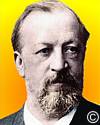 | Nikolaus August Otto, born 10 Jun 1832 was a German engineer who developed the first practical alternative to the steam engine as a power source. What power source did he develop? |
| Deaths | |
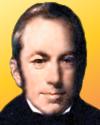 |  This Scottish botanist (1773-1858) is best known for his description of the natural continuous motion of minute particles in solution, which came to be called Brownian movement. In addition, he recognized the fundamental distinction between the conifers and their allies (gymnosperms) and the flowering plants (angiosperms). He recognized, and coined the name for, the cell nucleus (Latin: "little nut"). He also improved the natural classification of plants by establishing and defining new families and genera. Can you name this man? This Scottish botanist (1773-1858) is best known for his description of the natural continuous motion of minute particles in solution, which came to be called Brownian movement. In addition, he recognized the fundamental distinction between the conifers and their allies (gymnosperms) and the flowering plants (angiosperms). He recognized, and coined the name for, the cell nucleus (Latin: "little nut"). He also improved the natural classification of plants by establishing and defining new families and genera. Can you name this man? |
| | This French mathematician and physicist (1775-1836) founded and named the science of electrodynamics, now known as electromagnetism. His interests included mathematics, metaphysics, physics and chemistry. In mathematics he worked on partial differential equations. He made significant contributions to chemistry. In 1811 he suggested that an anhydrous acid prepared two years earlier was a compound of hydrogen with an unknown element, analogous to chlorine, for which he suggested the name fluorine. He produced a classification of elements in 1816. He also worked on the wave theory of light. By the early 1820's, he was working on a combined theory of electricity and magnetism, after hearing about Oersted's experiments.Can you name this man (hint: an electrical unit was named in his honour)? |
| Events | |
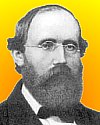 |  On 10 Jun 1854, Georg F.B. Reiman made a proposal concerning space.Reiman proposed that space was ...? On 10 Jun 1854, Georg F.B. Reiman made a proposal concerning space.Reiman proposed that space was ...? |
 | On 10 Jun 1809, the paddle-wheel steamboat Phoenix sailed from New York City to Philadelphia Pennsylvania. It was the first steamboat to navigate the open seas.To the nearest 5 days, how many days did it take? |
 | On 10 June of a certain year, machine-frozen food was transported a significant distance in the U.S. for the first time. A shipment of frozen Texas beef had been processed by refrigeration equipment invented by John Gorrie, and delivered by the steamship Agnes in New Orleans, La. The meat was served in meals at hospitals, and celebration banquiets at hotels and restaurants.In what decade was this machine-frozen food shipped? |
| Answers |
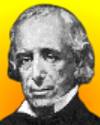
When you have your answers ready to all the questions above, you'll find all the information to check them, and more, on the June 10 web page of Today in Science History. Or, try this link first for just the brief answers. Fast answers for the previous newsletter for June 9: Rocket; cotton-textile; the process by which the chromosomes within the nucleus of a cell double and divide prior to cell division; vitamin D; the decade inclusing the year 1905; John H. Kraft. |
| Feedback |
 If you enjoy this newsletter, the website, or wish to offer encouragement or ideas, please send feedback by using your mail reader Reply button. If you enjoy this newsletter, the website, or wish to offer encouragement or ideas, please send feedback by using your mail reader Reply button. |

--
If you do not want to receive any more newsletters, this link
To update your preferences and to unsubscribe visit this link
If you do not want to receive any more newsletters, this link
To update your preferences and to unsubscribe visit this link
! !

Δεν υπάρχουν σχόλια:
Δημοσίευση σχολίου