 | TODAY IN SCIENCE HISTORY NEWSLETTER - 7 JUNE |
| Feature for Today |
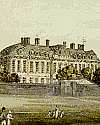 On 7 Jun 1753, the British Museum was founded, the world's oldest public national museum. King George II gave his royal assent to an Act of Parliament to accept the collection of Sir Hans Sloane, a London-based physician, following his death. In his will, Sloane had offered the British nation the collection he built over his lifetime: 71,000 objects, mostly plant and animal specimens. On 7 Jun 1753, the British Museum was founded, the world's oldest public national museum. King George II gave his royal assent to an Act of Parliament to accept the collection of Sir Hans Sloane, a London-based physician, following his death. In his will, Sloane had offered the British nation the collection he built over his lifetime: 71,000 objects, mostly plant and animal specimens.More of its history can be read in an extract from A General Guide to the British Museum (1898). |
| Book of the Day | |
| |

| Quotations for Today | |
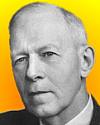 | "While it is never safe to affirm that the future of Physical Science has no marvels in store even more astonishing than those of the past, it seems probable that most of the grand underlying principles have been firmly established and that further advances are to be sought chiefly in the rigorous application of these principles to all the phenomena which come under our notice." - Robert Sanderson Mulliken, American chemist and physicist (born 7 Jun 1896)  |
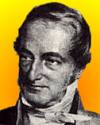 | "Your admission of the late appearance of the great intellectual crown of the whole animal race (man) strikes me as perfectly fatal to the analogy of your system of a continually recurring series of identical terms." - William Daniel Conybeare, English geologist, palaeontologist and clergyman (died 7 Jun 1787) |
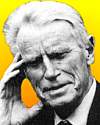 | "As soon as we got rid of the backroom attitude and brought our apparatus fully into the Department with an inexhaustible supply of living patients with fascinating clinical problems, we were able to get ahead really fast. Any new technique becomes more attractive if its clinical usefulness can be demonstrated without harm, indignity or discomfort to the patient... Anyone who is satisfied with his diagnostic ability and with his surgical results is unlikely to contribute much to the launching of a new medical science. He should first be consumed with a divine discontent with things as they are. It greatly helps, of course, to have the right idea at the right time, and quite good ideas may come, Archimedes fashion, in one's bath." - Ian Donald, English physician who first successfully applied ultrasound reflection imaging for medical diagnosis, whose seminal article that launched the widespread use of ultrasound in medical diagnosis was published by The Lancet on 7 Jun 1958 (born 27 Dec 1910) |
| QUIZ | |
| Before you look at today's web page, see if you can answer some of these questions about the events that happened on this day. Some of the names are very familiar. Others will likely stump you. Tickle your curiosity with these questions, then check your answers on today's web page. | |
| Births | |
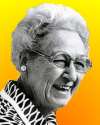 |  Virginia Apgar, born 7 Jun 1909 was an American physician, anesthesiologist, and medical researcher who developed the Apgar Score System. Virginia Apgar, born 7 Jun 1909 was an American physician, anesthesiologist, and medical researcher who developed the Apgar Score System. What is the Apgar Score System used for? What is the Apgar Score System used for? |
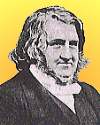 | Sir James Young Simpson, born 7 Jun 1811 was a Scottish inventor and obstertrician who was the the father of modern anesthetics. He employed ether for the first time in Britain. A different substance he used was as the first time that anesthetic was used in an operation (1847). Simpson was a natural inventor, always eager to experiment in new directions - the fight against puerperal fever, the invention of new types of forceps and the combating of cholera.Which anesthetic was it that he used for the first time in an operation? |
| Deaths | |
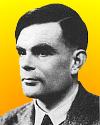 |  Alan M. Turing (1912-1954) was an English mathematician and logician who pioneered in the field of computer theory and who contributed important logical analyses of computer processes. He made major contributions to mathematics, cryptanalysis, logic, philosophy, and biology and to new areas of computer science. Can you name the new areas of computer science he contributed to? Alan M. Turing (1912-1954) was an English mathematician and logician who pioneered in the field of computer theory and who contributed important logical analyses of computer processes. He made major contributions to mathematics, cryptanalysis, logic, philosophy, and biology and to new areas of computer science. Can you name the new areas of computer science he contributed to? |
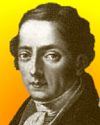 | A German physicist (1787-1826) who first studied the dark lines of the Sun's spectrum, was also the first to use extensively the diffraction grating, a device that dispenses light in much the same way a prism does. His work set the stage for the development of spectroscopy. Can you name this man? |
| Events | |
 On 7 Jun 1980, the first power plant of this type was dedicated. It was sited at the Natural Bridge National Monument, Utah. Its 100-kilowatt output could provide the power needs for the buildings and facilities of that National Park. The nearest alternate power line was 38 miles away. The National Park System was part of the joint venture with MIT's Lincoln Laboratory and the Dept. of Energy.What type of power plant was this? On 7 Jun 1980, the first power plant of this type was dedicated. It was sited at the Natural Bridge National Monument, Utah. Its 100-kilowatt output could provide the power needs for the buildings and facilities of that National Park. The nearest alternate power line was 38 miles away. The National Park System was part of the joint venture with MIT's Lincoln Laboratory and the Dept. of Energy.What type of power plant was this? | |
| On 7 Jun of a certain year, Thomas S. Hall of Stamford, Conn., received a patent for the first automatic electric block railroad signal system in the U.S. When a train entered a block of track, Hall's electromagnetic device automatically set a signal when the locomotive struck a lever fastened to the rail. The signal was set to danger until the train cleared the blockIn what decade was this patent issued? | |
| On 7 Jun of a certain year, the first U.S. laboratory exclusively built for studies in microbiology was dedicated in New Brunswick, N.J., as part of Rutgers University.In what decade did this dedication take place? | |
| Answers |
When you have your answers ready to all the questions above, you'll find all the information to check them, and more, on the June 7 web page of Today in Science History. Or, try this link first for just the brief answers. Fast answers for the previous newsletter for June 6: buckminsterfullerene, buckyball, a fullerene; fruits and seeds; Carl Jung; the decade including the year 1882; nylon. |
| Feedback |
 If you enjoy this newsletter, the website, or wish to offer encouragement or ideas, please send feedback by using your mail reader Reply button. If you enjoy this newsletter, the website, or wish to offer encouragement or ideas, please send feedback by using your mail reader Reply button. |

--
If you do not want to receive any more newsletters, this link
To update your preferences and to unsubscribe visit this link
If you do not want to receive any more newsletters, this link
To update your preferences and to unsubscribe visit this link
! !

Δεν υπάρχουν σχόλια:
Δημοσίευση σχολίου