 | TODAY IN SCIENCE HISTORY NEWSLETTER - 2 OCTOBER |
| Feature for Today |
| On 2 Oct 1937, films of moving X-ray images showing movement of organs of the human body were displayed at the American Roentgen Ray Society convention in New York City. Moving X-ray images on a fluorescent screen were captured with a 16-mm home movie camera. The doctors that made the films had reported their technique at the previous year's convention in 1936. You can read more about how the films were made in this excerpt on X-ray Movies, from Time magazine (1936). |
| Book of the Day | |
| |

| Quotations for Today | |
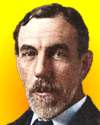 | (Concerning a discrepancy in the analysis of atmospheric and chemical nitrogen, Raleigh gave) "numbers about which there could be no reasonable doubt. I asked him then if he minded my trying to solve the mystery. He thought that the cause of the discrepancy was a light gas in non-atmospheric nitrogen. I thought that the cause was a heavy gas in atmospheric nitrogen. He spent the summer looking for the light gas; I spent July in hunting for the heavy one. And I have succeeded in isolating it." - Sir William Ramsay, Scottish chemist (born 2 Oct 1852) about his discovery of argon.  |
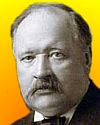 | "Humanity stands ... before a great problem of finding new materials and new sources of energy that shall never become exhausted. In the meantime, we must not waste what we have, but must leave as much as possible for coming generations." (1925) - Svante August Arrhenius, chemist (died 2 Oct 1927) |
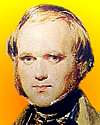 | "By-the-way, you say in your letter that you care more for my species work that for the Barnacles; now this is too bad of you, for I declare your decided approval of my plain Barnacle work over theoretical species work, had very great influence in deciding me to go on with the former, and delay my species paper." (Letter to J.D. Hooker, 1849) - Charles Darwin, who on 2 Oct 1836, returned from his voyage on the HMS Beagle to the Pacific, though he published Origin of Species in a much later year. |
| QUIZ | |
| Before you look at today's web page, see if you can answer some of these questions about the events that happened on this day. Some of the names are very familiar. Others will likely stump you. Tickle your curiosity with these questions, then check your answers on today's web page. | |
| Births | |
| |  Sir William Ramsay, born 2 Oct 1852, was a Scottish chemist who discovered three so-called "inert gases" and co-discovered a fourth. He was the Nobel laureate of 1904 "in recognition of his services in the discovery of the inert gaseous elements in air, and his determination of their place in the periodic system". Sir William Ramsay, born 2 Oct 1852, was a Scottish chemist who discovered three so-called "inert gases" and co-discovered a fourth. He was the Nobel laureate of 1904 "in recognition of his services in the discovery of the inert gaseous elements in air, and his determination of their place in the periodic system".  Can you name the four "inert gases" referred to above? Can you name the four "inert gases" referred to above? |
| Deaths | |
| |  Svante Arrhenius (1859-1927) was a physical chemist best known for his theory that electrolytes, certain substances that dissolve in water to yield a solution that conducts electricity, are separated, or dissociated, into electrically charged particles, or ions, even when there is no current flowing through the solution. What was his nationality? Svante Arrhenius (1859-1927) was a physical chemist best known for his theory that electrolytes, certain substances that dissolve in water to yield a solution that conducts electricity, are separated, or dissociated, into electrically charged particles, or ions, even when there is no current flowing through the solution. What was his nationality? |
| Events | |
| |  On 2 Oct 1836, Charles Darwin returned from his voyage on the HMS Beagle to the Pacific which led to the publication of his book, Origin of Species.How many years passed between this return and the book's publication? On 2 Oct 1836, Charles Darwin returned from his voyage on the HMS Beagle to the Pacific which led to the publication of his book, Origin of Species.How many years passed between this return and the book's publication? |
| | On 2 Oct 1942, the first self-sustaining nuclear chain reaction was demonstrated.At what city was this demonstrated? |
| | On 2 Oct of a certain year, the Atomicron, the first atomic clock, was unveiled at the Overseas Press Club in New York City. What was the decade in which this atomic clock was thus displayed? |
| Answers |
When you have your answers ready to all the questions above, you'll find all the information to check them, and more, on the October 2 web page of Today in Science History. Or, try this link first for just the brief answers. Fast answers for the previous newsletter for October 1: bosons; rear admiral; Heinrich Hertz; the decade including the year 1966; ENIAC. |
| Feedback |
 If you enjoy this newsletter, the website, or wish to offer encouragement or ideas, please send feedback by using your mail reader Reply button. If you enjoy this newsletter, the website, or wish to offer encouragement or ideas, please send feedback by using your mail reader Reply button. |

--
If you do not want to receive any more newsletters, this link
To update your preferences and to unsubscribe visit this link
If you do not want to receive any more newsletters, this link
To update your preferences and to unsubscribe visit this link
! !

Δεν υπάρχουν σχόλια:
Δημοσίευση σχολίου