 | TODAY IN SCIENCE HISTORY NEWSLETTER - 16 AUGUST |
| Feature for Today |
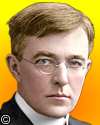 On 16 Aug 1957, Irving Langmuir died, the American physical chemist who was awarded the 1932 Nobel Prize for Chemistry. He is famous for his investigation of reactions at thin surface films. He improved incandescent light bulbs by filling them with inert gases rather than a vacuum, and also developed atomic-hydrogen welding. On 16 Aug 1957, Irving Langmuir died, the American physical chemist who was awarded the 1932 Nobel Prize for Chemistry. He is famous for his investigation of reactions at thin surface films. He improved incandescent light bulbs by filling them with inert gases rather than a vacuum, and also developed atomic-hydrogen welding.When he wrote an article for Boys' Life in June 1941, his topic for his youthful readers was the value of Summer jobs. Within his article he reveals some of his boyhood experiences that contributed to his abilities as a research scientist and led to winning a Nobel Prize. Likewise, he also describes what drives his assistant, and gives him outstanding qualities. Although written over a half-century ago, Dr Irving Langmuir's article has a theme that remains vitally true today: Information students get by themselves is enormously more valuable than that which is taught to them in school. Students need opportunities—outside of school—to research, inquire, reason, get hands-on, explore, be curious and explain the phenomena around them. |
| Book of the Day | |
| |

| Quotations for Today | |
| | "But in science the credit goes to the man who convinces the world, not to the man to whom the idea first occurs. Not the man who finds a grain of new and precious quality but to him who sows it, reaps it, grinds it and feeds the world on it. " - Francis Darwin, English Botanist (born 16 Aug 1848)  |
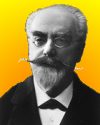 | "The radical novelty of modern science lies precisely in the rejection of the belief, which is at the heart of all popular religion, that the forces which move the stars and atoms are contingent upon the preferences of the human heart." - Gabriel Lippmann, French physicist (born 16 Aug 1845) |
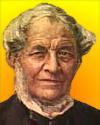 | "Bin Chemiker der kein Physiker ist, ist gar nichts." "A chemist who is not a physicist is nothing at all." - Robert Bunsen, German chemist (died 16 Aug 1899) |
| QUIZ | |
| Before you look at today's web page, see if you can answer some of these questions about the events that happened on this day. Some of the names are very familiar. Others will likely stump you. Tickle your curiosity with these questions, then check your answers on today's web page. | |
| Births | |
| |  Gabriel Lippman, born 16 Aug 1845, was a French physicist, who received the Nobel Prize for Physics in 1908 for producing an advance concerning the application of a photographic plate. Lippmann was a giant of his day in classical physics research, especially in optics and electricity. Gabriel Lippman, born 16 Aug 1845, was a French physicist, who received the Nobel Prize for Physics in 1908 for producing an advance concerning the application of a photographic plate. Lippmann was a giant of his day in classical physics research, especially in optics and electricity. What was this photographic development? What was this photographic development? |
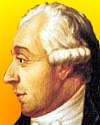 | Pierre Mechain, born 16 Aug 1744, was a French hydrographer, and astronomer at the naval map archives in Paris who, with Jean Delambre, measured the meridian arc from Dunkirk, France, to Barcelona (between 1792 and 1798).What was the significant about this measurement? |
| Deaths | |
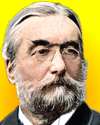 |  Sir Joseph Norman Lockyer (1836-1920) was a British astronomer who in 1868 discovered and named a previously unknown element that he found in the Sun's atmosphere. He also applied the name chromosphere for the sun's outer layer. What element did he discover and name? Sir Joseph Norman Lockyer (1836-1920) was a British astronomer who in 1868 discovered and named a previously unknown element that he found in the Sun's atmosphere. He also applied the name chromosphere for the sun's outer layer. What element did he discover and name? |
| | Robert Bunsen (1811-1899) is known for his laboratory gas burner (which he turned over to his assistant to actually make), but that was incidental to his his main research interest. The burner flame was his tool for identifying new elements. What was his main use for the burner flame? |
| Events | |
 On 16 Aug 1960, Captain Joseph W. Kittinger made the longest delayed parachute jump on record when he bailed out of a balloon dropped a record distance before opening his parachute over New Mexico.How many miles did he freefall? On 16 Aug 1960, Captain Joseph W. Kittinger made the longest delayed parachute jump on record when he bailed out of a balloon dropped a record distance before opening his parachute over New Mexico.How many miles did he freefall? | |
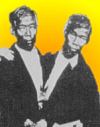 | On 16 Aug 1829, Chang and Eng Bunker, arrived in Boston from aboard ship to be exhibited to the Western world.From where did they come? |
| Answers |
When you have your answers ready to all the questions above, you'll find all the information to check them, and more, on the August 16 web page of Today in Science History. Or, try this link first for just the brief answers. Fast answers for the previous newsletter for August 15: the wave nature of electrons; archaeology; the first round-the-world solo flight; the decade including 1914; freight delivery; Hello! |
| Feedback |
 If you enjoy this newsletter, the website, or wish to offer encouragement or ideas, please send feedback by using your mail reader Reply button. If you enjoy this newsletter, the website, or wish to offer encouragement or ideas, please send feedback by using your mail reader Reply button. |
--
If you do not want to receive any more newsletters, Unsubscribe
To update your preferences and to unsubscribe visit this link

Δεν υπάρχουν σχόλια:
Δημοσίευση σχολίου