 | TODAY IN SCIENCE HISTORY NEWSLETTER - 11 AUGUST |
| Feature for Today |
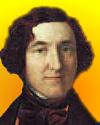 On 11 Aug Apr 1798, Macedonio Melloni was born, the Italian physicist who was the first to extensively research infrared radiation. Melloni is yet another of those scientists! whose name is likely unfamiliar to you, yet he did significant work. In A Review of the Progress of Mathematical and Physical Science (1858), James David Forbes can acquaint you with Macedonio Melloni and his work on the Transmission and Refraction of Heat. On 11 Aug Apr 1798, Macedonio Melloni was born, the Italian physicist who was the first to extensively research infrared radiation. Melloni is yet another of those scientists! whose name is likely unfamiliar to you, yet he did significant work. In A Review of the Progress of Mathematical and Physical Science (1858), James David Forbes can acquaint you with Macedonio Melloni and his work on the Transmission and Refraction of Heat.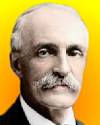 On 11 Aug 1865, Gifford Pinchot was born, the American forester who as the first chief of the U.S. Forest Service popularized the conservation of natural resources. He is regarded as a father of American conservation because of his great and unrelenting concern for the protection of the American forests. His efforts were supported by President Theodore Roosevelt, but not by his successor, President Taft, who replaced Pinchot in Jan 1910. On 11 Aug 1865, Gifford Pinchot was born, the American forester who as the first chief of the U.S. Forest Service popularized the conservation of natural resources. He is regarded as a father of American conservation because of his great and unrelenting concern for the protection of the American forests. His efforts were supported by President Theodore Roosevelt, but not by his successor, President Taft, who replaced Pinchot in Jan 1910.When Roosevelt died in 1919, Pinchot spoke at the Roosevelt Memorial Meeting, Metropolitan Opera House, Philadelphia. Pinchot's address was contributed to the memorial issue of Natural History magazine. Pinchot had first-hand experience of the President, about their shared goals and values, which you can read in the article, Roosevelt, the Man of Abundant Life. Although the subject of the piece is Theodore Roosevelt, naturally the words also give an insight into the writer, Gifford Pinchot. |
| Book of the Day | |
| |

| Quotations for Today | |
| | "If at one time or another I have brushed a few colleagues the wrong way, I must apologize: I had not realized that they were covered with fur." - Erwin Chargaff, Austrian biochemist who discovered two rules that helped lead to the discovery of the double helix structure of DNA (born 11 Aug 1905)  |
| | "I ran into the gigantic and gigantically wasteful lumbering of great Sequoias, many of whose trunks were so huge they had to be blown apart before they could be handled. I resented then, and I still resent, the practice of making vine stakes hardly bigger than walking sticks out of these greatest of living things." - Gifford Pinchot, American forester, who as the first chief of the U.S. Forest Service popularized the conservation of natural resources (born 11 Aug 1865) |
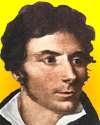 | "The cells are thus the stomachs of which the plant has millions like mouths." - Lorenz Oken, German naturalist who offered early evolutionary ideas in comparative anatomy, wrote books on natural history for students and adults, founded a scholarly journal, and organized scientific congresses (died 11 Aug 1851) |
| QUIZ | |
| Before you look at today's web page, see if you can answer some of these questions about the events that happened on this day. Some of the names are very familiar. Others will likely stump you. Tickle your curiosity with these questions, then check your answers on today's web page. | |
| Births | |
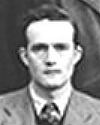 |  Tom Kilburn, born 11 Aug 1921, was a British electrical engineer who wrote the computer program used to test the first stored-program computer, the Small-Scale Experimental Machine, SSEM, also known as "The Baby." It successfully tested a memory system developed at Manchester University in England. This system was the first that could store programs, whereas previous electronic computers had to be rewired to execute each new problem. Tom Kilburn, born 11 Aug 1921, was a British electrical engineer who wrote the computer program used to test the first stored-program computer, the Small-Scale Experimental Machine, SSEM, also known as "The Baby." It successfully tested a memory system developed at Manchester University in England. This system was the first that could store programs, whereas previous electronic computers had to be rewired to execute each new problem.  On what was Kilburn's memory system based (though soon replaced)? On what was Kilburn's memory system based (though soon replaced)? |
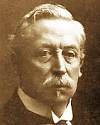 | Christiaan Eijkman, born 11 Aug 1858, was a Dutch scientist, who demonstration that beriberi is caused by poor diet led to the discovery of vitamins. He investigated beriberi in the Dutch East Indies in 1886. Eijkman discovered by accident that a certain change in diet for his laboratory chickens produced a disease resembling beriberi in human beings.Can you tell the story involving the chickens and their rice food that led to this discovery? |
| Deaths | |
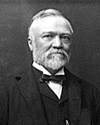 |  A Scottish-born U.S. steel industrialist (1835-1919) was a philanthropist, benefactor to education and built over 1700 public libraries. Can you name this industrialist? A Scottish-born U.S. steel industrialist (1835-1919) was a philanthropist, benefactor to education and built over 1700 public libraries. Can you name this industrialist? |
| Events | |
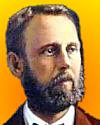 |  On 11 Aug 1877, the American astronomer Asaph Hall discovered the two moons of Mars, which he named.What names did he give these moons? On 11 Aug 1877, the American astronomer Asaph Hall discovered the two moons of Mars, which he named.What names did he give these moons? |
| On 11 Aug 1909, the liner, Arapahoe, was the first ship to use a new, standard international radio distress call when it found itself in trouble off Cape Hatteras, NC. What was this new distress signal? | |
| Answers |
When you have your answers ready to all the questions above, you'll find all the information to check them, and more, on the August 11 web page of Today in Science History. Or, try this link first for just the brief answers. Fast answers for the previous newsletter for August 10: A method of separating chemically similar charged colloids - an electrical field is applied to the sample, and particles with different sizes migrate at different rates to the pole of opposite charge; Monopoly; Robert Hutchings Goddard; Smithsonian Institution; the century including the year 1675. |
| Feedback |
 If you enjoy this newsletter, the website, or wish to offer encouragement or ideas, please send feedback by using your mail reader Reply button. If you enjoy this newsletter, the website, or wish to offer encouragement or ideas, please send feedback by using your mail reader Reply button. |

--
If you do not want to receive any more newsletters, this link
To update your preferences and to unsubscribe visit this link
If you do not want to receive any more newsletters, this link
To update your preferences and to unsubscribe visit this link
! !

Δεν υπάρχουν σχόλια:
Δημοσίευση σχολίου