 | TODAY IN SCIENCE HISTORY NEWSLETTER - 8 AUGUST |
| Feature for Today |
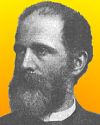 In today's double feature, here are two quite different reading pieces. One is about a notable chemist. The other is a biography by a scientist about another person—Theodore Roosevelt—whom you may know as a conservation-minded President. But he was far more of a naturalist from early years than you may have realized. In today's double feature, here are two quite different reading pieces. One is about a notable chemist. The other is a biography by a scientist about another person—Theodore Roosevelt—whom you may know as a conservation-minded President. But he was far more of a naturalist from early years than you may have realized.On 8 Aug 1897, Viktor Meyer was born, the German organic chemist who contributed greatly to knowledge of both organic and inorganic chemistry and invented an apparatus for determining vapour densities (and hence molecular weights), now named after him. If you took a chemistry course, chances are, you came across mention of this apparatus. To know more about the accomplishments of this interesting chemist, read this short biography of Viktor Meyer. 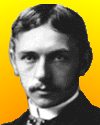 Henry Fairfield Osborn, born on 8 Aug 1857, was an American paleontologist and museum director who greatly influenced the art of museum display and the education of paleontologists in the United States and Great Britain. Thus, he was involved in much fieldwork. He also became acquainted with Theodore Roosevelt, who before becoming President Roosevelt, began his avid interest as a world-travelling naturalist. Through this activity, he formed a long association with the American Museum. Thus, in 1919, when Natural History magazine published a selection of articles memorializing the death of President Roosevelt, Osborn was able to contribute fascinating personal recollections about Theodore Roosevelt, Naturalist. Henry Fairfield Osborn, born on 8 Aug 1857, was an American paleontologist and museum director who greatly influenced the art of museum display and the education of paleontologists in the United States and Great Britain. Thus, he was involved in much fieldwork. He also became acquainted with Theodore Roosevelt, who before becoming President Roosevelt, began his avid interest as a world-travelling naturalist. Through this activity, he formed a long association with the American Museum. Thus, in 1919, when Natural History magazine published a selection of articles memorializing the death of President Roosevelt, Osborn was able to contribute fascinating personal recollections about Theodore Roosevelt, Naturalist. |
| Book of the Day | |
| |

| Quotations for Today | |
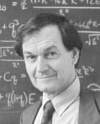 | "Consciousness ... is the phenomenon whereby the universe's very existence is made known." - Sir Roger Penrose, British mathematician (born 8 Aug 1931)  |
 | "God used beautiful mathematics in creating the world." "A great deal of my work is just playing with equations and seeing what they give." "As time goes on, it becomes increasingly evident that the rules which the mathematician finds interesting are the same as those which Nature has chosen." - Paul A. M. Dirac, English theoretical physicist (born 8 Aug 1902) |
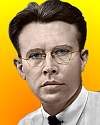 | "The day when the scientist, no matter how devoted, may make significant progress alone and without material help is past. This fact is most self-evident in our work. Instead of an attic with a few test tubes, bits of wire and odds and ends, the attack on the atomic nucleus has required the development and construction of great instruments on an engineering scale." - Ernest Orlando Lawrence, American physicist (born 8 Aug 1901) |
| QUIZ | |
| Before you look at today's web page, see if you can answer some of these questions about the events that happened on this day. Some of the names are very familiar. Others will likely stump you. Tickle your curiosity with these questions, then check your answers on today's web page. | |
| Births | |
| |  Sir Roger Penrose , born 8 Aug 1931, is a British mathematician and relativist who in the 1960s calculated many of the basic features of one of the objects in the universe. Sir Roger Penrose , born 8 Aug 1931, is a British mathematician and relativist who in the 1960s calculated many of the basic features of one of the objects in the universe. What are the objects he studied? What are the objects he studied? |
| | Ernest Lawrence, born 8 Aug 1901, was an American physicist, winner of the 1939 Nobel Prize for Physics for his invention of the first particle accelerator to achieve high energies.What is the name of this kind of accelerator? |
| Deaths | |
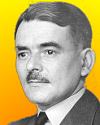 |  Sir Frank Whittle (1907-1996) was an English aviation engineer and pilot who developed aircraft that could fly at faster speeds and higher altitudes than piston-engine propeller airplanes of the 1920s.What did he pioneer, as early as 1930? Sir Frank Whittle (1907-1996) was an English aviation engineer and pilot who developed aircraft that could fly at faster speeds and higher altitudes than piston-engine propeller airplanes of the 1920s.What did he pioneer, as early as 1930? |
| Events | |
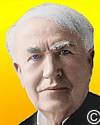 |  On 8 Aug 1876, Thomas A. Edison received a patent for another invention for reproduction, but for putting words on paper.What was this invention? On 8 Aug 1876, Thomas A. Edison received a patent for another invention for reproduction, but for putting words on paper.What was this invention? |
 | On 8 Aug of a certain year, the first steam locomotive in America, the Stourbridge Lion, was tested in Honesdale, Pennsylvania.In what decade did this first U.S. locomotive trial take place? |
| Answers |
When you have your answers ready to all the questions above, you'll find all the information to check them, and more, on the August 8 web page of Today in Science History. Or, try this link first for just the brief answers. Fast answers for the previous newsletter for August 7: Tsar Nicholas II and other members of the Romanov family; he found fossil remains of, he believed, the earliest member of the genus of human beings and named the species Homo habilis; Jons Jakob Berzelius; power loom for brocaded fabric, controlled by perforated control cards; the decade including the year 1994. |
| Feedback |
 If you enjoy this newsletter, the website, or wish to offer encouragement or ideas, please send feedback by using your mail reader Reply button. If you enjoy this newsletter, the website, or wish to offer encouragement or ideas, please send feedback by using your mail reader Reply button. |

--
If you do not want to receive any more newsletters, this link
To update your preferences and to unsubscribe visit this link
If you do not want to receive any more newsletters, this link
To update your preferences and to unsubscribe visit this link
! !

Δεν υπάρχουν σχόλια:
Δημοσίευση σχολίου