 | TODAY IN SCIENCE HISTORY NEWSLETTER - 4 FEBRUARY |
| Feature for Today |
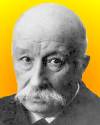 On 4 Feb 1841, Clément Ader was born, one of the most prominent and successful aviators of the pre-Wright Brothers era. In a time before internal-combustion engines were used for flying machines, in 1890, he constructed a steam-powered aircraft with bat-shaped wings, named the Eole. Very briefly, and uncontrolled, he made the first manned, powered flight in it. Well, if barely lifting off the ground can be called flight! Thirteen years later, the Wright Brothers' definitive flight is now where the history of aviation begins in earnest. Yet, if you'd like to know a little more about what an industrious French inventor accomplished before that, see The Air Craft of Clément Ader. On 4 Feb 1841, Clément Ader was born, one of the most prominent and successful aviators of the pre-Wright Brothers era. In a time before internal-combustion engines were used for flying machines, in 1890, he constructed a steam-powered aircraft with bat-shaped wings, named the Eole. Very briefly, and uncontrolled, he made the first manned, powered flight in it. Well, if barely lifting off the ground can be called flight! Thirteen years later, the Wright Brothers' definitive flight is now where the history of aviation begins in earnest. Yet, if you'd like to know a little more about what an industrious French inventor accomplished before that, see The Air Craft of Clément Ader. |
| Book of the Day | ||
|

| Quotations for Today | |
 | If I were entering adulthood now instead of in the environment of fifty years ago, I would choose a career that kept me in touch with nature more than science. � Too few natural areas remain; both by intent and by indifference we have insulated ourselves from the wilderness that produced us. - Charles A. Lindbergh, American aviator (born 4 Feb 1902).  |
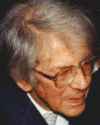 | One may characterize physics as the doctrine of the repeatable, be it a succession in time or the co-existence in space. The validity of physical theorems is founded on this repeatability. - Friedrich Hund, German physicist (born 4 Feb 1896). |
 | Technical skill is mastery of complexity while creativity is mastery of simplicity. - Sir Erik Christopher Zeeman, English mathematician (born 4 Feb 1925). |
| Quiz | |
| Before you look at today's web page, see if you can answer some of these questions about the events that happened on this day. Some of the names are very familiar. Others will likely stump you. Tickle your curiosity with these questions, then check your answers on today's web page. | |
| Births | |
 | Clyde W. Tombaugh, born 4 Feb 1906, was an American astronomer known for his successful discovery of the new planet, Pluto, for which a systematic search had been instigated by the predictions of other astronomers. Born of poor farmers, his first telescope was made of parts from worn-out farming equipment. In which decade of his life did Tombaugh discover Pluto? In which decade of his life did Tombaugh discover Pluto? |
 | Raymond A. Dart, born on 4 Feb 1893, was an Australian-born South African physical anthropologist. In 1924, working with students in the Taung limestone works in Bechuanaland, he found the skull of the Taung child, only three years old at the time of death. He named it Australopithecus africanus, “australis” meaning south and “pithecus” meaning ape. What significance did he recognize about this discovery? |
| Deaths | |
 | On 4 Feb 1974, Satyendra Nath Bose died. He was a mathematician and physicist who collaborated with Albert Einstein to develop a theory of statistical quantum mechanics, now called Bose-Einstein statistics. P.A.M. Dirac coined a name for particles obeying these statistics. What is this particle name coined by Dirac? |
 | On 4 Feb 1847, Henri Dutrochet died, a French physiologist who was the first to recognize that the take-up of carbon dioxide by plant cells depends on their green pigment. He also discovered and coined the name for the process in which a solvent passes through a semipermeable membrane into a region of greater solute concentration, thus equalizing concentrations on either side of the membrane. What name did Dutrochet give to the process he discovered? |
| Events | |
 | On 4 Feb 1941, Roy Plunkett received a U.S. patent for “Tetrafluoro-ethylene Polymers.” By what trade name is his invention better known? |
 | On 4 Feb 1915, a series of experiments began to find the cause of the disease pellagra, conducted by Dr. Joseph Goldberger. The illness was eventually found to result from poor diet, lacking certain essential nutrients. By what name are these “essential nutrients” now known? |
| Answers |
| When you have your answers ready to all the questions above, you'll find all the information to check them, and more, on the February 4 web page of Today in Science History. Or, try this link first for just the brief answers. Fast answers for the previous newsletter for February 3: gene • maximite • Cats • Johannes Gutenberg • Luna 9 • Joseph Swan. |
| Feedback |
 If you enjoy this newsletter, the website, or wish to offer encouragement or ideas, please send feedback by using your mail reader Reply button. If you enjoy this newsletter, the website, or wish to offer encouragement or ideas, please send feedback by using your mail reader Reply button. Your click on a StumbleUpon, Google+ or Facebook social button on the site webpages is also a welcome sign of appreciation. Thank you for using them. |
| Copyright |
| To find citations for quotations go to the corresponding webpage by clicking on the “quotes” balloon icon. Sources for the thumbnails appear on today's webpage with the corresponding item. � This newsletter is copyright 2014 by todayinsci.com. Please respect the Webmaster's wishes and do not put copies online of the Newsletter � or any Today in Science History webpage. (If you already have done so, please remove them. Thank you.) Offline use in education is encouraged such as a printout on a bulletin board, or projected for classroom viewing. Online, descriptive links to our pages are welcomed, as these will provide a reader with the most recent revisions, additions and/or corrections of a webpage. For any other copyright questions, please contact the Webmaster by using your mail reader Reply button. |
--
If you do not want to receive any more newsletters, Unsubscribe
To update your preferences and to unsubscribe visit this link

Δεν υπάρχουν σχόλια:
Δημοσίευση σχολίου