 | TODAY IN SCIENCE HISTORY NEWSLETTER - 15 JUNE |
| Feature for Today |
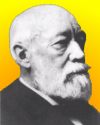 On 15 Jun 1869, John Wesley Hyatt and Isaiah Hyatt received a U.S. patent for the first plastic. On 15 Jun 1869, John Wesley Hyatt and Isaiah Hyatt received a U.S. patent for the first plastic. You can read the Hyatts' short patent, to learn about its manufacture. |
| Book of the Day | |
| |

| Quotations for Today | |
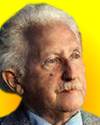 | "What was Freud's Galapagos, what species fluttered what kinds of wings before his searching eyes? It has often been pointed out derisively: his creative laboratory was the neurologist's office, the dominant species hysterical ladies." - Erik H. Erikson, German-American psychoanalyst (born 15 Jun 1902)  |
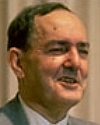 | "What information consumes is rather obvious: it consumes the attention of its recipients. Hence a wealth of information creates a poverty of attention, and a need to allocate that attention efficiently among the overabundance of information sources that might consume it." - Herbert A. Simon, American social scientist (born 15 Jun 1916) |
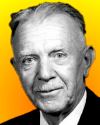 | "The science and technology which have advanced man safely into space have brought about startling medical advances for man on earth. Out of space research have come new knowledge, techniques and instruments which have enabled some bedridden invalids to walk, the totally deaf to hear, the voiceless to talk, and, in the foreseeable future, may even make it possible for the blind to "see."" - Hubertus Strughold, German-American physiologist, Nazi director of medical research for aviation, (born 15 Jun 1898) |
| QUIZ | |
| Before you look at today's web page, see if you can answer some of these questions about the events that happened on this day. Some of the names are very familiar. Others will likely stump you. Tickle your curiosity with these questions, then check your answers on today's web page. | |
| Births | |
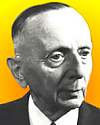 |  Georg Adolf Otto Wüst, born on 15 Jun 1890, was a German oceanographer who, by collecting and analyzing many systematic observations, developed the first essentially complete understanding of the physical structure and deep circulation a certain ocean. Georg Adolf Otto Wüst, born on 15 Jun 1890, was a German oceanographer who, by collecting and analyzing many systematic observations, developed the first essentially complete understanding of the physical structure and deep circulation a certain ocean. Which ocean did he study? Which ocean did he study? |
| Deaths | |
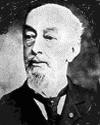 |  William Le Baron Jenney (1832-1907) was an American civil engineer and architect whose technical innovations were of primary importance in the development of a new way of building certain structures. What type of structures did he pioneer? William Le Baron Jenney (1832-1907) was an American civil engineer and architect whose technical innovations were of primary importance in the development of a new way of building certain structures. What type of structures did he pioneer? |
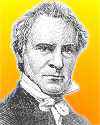 | A certain American inventor and manufacturer (1799-1869) pioneered in the industrial use of graphite and many other innovations. As a printer and a photographer, he designed a mirror into a camera that was the forerunner of the viewfinder, patented a double-crank steam engine, evolved a method of printing banknotes to foil counterfeiters, and patented a new method for tunneling under water. As a manufacturer and entrepreneur, he produced the first pencil made in the U.S. and was responsible for the development of the graphite industry there. When he died, his company was the largest manufacturer of graphite products in the world. His name is still associated with pencils. Can you name this man? |
| Events | |
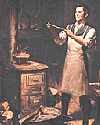 |  On 15 Jun 1844, a certain inventor received his first patent for "An Improvement in India-Rubber Fabrics." This was for his vulcanization process that produced elastic rubber, while keeping rubber solid but not sticky in warm weather, and to strengthen rubber. He had spent five years trying to make something useful from natural rubber. Because it was sticky in the summer and brittle in the winter, he was experimenting to coat it with a powder to make it less sticky when he accidentally dropped a mixture of natural rubber and powdered sulfur on a hot stove in Woburn, Massachusetts. The heat completed the process. Despite the value of the invention, he died in poverty in 1860. His name is still associated with rubber products.Who was this inventor? On 15 Jun 1844, a certain inventor received his first patent for "An Improvement in India-Rubber Fabrics." This was for his vulcanization process that produced elastic rubber, while keeping rubber solid but not sticky in warm weather, and to strengthen rubber. He had spent five years trying to make something useful from natural rubber. Because it was sticky in the summer and brittle in the winter, he was experimenting to coat it with a powder to make it less sticky when he accidentally dropped a mixture of natural rubber and powdered sulfur on a hot stove in Woburn, Massachusetts. The heat completed the process. Despite the value of the invention, he died in poverty in 1860. His name is still associated with rubber products.Who was this inventor? |
 | On 15 Jun of a certain year, Ben Franklin's kite-flying experiment proved lightning and electricity were related while flying a kite with a key attatched. The same year, he equipped his house with a lightning rod, connecting it to bells that ring when rod is electrified. He explained how to perform a kite experiment in the Pennsylvania Gazette.In what decade was this experiment conducted? |
| On 15 Jun 1869, John Wesley Hyatt and Isaiah Hyatt invented the first plastic.Can you name this plastic? |
| Answers |
When you have your answers ready to all the questions above, you'll find all the information to check them, and more, on the June 15 web page of Today in Science History. Or, try this link first for just the brief answers. Fast answers for the previous newsletter for June 14: Alois Alzheimer; the force between two electrical charges is proportional to the product of the charges and inversely proportional to the square of the distance between them; John Logie Baird; DDT; the decade including the year 1834; Thomas A. Edison. |
| Feedback |
 If you enjoy this newsletter, the website, or wish to offer encouragement or ideas, please send feedback by using your mail reader Reply button. If you enjoy this newsletter, the website, or wish to offer encouragement or ideas, please send feedback by using your mail reader Reply button. |

--
If you do not want to receive any more newsletters, this link
To update your preferences and to unsubscribe visit this link
If you do not want to receive any more newsletters, this link
To update your preferences and to unsubscribe visit this link
! !


Δεν υπάρχουν σχόλια:
Δημοσίευση σχολίου