 | TODAY IN SCIENCE HISTORY NEWSLETTER - 6 JUNE |
| Feature for Today |
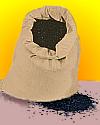 On 6 Jun In 1639, the first record of the establishment of a gunpowder mill in the American colonies was an order from the General Court of Massachusetts granting 500 acres of land at Pecoit, Mass. On 6 Jun In 1639, the first record of the establishment of a gunpowder mill in the American colonies was an order from the General Court of Massachusetts granting 500 acres of land at Pecoit, Mass.Since Jamestown was settled (1607) and the Pilgrims landed at Plymouth (1620), firearms and gunpowder were brought from England - an uncertain supply. When the colonialists turned to producing gunpowder for themselves, the General Court encouraged homespun production efforts. In this short article on Colonial Powder Mills, you can read about the first gunpowder mills in America. |
| Book of the Day | |
| |

| Quotations for Today | |
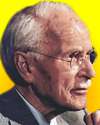 | "Complexes are psychic contents which are outside the control of the conscious mind. They have been split off from consciousness and lead a separate existence in the unconscious, being at all times ready to hinder or to reinforce the conscious intentions." - Swiss psychologist Hin the quiz below (died 6 Jun 1961)  |
| QUIZ | |
| Before you look at today's web page, see if you can answer some of these questions about the events that happened on this day. Some of the names are very familiar. Others will likely stump you. Tickle your curiosity with these questions, then check your answers on today's web page. | |
| Births | |
 |  Richard E. Smalley, born 6 Jun 1943, shared the 1996 Nobel Prize for Chemistry with Robert F. Curl, Jr., and Sir Harold W. Kroto for their joint 1985 discovery of the molecule carbon60. Richard E. Smalley, born 6 Jun 1943, shared the 1996 Nobel Prize for Chemistry with Robert F. Curl, Jr., and Sir Harold W. Kroto for their joint 1985 discovery of the molecule carbon60.  What is this called? What is this called? |
 | Andrea Cesalpino, born 6 Jun 1519, was an Italian physician who sought a philosophical and theoretical approach to plant classification based on unified and coherent principles rather than on alphabetical sequence or medicinal properties. What plant features did he use for his classification? |
| Deaths | |
| |  A Swiss psychologist, born 6 Jun 1961, met and collaborated with Freud, but then developed his own theories, which he called "analytical psychology." He proposed and developed the concepts of the extroverted and introverted personality, archetypes, and the collective unconscious. Can you name this psychologist? A Swiss psychologist, born 6 Jun 1961, met and collaborated with Freud, but then developed his own theories, which he called "analytical psychology." He proposed and developed the concepts of the extroverted and introverted personality, archetypes, and the collective unconscious. Can you name this psychologist? |
| Events | |
 |  On a certain 6 Jun, the first American patent for an electric iron was issued to Henry Seely of New York City. In what decade was the first American patent for an electric iron was issued? On a certain 6 Jun, the first American patent for an electric iron was issued to Henry Seely of New York City. In what decade was the first American patent for an electric iron was issued? |
 | On 6 Jun 1942, the first parachute jump in the U.S. using a parachute made of a new material was made by Adeline Gray. Parachutes were tested with dead weights until she became the first human to test a parachute made with this new material.What was this new material? |
| Answers |
When you have your answers ready to all the questions above, you'll find all the information to check them, and more, on the June 6 web page of Today in Science History. Or, try this link first for just the brief answers. Fast answers for the previous newsletter for June 5: holography; Neptune; the thickness of the Earth's crust; AIDS; Joseph and Jacques Montgolfier; Apple II. |
| Feedback |
 If you enjoy this newsletter, the website, or wish to offer encouragement or ideas, please send feedback by using your mail reader Reply button. If you enjoy this newsletter, the website, or wish to offer encouragement or ideas, please send feedback by using your mail reader Reply button. |

--
If you do not want to receive any more newsletters, this link
To update your preferences and to unsubscribe visit this link
If you do not want to receive any more newsletters, this link
To update your preferences and to unsubscribe visit this link
! !


Δεν υπάρχουν σχόλια:
Δημοσίευση σχολίου