 | TODAY IN SCIENCE HISTORY NEWSLETTER - 13 OCTOBER |
| Feature for Today |
 On 13 Oct 1853, the Pennsylvania and LeHigh Zinc Company Mill was erected in Bethlehem, Pennsylvania. It became the first mill to produce commercial zinc in the U.S. On 13 Oct 1853, the Pennsylvania and LeHigh Zinc Company Mill was erected in Bethlehem, Pennsylvania. It became the first mill to produce commercial zinc in the U.S.Before producing metallic zinc from the local calamine ores, the company began by manufacturing zinc oxide. You've seen that compound used in the white paste on the noses of swimming pool lifeguards for protection from the summer sun. But the company used the zinc oxide powder to make white zinc oxide paint. For more on the background of the company, read this excerpt on The Pennsylvania and Lehigh Zinc Company, from History of the Lehigh Valley (1860). |
| Book of the Day | |
| |

| Quotations for Today | |
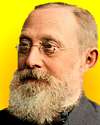 | "If the man of science chose to follow the example of historians and pulpit-orators, and to obscure strange and peculiar phenomena by employing a hollow pomp of big and sounding words, this would be his opportunity; for we have approached one of the greatest mysteries which surround the problem of animated nature and distinguish it above all other problems of science. To discover the relations of man and woman to the egg-cell would be almost equivalent of the egg-cell in the body of the mother, the transfer to it by means of the seed, of the physical and mental characteristics of the father, affect all the questions which the human mind has ever raised in regard to existence." (1848) - Rudolph Virchow, (born 13 Oct 1821)  |
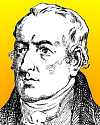 | "230(231-1) ... is the greatest perfect number known at present, and probably the greatest that ever will be discovered; for; as they are merely curious without being useful, it is not likely that any person will attempt to find a number beyond it." - Peter Barlow, (born 13 Oct 1776) |
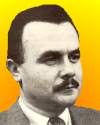 | "Science is an act of faith. Without faith, how can understanding the existance of a neutron help with the larger moral issues of life." - Bertram N. Brockhouse, (died 13 Oct 2003) |
| QUIZ | |
| Before you look at today's web page, see if you can answer some of these questions about the events that happened on this day. Some of the names are very familiar. Others will likely stump you. Tickle your curiosity with these questions, then check your answers on today's web page. | |
| Births | |
| |  Rudolf Virchow, born 13 Oct 1821, was a pathologist and statesman who originated the concept that disease arises in the individual cells of a tissue and, with publication of his Cellular Pathology (1858), founded the science of cellular pathology. Virchow also worked on improving sanitary conditions, and believed that environmental factors such as poor living conditions could be as much a cause of disease as germs. Rudolf Virchow, born 13 Oct 1821, was a pathologist and statesman who originated the concept that disease arises in the individual cells of a tissue and, with publication of his Cellular Pathology (1858), founded the science of cellular pathology. Virchow also worked on improving sanitary conditions, and believed that environmental factors such as poor living conditions could be as much a cause of disease as germs. What was his nationality? What was his nationality? |
| Deaths | |
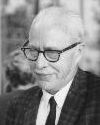 |  Walter H. Brattain (1902-1987) was an American scientist born in China who, with John Bardeen and William B. Shockley, won the Nobel Prize for Physics in 1956 for investigating semiconductors. Working with the ideas of Shockley and Bardeen, Brattain built the first of a new electronic product.What was this first-of-its-kind that he built? Walter H. Brattain (1902-1987) was an American scientist born in China who, with John Bardeen and William B. Shockley, won the Nobel Prize for Physics in 1956 for investigating semiconductors. Working with the ideas of Shockley and Bardeen, Brattain built the first of a new electronic product.What was this first-of-its-kind that he built? |
| Events | |
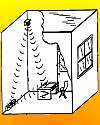 |  On 13 Oct of a certain year, the first U.S. patent for a burglar alarm operated by ultrasonic sound was issued to Samuel Bagno. A sound source produced waves of 19,000 hertz, a frequency too high for normal human hearing. An intruder could be detected by the alarm by a difference in frequency of the reflected waves from the moving body (the Doppler effect).In what decade was this patent issued? On 13 Oct of a certain year, the first U.S. patent for a burglar alarm operated by ultrasonic sound was issued to Samuel Bagno. A sound source produced waves of 19,000 hertz, a frequency too high for normal human hearing. An intruder could be detected by the alarm by a difference in frequency of the reflected waves from the moving body (the Doppler effect).In what decade was this patent issued? |
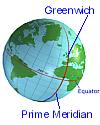 | On 13 Oct 1884, a universal meridian was adopted. At the behest of the U.S. President, 41 delegates from 25 nations met in Washington, DC, for the International Meridian Conference. All longitude would be calculated both east and west from this meridian up to 180°.Through which Observatory does this International Meridian pass? |
| Answers |
When you have your answers ready to all the questions above, you'll find all the information to check them, and more, on the October 13 web page of Today in Science History. Or, try this link first for just the brief answers. Fast answers for the previous newsletter for October 12: the decade containing the year 1911; nitroglycerine;DDT; the decade containing the year 1983; Charles Macintosh. |
| Feedback |
 If you enjoy this newsletter, the website, or wish to offer encouragement or ideas, please send feedback by using your mail reader Reply button. If you enjoy this newsletter, the website, or wish to offer encouragement or ideas, please send feedback by using your mail reader Reply button. |

--
If you do not want to receive any more newsletters, this link
To update your preferences and to unsubscribe visit this link
If you do not want to receive any more newsletters, this link
To update your preferences and to unsubscribe visit this link
! !


Δεν υπάρχουν σχόλια:
Δημοσίευση σχολίου