 | TODAY IN SCIENCE HISTORY NEWSLETTER - 14 AUGUST |
| Feature for Today |
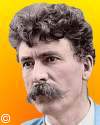 On 14 Aug 1860, Ernest Thompson Seton was born, an English-American naturalist who applied these skills in over forty books on wild life, woodcraft, Indian lore and animal-fiction stories. As a capable naturalist, in his field observations he made detailed studies of morphology, physiology, distribution, and behaviour. His fame as author began with Wild Animals I Have Known (1898) - still in print a century later. On 14 Aug 1860, Ernest Thompson Seton was born, an English-American naturalist who applied these skills in over forty books on wild life, woodcraft, Indian lore and animal-fiction stories. As a capable naturalist, in his field observations he made detailed studies of morphology, physiology, distribution, and behaviour. His fame as author began with Wild Animals I Have Known (1898) - still in print a century later.Over a period of twenty years he delivered over three thousand lectures. Believing in promoting the values of ethology and ecology, he was chairman of the committee that established the Boy Scouts in the U.S. (1910). Seton envisioned the North American Indian as a model for the movement, but Baden-Powell's military structure was adopted as in Britain. For a longer biography of this interesting naturalist, read this article on Ernest Thompson Seton. |
| Book of the Day | |
| |

| Quotations for Today | |
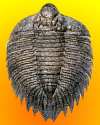 | "The Silurian Period—the grandest of all the Periods,—and, as yet, apparently the seed-time of all succeeding life." - John Jeremiah Bigsby, English physician and geologist who published Thesaurus Siluricus in 1868), his “master-roll” of the flora and fauna of the Silurian period (born 14 Aug 1792)  |
| | "The life of a wild animal always has a tragic end." - Ernest Thompson Seton, English-American naturalist (born 14 Aug 1910) |
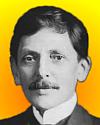 | "There are still many unsolved problems about bird life, among which are the age that birds attain, the exact time at which some birds acquire their adult dress, and the changes which occur in this with years. Little, too, is known about the laws and routes of bird migration, and much less about the final disposition of the untold thousands which are annually produced." - Paul Bartsch, German-American zoologist with the Smithsonian Institution, who initiated systematic, scientific bird banding in North America in 1902 (born 14 Aug 1840) |
| QUIZ | |
| Before you look at today's web page, see if you can answer some of these questions about the events that happened on this day. Some of the names are very familiar. Others will likely stump you. Tickle your curiosity with these questions, then check your answers on today's web page. | |
| Births | |
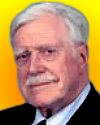 |  Richard Darwin Keynes, born 14 Aug 1919, is a British physiologist who was the first to trace the movements of two particular elements during the transmission of a nerve impulse by using radioactive tracers. Richard Darwin Keynes, born 14 Aug 1919, is a British physiologist who was the first to trace the movements of two particular elements during the transmission of a nerve impulse by using radioactive tracers. What are two elements are involved? What are two elements are involved? |
| | A Danish physicist and chemist, born 14 Aug 1777, discovered that electric current in a wire can deflect a magnetized compass needle, a phenomenon the importance of which was rapidly recognized and which inspired the development of electromagnetic theory.Can you name this man? |
| Deaths | |
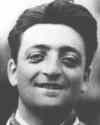 |  An Italian automobile manufacturer, designer, and racing-car driver (1898-1988) whose cars often dominated world racing competition in the second half of the 20th century. In 1947, as a former racecar driver, he built cars under his own name for the first time. Within five years, his powerful 12-cylinder cars dominated racing. Within a decade, the road models had become status symbols. Individually crafted, their fenders were pounded into shape against tree trunks, their engines were cast like statues. Can you name this man? An Italian automobile manufacturer, designer, and racing-car driver (1898-1988) whose cars often dominated world racing competition in the second half of the 20th century. In 1947, as a former racecar driver, he built cars under his own name for the first time. Within five years, his powerful 12-cylinder cars dominated racing. Within a decade, the road models had become status symbols. Individually crafted, their fenders were pounded into shape against tree trunks, their engines were cast like statues. Can you name this man? |
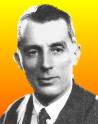 | When this French physical chemist (1900-1958) married Irène, (the daughter of Marie Curie), both husband and wife joined their surnames, by which both were then known. Following in the footsteps of the famous mother, the couple were jointly awarded the 1935 Nobel Prize for Chemistry for their discovery of artificially prepared, radioactive isotopes of new elements.Can you name this man? |
| Events | |
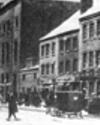 |  On 14 Aug of a certain year, the New York Eye Infirmary, the first U.S. eye hospital, opened in New York City.In what decade did this hospital open? On 14 Aug of a certain year, the New York Eye Infirmary, the first U.S. eye hospital, opened in New York City.In what decade did this hospital open? |
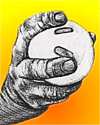 | On 14 Aug 1953, a ball that curved when it was thrown, was invented by David Mullany Sr. for his 13-year-old son.What is this ball called? |
| Answers |
When you have your answers ready to all the questions above, you'll find all the information to check them, and more, on the August 14 web page of Today in Science History. Or, try this link first for just the brief answers. Fast answers for the previous newsletter for August 13: The first rotary internal combustion engine; John Logie Baird; all of them; the stethoscope; the Martian south polar cap; the decade including 1889. |
| Feedback |
 If you enjoy this newsletter, the website, or wish to offer encouragement or ideas, please send feedback by using your mail reader Reply button. If you enjoy this newsletter, the website, or wish to offer encouragement or ideas, please send feedback by using your mail reader Reply button. |

--
If you do not want to receive any more newsletters, this link
To update your preferences and to unsubscribe visit this link
If you do not want to receive any more newsletters, this link
To update your preferences and to unsubscribe visit this link
! !


Δεν υπάρχουν σχόλια:
Δημοσίευση σχολίου