 | TODAY IN SCIENCE HISTORY NEWSLETTER - 3 FEBRUARY |
| Feature for Today |
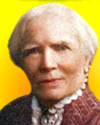 Elizabeth Blackwell, born 3 Feb 1821, is considered the first female doctor of medicine in modern times. She was the first woman to gain the M.D. degree in the United States. Elizabeth Blackwell, born 3 Feb 1821, is considered the first female doctor of medicine in modern times. She was the first woman to gain the M.D. degree in the United States. It wasn't easy. Medical schools were strongly opposed to admitting a woman wanting to be a doctor. But by a strange quirk of circumstances, she did finally get one to accept her. Today's feature is a letter written by one of her classmates recalling how it happened, what she went through in pursuing her education there, and some surprising details of the behaviour of the medical students of the mid-19th century. It's fascinating reading. Here is the link for the first Medical Co-Education of the Sexes. |
| Book of the Day | ||
|
| Quotations for Today | |
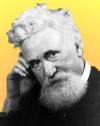 | If all boys could be made to know that with every breath of cigarette smoke they inhale imbecility and exhale manhood ... and that the cigarette is a maker of invalids, criminals and fools—not men—it ought to deter them some. The yellow finger stain is an emblem of deeper degradation and enslavement than the ball and chain. - Hudson Maxim, American inventor (born 3 Feb 1853).  |
| | To her [Florence Nightingale] chiefly I owed the awakening to the fact that sanitation is the supreme goal of medicine its foundation and its crown. - Elizabeth Blackwell, English-American physician (born 3 Feb 1821). |
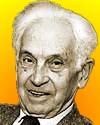 | It is curious how often erroneous theories have had a beneficial effect for particular branches of science. - Ernst Mayr, German-American biologist (died 3 Feb 2005). |
| Quiz | |
| Before you look at today's web page, see if you can answer some of these questions about the events that happened on this day. Some of the names are very familiar. Others will likely stump you. Tickle your curiosity with these questions, then check your answers on today's web page. | |
| Births | |
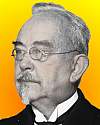 | Wilhelm Ludvig Johannsen, born 3 Feb 1857, was a Danish botanist and plant geneticist. In 1909, Johannsen proposed a name for that portion of a chromosome which controls a phenotype. What name did Johannsen propose for the portion of a chromosome that controls a phenotype? What name did Johannsen propose for the portion of a chromosome that controls a phenotype? |
| | Hudson Maxim, born 3 Feb 1853, was an American inventor of explosives, much used in WW I. In his early career, a printing business at Pittsfield, Mass. (1883) he invented a method of color printing in newspapers. He turned to improving explosives and made the first smokeless powder in the U.S. It was adopted by the U.S. Army. In 1901, he invented a high explosive bursting powder 50% more powerful than dynamite. What name did he give to the new explosive he invented in 1901? |
| Deaths | |
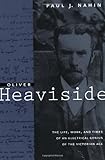
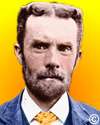 | Oliver Heaviside, died 3 Feb 1925, was an English physicist. In 1902, (with Kennelly), he predicted that there should be an ionised layer in the upper atmosphere that would reflect radio waves. This ionised layer would be useful for long distance communication, allowing radio signals to travel to distant parts of the earth by bouncing off the underside of this layer. In which theatre musical does the character Old Deuteronomy choose who will rise up to the Heaviside Layer? |
| A German printer (c.1936-1468) not only invented moveable type, but also a new type-metal alloy, a new press, and an oil based printing ink. Who is this inventor of moveable type | |
| Events | |
 | On 3 Feb 1966, three days after its takeoff, an unmanned Soviet spacecraft landed safely on the moon in the Ocean of Storms. It was the first ever soft landing on another celestial body, and opened the way for manned trips to the moon, by removing doubts lest the surface was an unsafe dusty quicksand. What was the name of this spacecraft? |
 | On 3 Feb 1879, the first practically usable incandescent filament electric light bulb was demonstrated to an audience of 700 by its inventor. Following his successful demonstration, he established the world's first electric light bulb factory. By 1881, his bulbs were used in the lighting of a theatre in front of an astonished audience. Can you name this inventor? |
| Answers |
| When you have your answers ready to all the questions above, you'll find all the information to check them, and more, on the February 3 web page of Today in Science History. Or, try this link first for just the brief answers. Fast answers for the previous newsletter for February 2: a rhythmic oscillation of water in a lake or a partially enclosed coastal inlet, such as a bay, gulf, or harbour • sulphuric acid • eka-aluminum • Literature • decade including the year 1947 • tetra-ethyl lead. |
| Feedback |
 If you enjoy this newsletter, the website, or wish to offer encouragement or ideas, please send feedback by using your mail reader Reply button. If you enjoy this newsletter, the website, or wish to offer encouragement or ideas, please send feedback by using your mail reader Reply button. Your click on a StumbleUpon, Google+ or Facebook social button on the site webpages is also a welcome sign of appreciation. Thank you for using them. |
| Copyright |
| To find citations for quotations go to the corresponding webpage by clicking on the “quotes” balloon icon. Sources for the thumbnails appear on today's webpage with the corresponding item. � This newsletter is copyright 2014 by todayinsci.com. Please respect the Webmaster's wishes and do not put copies online of the Newsletter � or any Today in Science History webpage. (If you already have done so, please remove them. Thank you.) Offline use in education is encouraged such as a printout on a bulletin board, or projected for classroom viewing. Online, descriptive links to our pages are welcomed, as these will provide a reader with the most recent revisions, additions and/or corrections of a webpage. For any other copyright questions, please contact the Webmaster by using your mail reader Reply button. |
--
If you do not want to receive any more newsletters, Unsubscribe
To update your preferences and to unsubscribe visit this link


Δεν υπάρχουν σχόλια:
Δημοσίευση σχολίου