 | TODAY IN SCIENCE HISTORY NEWSLETTER - 9 MAY |
| Feature for Today |
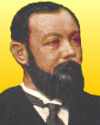 On 9 May 1914, Paul-Louis-Toussaint H�roult died, the French chemist who invented the electric-arc furnace, widely used in making steel; and, independently of the simultaneous work of Charles M. Hall of the United States, devised the electrolytic process for separating aluminium from its ore. The electrolytic process made low-priced aluminium available for the first time. On 9 May 1914, Paul-Louis-Toussaint H�roult died, the French chemist who invented the electric-arc furnace, widely used in making steel; and, independently of the simultaneous work of Charles M. Hall of the United States, devised the electrolytic process for separating aluminium from its ore. The electrolytic process made low-priced aluminium available for the first time.Aluminium and its alloys are now so widely available, it is worth reflecting on how only relatively recently (in the history of man's use of metals) it was gained from its ore in a cost-efficient way. In an 1891 article The Scientific American published the text of a Lecture on Aluminum delivered in January 1886. Because this lecture (by J.A. Price) came one month before Charles Hall produced his first beads of aluminium, it gives an interesting insight into the history of the metal, and how it was viewed before the electrolytic process so drastically dropped its cost of production. |
| Book of the Day | |
| |


| Quotations for Today | |
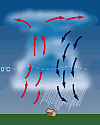 | "The astronomer is, in some measure, independent of his fellow astronomer; he can wait in his observatory till the star he wishes to observe comes to his meridian; but the meteorologist has his observations bounded by a very limited horizon, and can do little without the aid of numerous observers furnishing him contemporaneous observations over a wide-extended area." |
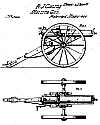 | "It occurred to me that if I could invent a machine - a gun - which could by its rapidity of fire, enable one man to do as much battle duty as a hundred, that it would, to a large extent supersede the necessity of large armies, and consequently, exposure to battle and disease [would] be greatly diminished." |
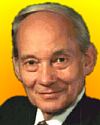 | "A theory has only the alternative of being right or wrong. A model has a third possibility: it may be right, but irrelevant." - Manfred Eigen (born 9 May 1927)  |
| QUIZ | |
| Before you look at today's web page, see if you can answer some of these questions about the events that happened on this day. Some of the names are very familiar. Others will likely stump you. Tickle your curiosity with these questions, then check your answers on today's web page. | |
| Births | |
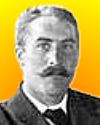 |  On 9 May 1873, the British archaeologist was born who made one of the richest and most celebrated contributions to Egyptology: the discovery (1922) of the largely intact tomb of King Tutankhamen. The Earl of Carnarvon funded the excavation work. On 9 May 1873, the British archaeologist was born who made one of the richest and most celebrated contributions to Egyptology: the discovery (1922) of the largely intact tomb of King Tutankhamen. The Earl of Carnarvon funded the excavation work. Can you name the archaeologist? Can you name the archaeologist? |
| | A second question about the same archaeologist. He first worked in Egypt in 1891, at age 17, when he was hired by the Egypt Exploration Fund in London. He was not yet an archaeologist, but had some useful talent for which he was hired.What was his talent which first took him to Egypt? |
| Deaths | |
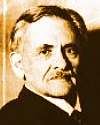 |  A.A. Michelson (1852-1931), a distinguished American physicist won a Nobel Prize "for his optical precision instruments and the spectroscopic and metrological investigations carried out with their aid". With a highly accurate interferometer he made a notable precise measurement.What did he measure? A.A. Michelson (1852-1931), a distinguished American physicist won a Nobel Prize "for his optical precision instruments and the spectroscopic and metrological investigations carried out with their aid". With a highly accurate interferometer he made a notable precise measurement.What did he measure? |
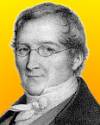 | Joseph Louis Gay-Lussac, a French scientist (1778-1850) who developed techniques of quantitative chemical analysis, confirmed that iodine was an element, discovered cyanogen, improved the process for manufacturing sulphuric acid, prepared potassium and boron (1808). He made two balloon ascents to study the atmosphere. All of which are interesting, but not the reason for which he is most remembered - a significant law in chemistry.Can you state his Law? |
| Events | |
 In 1944, the first U.S. "bank" for a certain part of the human body was established through the efforts of New York City doctors, who established the project at New York Hospital.What did the "bank" collect? In 1944, the first U.S. "bank" for a certain part of the human body was established through the efforts of New York City doctors, who established the project at New York Hospital.What did the "bank" collect? | |
| In 1936, the maiden voyage of a new way to cross the Atlantic left Europe and arrived in New Jersey a little over 61 hours later.What form of transport made the voyage? | |
| In 1882, a U.S. patent was issued for what is now a classic design of medical instrument, used extensively by doctors ever since, especially for check-ups involving the heart and lungs.What was this instrument? | |
| Answers |
When you have your answers ready to all the questions above, you'll find all the information to check them, and more, on the May 9 web page of Today in Science History. Or, try this link first for just the brief answers. Fast answers for the previous newsletter for May 8: barbed wire fencing on the U.S. western plains; new ways to culture yeast; Eadweard Muybridge; Antoine-Laurent Lavoisier; blooms of reddish algae; Coca-Cola; metre. |
| Feedback |
 If you enjoy this newsletter, the website, or wish to offer encouragement or ideas, please send feedback by using your mail reader Reply button. If you enjoy this newsletter, the website, or wish to offer encouragement or ideas, please send feedback by using your mail reader Reply button. |
--
If you do not want to receive any more newsletters, Unsubscribe
To update your preferences and to unsubscribe visit this link


Δεν υπάρχουν σχόλια:
Δημοσίευση σχολίου