 | TODAY IN SCIENCE HISTORY NEWSLETTER - 1 OCTOBER |
| Feature for Today |
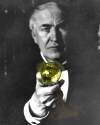 On 1 Oct 1880, The Edison Lamp Works, the first electric incandescent lamp factory in the U.S., was opened in Menlo Park, N.J. On 1 Oct 1880, The Edison Lamp Works, the first electric incandescent lamp factory in the U.S., was opened in Menlo Park, N.J.A photograph with more information on the building and its electrical equipment is given in the section First Edison Lamp Factory, from Edisonia (1904). |
| Book of the Day | |
| |

| Quotations for Today | |
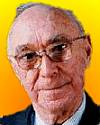 | "Consider this. As between reading, listening and speaking, one falls asleep most easily reading, next most easily listening, and only with the greatest difficulty when writing or speaking." - Jerome Bruner, American psychologist and educator (born 1 Oct 1915)  |
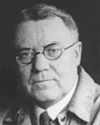 | "Time ... is an essential requirement for effective research. An investigator may be given a palace to live in, a perfect laboratory to work in, he may be surrounded with all the conveniences money can provide, but if his time is taken from him, he weill remain sterile." - Walter Bradford Cannon, American neurologist and physiologist (died 1 Oct 1945) |
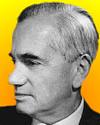 | "Today we no longer ask what really goes on in an atom; we ask what is likely to be observed—and with what likelihood—when we subject atoms to any specified influences such as light or heat, magnetic fields or electric currents." - Otto Robert Frisch, Austrian-British nuclear physicist (born 1 Oct 1904) |
| QUIZ | |
| Before you look at today's web page, see if you can answer some of these questions about the events that happened on this day. Some of the names are very familiar. Others will likely stump you. Tickle your curiosity with these questions, then check your answers on today's web page. | |
| Births | |
| |  Otto Robert Frisch, born 1 Oct 1904, was an Austrian-British nuclear physicist, born in Vienna, who, with his aunt Lise Meitner, described the division of neutron-bombarded uranium into lighter elements. He named the process fission (1939). Otto Robert Frisch, born 1 Oct 1904, was an Austrian-British nuclear physicist, born in Vienna, who, with his aunt Lise Meitner, described the division of neutron-bombarded uranium into lighter elements. He named the process fission (1939). On what did he base this name? On what did he base this name? |
| Deaths | |
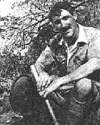 |  Louis S.B. Leakey (1903-1972) was an archaeologist and anthropologist. In 1964, on an expedition to the Olduvai Gorge in Tanzania, he found fossil remains of, he believed, the earliest member of the genus of human beings.What name did he give this species? Louis S.B. Leakey (1903-1972) was an archaeologist and anthropologist. In 1964, on an expedition to the Olduvai Gorge in Tanzania, he found fossil remains of, he believed, the earliest member of the genus of human beings.What name did he give this species? |
| Events | |
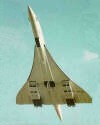 |  On 1 Oct of a certain year, the Anglo-French Concorde broke the sound barrier for the first time. It was the first plane in the world to be entirely controlled by computer.What was the decade in which this flight was made? On 1 Oct of a certain year, the Anglo-French Concorde broke the sound barrier for the first time. It was the first plane in the world to be entirely controlled by computer.What was the decade in which this flight was made? |
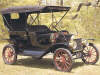 | On 1 Oct 1908, the Ford Model T car, the first car to be made on an assembly line, was introduced and was an immediate sensation. Before long, it was the largest selling car in the United States, often accounting for over half the sales in the country. What was the introductory price of the Model T (to the nearest $100)? |
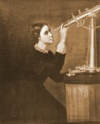 | On 1 Oct 1847, Maria Mitchell, the first woman astronomer in the United States made a discovery for which she was awarded a gold medal by the king of Denmark.What was her discovery? |
| Answers |
When you have your answers ready to all the questions above, you'll find all the information to check them, and more, on the October 1 web page of Today in Science History. Or, try this link first for just the brief answers. Fast answers for the previous newsletter for September 30: Hans Geiger; Avogadro's number; Charles Richter; H. Ross Perot; sixteen 50 pound thrust rockets; Appleton, Wisconsin. |
| Feedback |
 If you enjoy this newsletter, the website, or wish to offer encouragement or ideas, please send feedback by using your mail reader Reply button. If you enjoy this newsletter, the website, or wish to offer encouragement or ideas, please send feedback by using your mail reader Reply button. |

--
If you do not want to receive any more newsletters, this link
To update your preferences and to unsubscribe visit this link
If you do not want to receive any more newsletters, this link
To update your preferences and to unsubscribe visit this link
! !


Δεν υπάρχουν σχόλια:
Δημοσίευση σχολίου