 | TODAY IN SCIENCE HISTORY NEWSLETTER - 7 OCTOBER |
| Feature for Today |
| |
| Book of the Day | |
| |

| Quotations for Today | |
 | "I had a Meccano set with which I 'played' endlessly. Meccano which was invented by Frank Hornby around 1900, is called Erector Set in the US. New toys (mainly Lego) have led to the extinction of Meccano and this has been a major disaster as far as the education of our young engineers and scientists is concerned. Lego is a technically trivial plaything and kids love it partly because it is so simple and partly because it is seductively coloured. However it is only a toy, whereas Meccano is a real engineering kit and it teaches one skill which I consider to be the most important that anyone can acquire: This is the sensitive touch needed to thread a nut on a bolt and tighten them with a screwdriver and spanner just enough that they stay locked, but not so tightly that the thread is stripped or they cannot be unscrewed. On those occasions (usually during a party at your house) when the handbasin tap is closed so tightly that you cannot turn it back on, you know the last person to use the washroom never had a Meccano set." - Sir Harold Kroto (born 7 Oct 1939)  |
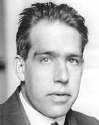 | "But, but, but... if anyone says he can think about quantum theory without getting giddy it merely shows he hasn't understood the first thing about it." - Danish physicist in the quiz below (born 7 Oct 1885) |
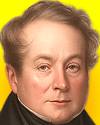 | "Every one is fond of comparing himself to something great and grandiose, as Louis XIV likened himself to the sun, and others have had like similes. I am more humble, I am a mere street scavenger (chiffonier) of science. With my hook in my hand, and my basket on my back, I go about the streets of science, collecting what I find." - François Magendie, French experimental physiologist (died 7 Oct 1855) |
| QUIZ | |
| Before you look at today's web page, see if you can answer some of these questions about the events that happened on this day. Some of the names are very familiar. Others will likely stump you. Tickle your curiosity with these questions, then check your answers on today's web page. | |
| Births | |
| |  Sir Harold W. Kroto, born 7 Oct 1939, is an English chemist who, shared the 1996 Nobel Prize for Chemistry for joint discovery of new forms of the element carbon containing 60 or more atoms arranged in closed shells. Sir Harold W. Kroto, born 7 Oct 1939, is an English chemist who, shared the 1996 Nobel Prize for Chemistry for joint discovery of new forms of the element carbon containing 60 or more atoms arranged in closed shells. After whom were the new forms of carbon name named, and why? After whom were the new forms of carbon name named, and why? |
| | A Danish physicist, born 7 Oct 1885, was the first to apply the quantum theory, which restricts the energy of a system to certain discrete values, to the problem of atomic and molecular structure. For this work he received the Nobel Prize for Physics in 1922. He developed an early theory of the atom and the liquid model of the nucleus Can you name this scientist? |
| Deaths | |
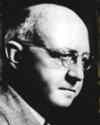 |  Clarence Birdseye (1886-1956) was the inventor of the deep freezing food method and co-founder of General Foods Corp. In 1924, his company produced the first frozen food, packed in cartons. What was his first frozen food product? Clarence Birdseye (1886-1956) was the inventor of the deep freezing food method and co-founder of General Foods Corp. In 1924, his company produced the first frozen food, packed in cartons. What was his first frozen food product? |
| Events | |
| |  On 7 Oct of a certain year, IBM displayed a large all-transistor calculator needing only 5% of the power of comparable electronic ones. Three years later, IBM introduced the IBM 608, the fist all-transistor commercial calculator.In what decade did these events occur? On 7 Oct of a certain year, IBM displayed a large all-transistor calculator needing only 5% of the power of comparable electronic ones. Three years later, IBM introduced the IBM 608, the fist all-transistor commercial calculator.In what decade did these events occur? |
| | On 7 Oct 1806, Englishman Ralph Wedgwood secured the first patent for carbon paper, by saturating thin paper with printer's ink, and drying it out between sheets of blotting paper. The idea was a byproduct of another invention, his "Stylographic Writer" which used a metal stylus instead of a quill.What was the purpose of Wedgewood's original Stylographic Writer? |
| Answers |
When you have your answers ready to all the questions above, you'll find all the information to check them, and more, on the October 7 web page of Today in Science History. Or, try this link first for just the brief answers. Fast answers for the previous newsletter for October 6: Kon-Tiki; air brake; chemical reactions of metabolism in muscle; prions; orally. |
| Feedback |
 If you enjoy this newsletter, the website, or wish to offer encouragement or ideas, please send feedback by using your mail reader Reply button. If you enjoy this newsletter, the website, or wish to offer encouragement or ideas, please send feedback by using your mail reader Reply button. |

--
If you do not want to receive any more newsletters, this link
To update your preferences and to unsubscribe visit this link
If you do not want to receive any more newsletters, this link
To update your preferences and to unsubscribe visit this link
! !


Δεν υπάρχουν σχόλια:
Δημοσίευση σχολίου