 | TODAY IN SCIENCE HISTORY NEWSLETTER - 4 OCTOBER |
| Feature for Today |
 On 4 Oct 1821, John Rennie died, the Scottish engineer and architect whose major contributions to the design of canals, bridges, harbours, docks and lighthouses throughout Britain was recognized by his burial in St. Paul's Cathedral. On 4 Oct 1821, John Rennie died, the Scottish engineer and architect whose major contributions to the design of canals, bridges, harbours, docks and lighthouses throughout Britain was recognized by his burial in St. Paul's Cathedral.One of his finest works, the Waterloo Bridge across the Thames River in London was under construction at the time of his death, and completed by his son, Sir John Rennie. A chapter on John Rennie in Biographical Illustrations of St. Paul’s Cathedral (1843) provides more information on his life work. |
| Book of the Day | ||
| ||


| Quotations for Today | |
 | "In the old days, they killed the messenger who brought the bad news... a Cassandra is never popular in her time." - Alice Stewart, English epidemiologist (born 4 Oct 1906)  |
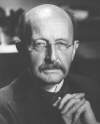 | "Physical changes take place continuously, while chemical changes take place discontinuously. Physics deals chiefly with continuously varying quantities, while chemistry deals chiefly with whole numbers." - Max Planck, (died 4 Oct 1947) |
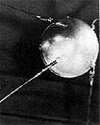 | "Listen now for the sound that forevermore separates the old from the new." - NBC radio announcer on 4 Oct 1957 introducing the beep-beep chirp transmitted by Sputnik. |
| QUIZ | |
| Before you look at today's web page, see if you can answer some of these questions about the events that happened on this day. Some of the names are very familiar. Others will likely stump you. Tickle your curiosity with these questions, then check your answers on today's web page. | |
| Births | |
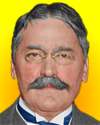 |  Michael Idvorsky Pupin, born 4 Oct 1858, was a Serbian-American physicist who devised an improvement for telephone communication. Pupin also won a Pulitzer Prize (1924) for his autobiographical work, From Immigrant to Inventor (1923). Michael Idvorsky Pupin, born 4 Oct 1858, was a Serbian-American physicist who devised an improvement for telephone communication. Pupin also won a Pulitzer Prize (1924) for his autobiographical work, From Immigrant to Inventor (1923). What was his contribution to telephone communication? What was his contribution to telephone communication? |
| Deaths | |
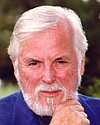 |  Edward H. Lowe (1920-1995) was an American inventor. After Navy duty (1941-45), Lowe joined his father's company in Cassopolis, Mich., selling industrial absorbents, including sawdust and an absorbent clay called Fuller's Earth.What household invention did he produce, and under what name? Edward H. Lowe (1920-1995) was an American inventor. After Navy duty (1941-45), Lowe joined his father's company in Cassopolis, Mich., selling industrial absorbents, including sawdust and an absorbent clay called Fuller's Earth.What household invention did he produce, and under what name? |
| Events | |
| |  On 4 Oct 1957, the Space Age began as the Soviet Union, to the dismay of the United States, launched Sputnik, the first manmade satellite, into orbit around the earth. The craft circled the earth every 95 minutes at almost 2,000 miles per hour 500 miles above the Earth.For how long did Sputnik continue to transmit its beep-beep radio signal? On 4 Oct 1957, the Space Age began as the Soviet Union, to the dismay of the United States, launched Sputnik, the first manmade satellite, into orbit around the earth. The craft circled the earth every 95 minutes at almost 2,000 miles per hour 500 miles above the Earth.For how long did Sputnik continue to transmit its beep-beep radio signal? |
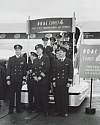 | On 4 Oct of a certain year, the first trans-Atlantic passenger jetliner service was begun by British Overseas Airways Corporation (BOAC) with flights between London and New York.What was the decade in which this service began? |
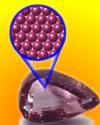 | On 4 Oct 1971, a new unit for chemical measurement of the amount of substance (matter) was added to the six base quantities of the SI (International System of scientific units.) The decision was made by the Conférence Général des Poids et Mesures (CGPM), the principal executive organization under the Treaty of the Meter. IUPAC's participation was led by M.L. McGlashan.What was this new unit called and what is its symbol? |
| Answers |
When you have your answers ready to all the questions above, you'll find all the information to check them, and more, on the October 4 web page of Today in Science History. Or, try this link first for just the brief answers. Fast answers for the previous newsletter for October 3: to treat malaria patients with fever, for, he reasoned, people living in cold climates never got malaria; sewing machine; the decade containing the year 1952; insecticide; CQD. |
| Feedback |
 If you enjoy this newsletter, the website, or wish to offer encouragement or ideas, please send feedback by using your mail reader Reply button. If you enjoy this newsletter, the website, or wish to offer encouragement or ideas, please send feedback by using your mail reader Reply button. |

--
If you do not want to receive any more newsletters, this link
To update your preferences and to unsubscribe visit this link
If you do not want to receive any more newsletters, this link
To update your preferences and to unsubscribe visit this link
! !


Δεν υπάρχουν σχόλια:
Δημοσίευση σχολίου