 | TODAY IN SCIENCE HISTORY NEWSLETTER - 9 OCTOBER |
| Feature for Today |
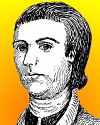 On 9 Oct 1780, the first expedition of its kind in the U.S. departed to observe a total solar eclipse in Penobscot, Maine, led by Samuel Williams of Harvard University. This is also notable, because Penobscot Bay was at the time held by the British enemy! On 9 Oct 1780, the first expedition of its kind in the U.S. departed to observe a total solar eclipse in Penobscot, Maine, led by Samuel Williams of Harvard University. This is also notable, because Penobscot Bay was at the time held by the British enemy!To learn how science could be advanced even during times of war, read an account given in History of Islesborough, Maine (1893). |
| Book of the Day | ||
| ||


| Quotations for Today | |
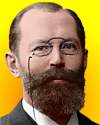 | "You are urgently warned against allowing yourself to be influenced in any way by theories or by other preconceived notions in the observation of phenomena, the performance of analyses and other determinations." - Emil Fischer, German Nobel Prize-winning chemist (born 9 Oct 1852)  |
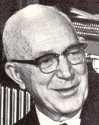 | "The specific goals we set for ourselves are almost always subsidiary to our long range intentions. A good parent, a good neighbour, a good citizen, is not good because his specific goals are acceptable, but because his successive goals are ordered to a dependable and socially desirable set of values." (1947) - Gordon Allport, American humanistic psychologist (died 9 Oct 1967) |
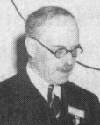 | "The secret in science is to ask the right questions, and it is the choice of problem more than anything else that marks the man of genius in the scientific world." - Sir Henry Tizard, English chemist and inventor (died 9 Oct 1959) |
| QUIZ | |
| Before you look at today's web page, see if you can answer some of these questions about the events that happened on this day. Some of the names are very familiar. Others will likely stump you. Tickle your curiosity with these questions, then check your answers on today's web page. | |
| Births | |
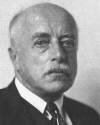 |  A German physicist, born 9 Oct 1879, was a recipient of the Nobel Prize for Physics in 1914 for his discovery of the diffraction of X-rays in crystals. This enabled scientists to study the structure of crystals and hence marked the origin of solid-state physics, an important field in the development of modern electronics. A German physicist, born 9 Oct 1879, was a recipient of the Nobel Prize for Physics in 1914 for his discovery of the diffraction of X-rays in crystals. This enabled scientists to study the structure of crystals and hence marked the origin of solid-state physics, an important field in the development of modern electronics.  Can you name this scientist? Can you name this scientist? |
| Deaths | |
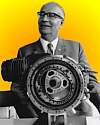 |  Felix Wankel (1902-1988) was a German engineer who invented the first rotary internal combustion engine. Many people had proposed rotary engine designs, but none had pursued it for as long or as relentlessly as Felix Wankel. By what name is Boulder Dam now known? Felix Wankel (1902-1988) was a German engineer who invented the first rotary internal combustion engine. Many people had proposed rotary engine designs, but none had pursued it for as long or as relentlessly as Felix Wankel. By what name is Boulder Dam now known? |
| Events | |
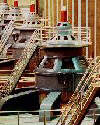 |  On 9 Oct 1936, the first generator at Boulder Dam began transmitting electricity to Los Angeles. From 1939 to 1949, its powerplant was the world's largest hydroelectric installation.By what name is Boulder Dam now known? On 9 Oct 1936, the first generator at Boulder Dam began transmitting electricity to Los Angeles. From 1939 to 1949, its powerplant was the world's largest hydroelectric installation.By what name is Boulder Dam now known? |
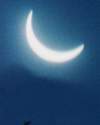 | On 9 Oct 1780, the first U.S. astronomy expedition to record an eclipse of the sun left from Harvard College, Cambridge, Mass., for Penobscot Bay, led by Samuel Williams. The country was at war with Britain, and when they arrived, a British officer was in charge of Penobscot Bay. What happened to the expedition? |
| Answers |
When you have your answers ready to all the questions above, you'll find all the information to check them, and more, on the October 9 web page of Today in Science History. Or, try this link first for just the brief answers. Fast answers for the previous newsletter for October 8: Russell; Henry-Louis Le Chatelier; germanium; the decade containing the year 1906. |
| Feedback |
 If you enjoy this newsletter, the website, or wish to offer encouragement or ideas, please send feedback by using your mail reader Reply button. If you enjoy this newsletter, the website, or wish to offer encouragement or ideas, please send feedback by using your mail reader Reply button. |

--
If you do not want to receive any more newsletters, this link
To update your preferences and to unsubscribe visit this link
If you do not want to receive any more newsletters, this link
To update your preferences and to unsubscribe visit this link
! !


Δεν υπάρχουν σχόλια:
Δημοσίευση σχολίου