 | TODAY IN SCIENCE HISTORY NEWSLETTER - 3 OCTOBER |
| Feature for Today |
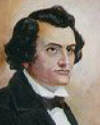 On 3 Oct 1803, John Gorrie was born, an American physician who conducted pioneering work in Apalachicola, Florida, on the artificial manufacture of ice, refrigeration, and air conditioning. On 3 Oct 1803, John Gorrie was born, an American physician who conducted pioneering work in Apalachicola, Florida, on the artificial manufacture of ice, refrigeration, and air conditioning.The significance of his work was recognized posthumously in 1914, by placing his statue in the Capitol, Washington, D.C. This was Florida's choice as one of the two contributions from each state displayed in Statuary Hall. You can learn more by reading 'Apalachicola Birthplace of Mechanical Refrigeration,' a short article from Popular Mechanics magazine (1958) which includes a photo of a replica of Gorrie's first compression machine. |
| Book of the Day | |
| |

| Quotations for Today | |
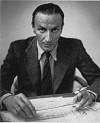 | "A camel is a horse designed by committee." - Sir Alec Issigonis, British engineer who designed the landmark "Mini" car (died 3 Oct 1988)  |
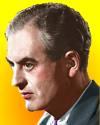 | "Today the world changes so quickly that in growing up we take leave not just of youth but of the world we were young in." - Sir Peter B. Medawar, British zoologist (died 3 Oct 1987) |
 | "Thou, O God, dost sell unto us all good things at the price of labour." - Quotation credited to Leonardo da Vinci, chosen by Florence Rena Sabin (died 3 Oct 1953) for her bookplate, reflecting her outlook on her work.. |
| QUIZ | |
| Before you look at today's web page, see if you can answer some of these questions about the events that happened on this day. Some of the names are very familiar. Others will likely stump you. Tickle your curiosity with these questions, then check your answers on today's web page. | |
| Births | |
 |  John Gorrie, born 3 Oct 1803, was an American physician and early pioneer in the invention of the artificial manufacture of ice, refrigeration, and air conditioning. He built a small steam engine to drive a piston in a cylinder immersed in brine. The piston first compressed the air, and then on the second stroke, when the air expanded, it drew heat from the brine. The chilled brine was used to cool air or make ice. John Gorrie, born 3 Oct 1803, was an American physician and early pioneer in the invention of the artificial manufacture of ice, refrigeration, and air conditioning. He built a small steam engine to drive a piston in a cylinder immersed in brine. The piston first compressed the air, and then on the second stroke, when the air expanded, it drew heat from the brine. The chilled brine was used to cool air or make ice. What first caused him to work on this idea? What first caused him to work on this idea? |
| Deaths | |
 |  Elias Howe (1819-1867) patented his version of a certain important manufacturing machine, but its commercial success required defending against the better-marketed machine by Isaac SingerWhat is Howe's most well-known machine? Elias Howe (1819-1867) patented his version of a certain important manufacturing machine, but its commercial success required defending against the better-marketed machine by Isaac SingerWhat is Howe's most well-known machine? |
| Events | |
 |  On 3 Oct, "Hurricane", the first British atomic bomb was tested at the Monte Bello, Australia, becoming the third country in the world to test such a weapon. The bomb used an improved plutonium implosion bomb similar to the U.S. "Fat Man". In what decade was this test made? On 3 Oct, "Hurricane", the first British atomic bomb was tested at the Monte Bello, Australia, becoming the third country in the world to test such a weapon. The bomb used an improved plutonium implosion bomb similar to the U.S. "Fat Man". In what decade was this test made? |
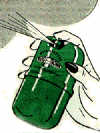 | On 3 Oct 1941, the first aerosol can used in a commercial application was patented, invented by two U.S. Dept. of Agriculture researchers, a chemist and an entomologist, L.D. Goodhue and W.N. Sullivan.What product was contained in theis first aerosol? |
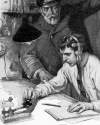 | On 3 Oct 1906, the second international conference on wireless telegraphy in Berlin adopted "SOS" as the international distress signal, replacing an earlier call sign. What call sign did it replace? |
| Answers |
When you have your answers ready to all the questions above, you'll find all the information to check them, and more, on the October 3 web page of Today in Science History. Or, try this link first for just the brief answers. Fast answers for the previous newsletter for October 2: neon, krypton and xenon, and co-discovered argon; Swedish; 23 years; Chicago, Illinois, USA; decade containing the year 1956. |
| Feedback |
 If you enjoy this newsletter, the website, or wish to offer encouragement or ideas, please send feedback by using your mail reader Reply button. If you enjoy this newsletter, the website, or wish to offer encouragement or ideas, please send feedback by using your mail reader Reply button. |

--
If you do not want to receive any more newsletters, this link
To update your preferences and to unsubscribe visit this link
If you do not want to receive any more newsletters, this link
To update your preferences and to unsubscribe visit this link
! !


Δεν υπάρχουν σχόλια:
Δημοσίευση σχολίου