 | TODAY IN SCIENCE HISTORY NEWSLETTER - 7 MAY |
| Feature for Today |
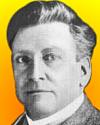 On 7 May 1925, William Lever, Lord Leverhulme, died. He created a massive industry as the Lever Brothers soap manufacting industry with international production. On 7 May 1925, William Lever, Lord Leverhulme, died. He created a massive industry as the Lever Brothers soap manufacting industry with international production.What was remarkable about his philanthropy was the way in which he believed in a six-hour work day for his employees, as just one aspect of his support for his workers' living conditions. At his great soap works of Port Sunlight, England, he built a town to house his employees, with churches, clubs, schools for children, technical schools for adults, an inn, swimming pool, hospital, library, gymnasium, baths, tennis courts and common gardens. An article in a 1919 issue of The Chemical Age, Soap and Sociology, provides an insight into a far higher concern for the workers than is seen in present times! |
| Book of the Day | |
| |

| Quotations for Today | |
 | "Every creative act is a sudden cessation of stupidity." |
| | "A premature attempt to explain something that thrills you will destroy your perceptivity rather than increase it, because your tendency will be to explain away rather than seek out." |
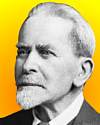 | "The position of the anthropologist of to-day resembles in some sort the position of classical scholars at the revival of learning. To these men the rediscovery of ancient literature came like a revelation, disclosing to their wondering eyes a splendid vision of the antique world, such as the cloistered of the Middle Ages never dreamed of under the gloomy shadow of the minster and within the sound of its solemn bells. To us moderns a still wider vista is vouchsafed, a greater panorama is unrolled by the study which aims at bringing home to us the faith and the practice, the hopes and the ideals, not of two highly gifted races only, but of all mankind, and thus at enabling us to follow the long march, the slow and toilsome ascent, of humanity from savagery to civilization. And as the scholar of the Renaissance found not merely fresh food for thought but a new field of labour in the dusty and faded manuscripts of Greece and Rome, so in the mass of materials that is steadily pouring in from many sides—from buried cities of remotest antiquity as well as from the rudest savages of the desert and the jungle-— we of to-day must recognise a new province of knowledge which will task the energies of generations of students to master." - Sir James George Frazer, Scottish anthropologist (died 7 May 1941)  |
| QUIZ | |
| Before you look at today's web page, see if you can answer some of these questions about the events that happened on this day. Some of the names are very familiar. Others will likely stump you. Tickle your curiosity with these questions, then check your answers on today's web page. | |
| Births | |
| |  Today is the birthday of Sidney Altman, born 7 May 1939, a Canadian-American molecular biologist who won a share of the 1989 Nobel Prize for Chemistry. His work concerned what is known by the letters RNA. Today is the birthday of Sidney Altman, born 7 May 1939, a Canadian-American molecular biologist who won a share of the 1989 Nobel Prize for Chemistry. His work concerned what is known by the letters RNA. Can you give the full name for RNA? Can you give the full name for RNA? |
| | This American inventor and physicist, born 7 May 1909 created the one-step process for developing and printing photographs which was the greatest innovation in photography since the introduction of roll film. He first demonstrated the Polaroid camera in 1947, which gave fully developed prints in 60 seconds. He also applied the name Polaroid to the light-polarizing filter as used in the lenses of sunglasses.Can you name him? |
| Deaths | |
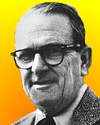 |  Allan MacLeod Cormack was a South African-born American physicist (1924-1998) whose formulation of mathematical algorithms made possible a powerful new disagnostic X-ray imaging process. First described in his paper of 1963, the method used a machine that a series of imaginary slices through a body. For this work, he won a share of a Nobel Prize in 1979.What imaging process did he create? Allan MacLeod Cormack was a South African-born American physicist (1924-1998) whose formulation of mathematical algorithms made possible a powerful new disagnostic X-ray imaging process. First described in his paper of 1963, the method used a machine that a series of imaginary slices through a body. For this work, he won a share of a Nobel Prize in 1979.What imaging process did he create? |
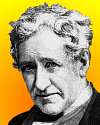 | James Nasmyth (1890-1808) was a British engineer who is remembered primarily for his invention of a steam operated machine.Can you name the machine? |
| Events | |
 On 7 May 1963, it was time for AT&T to replace an earlier communications satellite, and it was launched on this date. On its tenth orbit, it transmitted the first transatlantic TV program seen in colour. It took its name after the earlier famous U.S. satellite, but followed by "II."Can you name the satellite? On 7 May 1963, it was time for AT&T to replace an earlier communications satellite, and it was launched on this date. On its tenth orbit, it transmitted the first transatlantic TV program seen in colour. It took its name after the earlier famous U.S. satellite, but followed by "II."Can you name the satellite? | |
| On 7 May 1955, an important U.S. national vaccination program was suspended due to problems with faulty production of the vaccine. Some children had acquired the disease from the vaccine that was supposed to be prevented.What was the disease? | |
| On 7 May 1952, the concept was first published for what became the next generation of electronic components after the invention of the transistor. The inventor was Geoffrey W.A. Dummer.Can you name this electronic component? | |
| Answers |
When you have your answers ready to all the questions above, you'll find all the information to check them, and more, on the May 7 web page of Today in Science History. Or, try this link first for just the brief answers. Fast answers for the previous newsletter for May 6: Victor Grignard; Robert Edwin Peary; maximite, a high explosive bursting powder 50% more powerful than dynamite; Henry David Thoreau; Polaris submarine; (Lakehurst) New Jersey; mechanical refrigerator. |
| Feedback |
 If you enjoy this newsletter, the website, or wish to offer encouragement or ideas, please send feedback by using your mail reader Reply button. If you enjoy this newsletter, the website, or wish to offer encouragement or ideas, please send feedback by using your mail reader Reply button. |

--
If you do not want to receive any more newsletters, this link
To update your preferences and to unsubscribe visit this link
If you do not want to receive any more newsletters, this link
To update your preferences and to unsubscribe visit this link
! !


Δεν υπάρχουν σχόλια:
Δημοσίευση σχολίου