 | TODAY IN SCIENCE HISTORY NEWSLETTER - 12 JULY |
| Feature for Today |
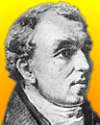 On 12 July 1834, David Douglas died in a tragic accident, in extraordinary fashion, bringing an end to a short life: he was just 35. Yet in his lifetime, he accomplished much in travelling the world to collect specimens and return them to Britain. The Douglas fir is named for him. On 12 July 1834, David Douglas died in a tragic accident, in extraordinary fashion, bringing an end to a short life: he was just 35. Yet in his lifetime, he accomplished much in travelling the world to collect specimens and return them to Britain. The Douglas fir is named for him.A chapter in True Tales of Travel and Adventure (1884), gives an overview of his adventurous nature. Other naturalist travellers are better known, but the story of David Douglas's life is well-worth adding to your knowledge of what it involves to be a pioneering botanical collector. A second extract, David Douglas - Extracts from A Brief Memoir (1919) by Sir William Hooker gives additional insight. |
| Book of the Day | |
| |

| Quotations for Today | |
 | "There are only two sorts of doctors: those who practice with their brains, and those who practice with their tongues." - Sir William Osler, Canadian physician, medical educator and author (born 12 Jul 1849)  |
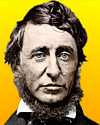 | "Even the facts of science may dust the mind by their dryness, unless they are ... rendered fertile by the dews of fresh and living truth. Knowledge does not come to us by details, but in flashes of light from heaven." - Henry Thoreau, American writer, naturalist, philosopher and poet (born 12 Jul 1817) |
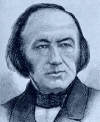 | "Art is I; science is we." - Claude Bernard, French physiologist (born 12 Jul 1813) |
| QUIZ | |
| Before you look at today's web page, see if you can answer some of these questions about the events that happened on this day. Some of the names are very familiar. Others will likely stump you. Tickle your curiosity with these questions, then check your answers on today's web page. | |
| Births | |
 |  R. B. Fuller, born 12 Jul 1895, was an American inventor, educator, author, philosopher, engineer and architect who developed the geodesic dome, the only large dome that can be set directly on the ground as a complete structure, and the only practical kind of building that has no limiting dimensions (i.e., beyond which the structural strength must be insufficient). He held over 2000 patents. R. B. Fuller, born 12 Jul 1895, was an American inventor, educator, author, philosopher, engineer and architect who developed the geodesic dome, the only large dome that can be set directly on the ground as a complete structure, and the only practical kind of building that has no limiting dimensions (i.e., beyond which the structural strength must be insufficient). He held over 2000 patents. What is his middle name? What is his middle name? |
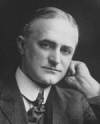 | An American inventor was born on 12 Jul 1854, who was a pioneering manufacturer of photographic materials, including rolled film. He helped to promote large-scale amateur photography. Can you name this man? |
| Deaths | |
| |  Ole Evinrude who died 12 Jul 1934 was a Norwegian inventor and manufacturer whose inspiration began one day while he was rowing his small boat. It struck him that rowing was more difficult than it needed to be, when his purpose was a picnic on a distant small island.What was the invention he devised to solve the problem? Ole Evinrude who died 12 Jul 1934 was a Norwegian inventor and manufacturer whose inspiration began one day while he was rowing his small boat. It struck him that rowing was more difficult than it needed to be, when his purpose was a picnic on a distant small island.What was the invention he devised to solve the problem? |
| Events | |
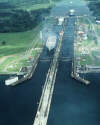 |  On 12 Jul 1920, a 51-mile water tollway had a formal celebration for its opening. It had started use six years earlier, however, when the first ship sailed through it on 15 Aug 1914. But at that time, the first World War was in progress. .What was this waterway? On 12 Jul 1920, a 51-mile water tollway had a formal celebration for its opening. It had started use six years earlier, however, when the first ship sailed through it on 15 Aug 1914. But at that time, the first World War was in progress. .What was this waterway? |
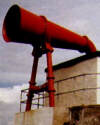 | On 12 Jul 1844, Captain J.N. Taylor of the Royal Navy first demonstrated a device that, at the time, was called a telephone - to mean far-signalling. (It was nothing like, and had nothing to do with what is now called a telephone.) By what name is it now known? |
| Answers |
When you have your answers ready to all the questions above, you'll find all the information to check them, and more, on the July 12 web page of Today in Science History. Or, try this link first for just the brief answers. Fast answers for the previous newsletter for July 11:laser; "IQ" (intelligence quotient); first to use dissected human bodies in the teaching of anatomy in America; Joseph Wilson Swan; zippers instead of stitches for incisions likely to be reopened for further surgery. |
| Feedback |
 If you enjoy this newsletter, the website, or wish to offer encouragement or ideas, please send feedback by using your mail reader Reply button. If you enjoy this newsletter, the website, or wish to offer encouragement or ideas, please send feedback by using your mail reader Reply button. |

--
If you do not want to receive any more newsletters, this link
To update your preferences and to unsubscribe visit this link
If you do not want to receive any more newsletters, this link
To update your preferences and to unsubscribe visit this link
! !


Δεν υπάρχουν σχόλια:
Δημοσίευση σχολίου