 | TODAY IN SCIENCE HISTORY NEWSLETTER - 13 JULY |
| Feature for Today |
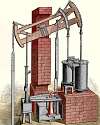 On 13 July 1781, a British patent was taken out by an English mining engineer, Jonathan Carter Hornblower, for the first compound steam engine. Boulton and Watt, who jealously guarded their patent rights as the commercial developers of steam engines, were not impressed. On 13 July 1781, a British patent was taken out by an English mining engineer, Jonathan Carter Hornblower, for the first compound steam engine. Boulton and Watt, who jealously guarded their patent rights as the commercial developers of steam engines, were not impressed.Hornblower's family had shown inventive genius for two generations, and their interesting family history is described in this article from Dictionary of National Biographies (1901). At the end of the web page are links to further information on Hornblower's steam engine design. |
| Book of the Day | |
| |


| Quotations for Today | |
| | "Parasites are not only incredibly diverse; they are also incredibly successful. There are parasitic stretches of DNA in your own genes, some of which are called retrotransposons. Many of the parasitic stretches were originally viruses that entered our DNA. Most of them don't do us any harm. They just copy and insert themselves in other parts of our DNA, basically replicating themselves. Sometimes they hop into other species and replicate themselves in a new host. According to one estimate, roughly one-third to one-half of all human DNA is basically parasitic." - Carl Zimmer, American science writer mostly on evolution and parasites (born 13 Jul 1966)  |
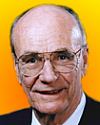 | "All of us are interested in our roots. Generally this interest is latent in youth, and grows with age. Until I reached fifty I thought that history of science was a refuge for old scientists whose creative juices had dried up. Now of course I know that I was wrong! As we grow older, we become more interested in the past, in family history, local history, etc. Astronomy is, or was when I started in it, almost a family." - Donald E. Osterbrock, American astronomer and authority on the history of astornomy (born 13 Jul 1924) |
 | "May every young scientist remember ... and not fail to keep his eyes open for the possibility that an irritating failure of his apparatus to give consistent results may once or twice in a lifetime conceal an important discovery." — Commenting on the discovery of thoron gas because one of Rutherford's students had found his measurements of the ionizing property of thorium were variable. His results even seemed to relate to whether the laboratory door was closed or open. After considering the problem, Rutherford realized a radioactive gas was emitted by thorium, which hovered close to the metal sample, adding to its radioactivity—unless it was dissipated by air drafts from an open door. (Thoron was later found to be argon.) - Patrick M.S. Blackett, English physicist (died 13 Jul 1974) |
| QUIZ | |
| Before you look at today's web page, see if you can answer some of these questions about the events that happened on this day. Some of the names are very familiar. Others will likely stump you. Tickle your curiosity with these questions, then check your answers on today's web page. | |
| Births | |
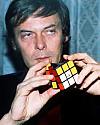 |  A mathematician and educator, born on 13 Jul 1944, invented a toy that became popular in the 1980s. The toy consists of 26 small cubes that rotate on a central axis; nine coloured cube faces, in three rows of three each, form each side of the cube. When the cube arrangement is randomized, the player must then return it to the original condition of faces with matching colours, which is one among 43 quintillion possible configurations. A mathematician and educator, born on 13 Jul 1944, invented a toy that became popular in the 1980s. The toy consists of 26 small cubes that rotate on a central axis; nine coloured cube faces, in three rows of three each, form each side of the cube. When the cube arrangement is randomized, the player must then return it to the original condition of faces with matching colours, which is one among 43 quintillion possible configurations. Can you name this man - and name his national origin? Can you name this man - and name his national origin? |
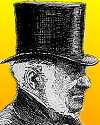 | William Hedley, born 13 Jul 1779, was an English coal-mine official and inventor who was probably the first to build a commercially useful steam locomotive with driving wheels using the natural friction between their rims and the rails. The locomotive he put in service in 1813 to haul 50-ton coal wagons on a five-mile line was not retired until 1862.What was the name of this famous locomotive? |
| Deaths | |
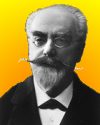 |  Gabriel Lippmann (1845-1921) was a French physicist, who received the Nobel Prize for Physics in 1908 for an advance in photography. Lippmann was a giant of his day in classical physics research, especially in optics and electricity. He worked in Berlin with the famed Hermann von Helmholtz before settling in Paris to head (in 1886) the Sorbonne's Laboratories of Physical Research until his death. His inventions include an instrument for precisely measuring minute differences in electrical power.What was the invention for which he was awarded a Nobel Prize? Gabriel Lippmann (1845-1921) was a French physicist, who received the Nobel Prize for Physics in 1908 for an advance in photography. Lippmann was a giant of his day in classical physics research, especially in optics and electricity. He worked in Berlin with the famed Hermann von Helmholtz before settling in Paris to head (in 1886) the Sorbonne's Laboratories of Physical Research until his death. His inventions include an instrument for precisely measuring minute differences in electrical power.What was the invention for which he was awarded a Nobel Prize? |
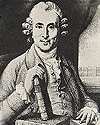 | James Lind (1716-1794) was a Scottish physician, "founder of naval hygiene in England," whose recommendation on the diet of seamen resulted in the prompt eradication of scurvy from the British Navy. (The Dutch had implemented this practice almost two centuries earlier.) Lind also recommended shipboard delousing procedures and suggested the use of hospital ships for sick sailors in tropical ports. In 1761, he arranged for the shipboard distillation of seawater for drinking water. What was the life-saving change in diet he recommended? |
| Events | |
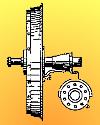 |  On 13 Jul 1836, John Ruggles of Thomaston, Maine received a patent from the U.S. Patent Office, for a traction wheel used in locomotive steam engines. Before this one, there had been 9,957 patents issued. Ruggles was Chairman of the Committee on Patents of the U.S. Senate, and was instrumental in patent law reform. However, in 1838, a Senate select committee investigated corruption charges against Senator Ruggles relating to a patent application.What was the U.S. Patent Number of Ruggles' patent? On 13 Jul 1836, John Ruggles of Thomaston, Maine received a patent from the U.S. Patent Office, for a traction wheel used in locomotive steam engines. Before this one, there had been 9,957 patents issued. Ruggles was Chairman of the Committee on Patents of the U.S. Senate, and was instrumental in patent law reform. However, in 1838, a Senate select committee investigated corruption charges against Senator Ruggles relating to a patent application.What was the U.S. Patent Number of Ruggles' patent? |
 | On 13 Jul of a certain year, a power failure blacked out New York. Starting at about 9 pm, four lightning strikes on high-voltage transmission lines within the course of about half-an-hour knocked out electricity and plunged millions of residents of New York City into darkness. The city was already in the midst of a financial crisis and high unemployment. Responding to the tension of the times, mobs set fires, smashed windows and hauled away food, clothing and appliances. It took 25 hours to restore power to the entire city. About 4,500 people were arrested during the riots, which resulted in damage estimated at $61 million. In which decade did this happen? |
| Answers |
When you have your answers ready to all the questions above, you'll find all the information to check them, and more, on the July 13 web page of Today in Science History. Or, try this link first for just the brief answers. Fast answers for the previous newsletter for July 12: English Channel; differential and integral calculus; Richard Buckminster Fuller; Charles Goodyear; Linotype machine; the decade including the year 1910. |
| Feedback |
 If you enjoy this newsletter, the website, or wish to offer encouragement or ideas, please send feedback by using your mail reader Reply button. If you enjoy this newsletter, the website, or wish to offer encouragement or ideas, please send feedback by using your mail reader Reply button. |

--
If you do not want to receive any more newsletters, this link
To update your preferences and to unsubscribe visit this link
If you do not want to receive any more newsletters, this link
To update your preferences and to unsubscribe visit this link
! !


Δεν υπάρχουν σχόλια:
Δημοσίευση σχολίου