 | TODAY IN SCIENCE HISTORY NEWSLETTER - 9 JULY |
| Feature for Today |
 On 9 July 1819, Elias Howe was born. He was the son of a farmer, but his persistence and inventiveness led to significant progress in the early design of an important machine. Sadly, as with many inventions of his era, he had to spent much effort and money protecting his patents. You can read more — about how he developed his ideas into a commercial product, and how it eventually changed his life — in this Biography of Elias Howe, a chapter from Great Fortunes and How They Were Made (1871). You'll be answering a question about exactly what was his invention in the quiz below. He became famous enough that his life was commemorated with the issue of a 5¢ postage stamp in 1940. On 9 July 1819, Elias Howe was born. He was the son of a farmer, but his persistence and inventiveness led to significant progress in the early design of an important machine. Sadly, as with many inventions of his era, he had to spent much effort and money protecting his patents. You can read more — about how he developed his ideas into a commercial product, and how it eventually changed his life — in this Biography of Elias Howe, a chapter from Great Fortunes and How They Were Made (1871). You'll be answering a question about exactly what was his invention in the quiz below. He became famous enough that his life was commemorated with the issue of a 5¢ postage stamp in 1940. |
| Book of the Day | |
| |

| Quotations for Today | |
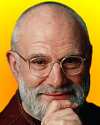 | "Nature gropes and blunders and performs the crudest acts. There is no steady advance upward. There is no design." - Oliver Sacks, English neurologist and writer (born 9 Jul 1933)  |
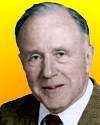 | To Wheeler's comment, "If you haven't found something strange during the day, it hasn't been much of a day," a student responded, "I can't believe that space is that crummy." Wheeler replied: "To disagree leads to study, to study leads to understanding, to understand is to appreciate, to appreciate is to love. So maybe I'll end up loving your theory." - John Wheeler, American physicist (born 9 Jul 1911) |
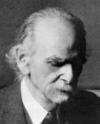 | "There is no fundamental difference in the ways of thinking of primitive and civilized man. A close connection between race and personality has never been established." - Franz Boaz, German-American anthropologist (born 9 Jul 1858) |
| QUIZ | |
| Before you look at today's web page, see if you can answer some of these questions about the events that happened on this day. Some of the names are very familiar. Others will likely stump you. Tickle your curiosity with these questions, then check your answers on today's web page. | |
| Births | |
 |  On 9/10 July 1856, at the stroke of midnight, a Serbian-American inventor was born who designed and built the first alternating current induction motor in 1883. George Westinghouse bought his patents for his system of alternating-current dynamos, transformers, and motors to use the system at Niagara Falls and power the city of Buffalo, NY. On 9/10 July 1856, at the stroke of midnight, a Serbian-American inventor was born who designed and built the first alternating current induction motor in 1883. George Westinghouse bought his patents for his system of alternating-current dynamos, transformers, and motors to use the system at Niagara Falls and power the city of Buffalo, NY.  Can you name this inventor? Can you name this inventor? |
| | Elias Howe, an American inventor, was born 9 Jul 1819. Although he wasn't the first to create a particular type of machine, he was the first in the U.S. to pursue it and was granted a patent on his own machine on 10 Sep 1846. Commercial success came slowly, requiring the defense of his patent against the better marketed machine of another more well-known person in the same industry. Eventually Howe gained riches, but died young at 49. By then, his machines helped revolutionize the factory and in the home.What was Howe's invention? |
| Deaths | |
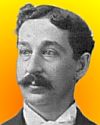 |  The inventor and manufacturer of the safety razor (1855-1932) began in 1895 by producing a crude version of a disposable razor blade. A utopian, he wrote four books translating his business experience into social theories, culminating with The People's Corporation (1924).Can you name this inventor? The inventor and manufacturer of the safety razor (1855-1932) began in 1895 by producing a crude version of a disposable razor blade. A utopian, he wrote four books translating his business experience into social theories, culminating with The People's Corporation (1924).Can you name this inventor? |
| Events | |
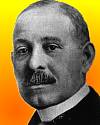 |  On 9 Jul of a certain year, Dr. Daniel Hale Williams, at Provident Hospital in Chicago, performed the world's first successful open heart surgery without using anesthesia by removing a knife from the heart of a bar-fight stabbing victim. He sutured a wound to the pericardium (the fluid sac surrounding the myocardium), from which the patient recovered and lived for several years afterward. Dr. Williams was the only African-American in a group of 100 charter members of the American College of Surgeons in 1913.What was the decade in which this open-heart surgey took place? On 9 Jul of a certain year, Dr. Daniel Hale Williams, at Provident Hospital in Chicago, performed the world's first successful open heart surgery without using anesthesia by removing a knife from the heart of a bar-fight stabbing victim. He sutured a wound to the pericardium (the fluid sac surrounding the myocardium), from which the patient recovered and lived for several years afterward. Dr. Williams was the only African-American in a group of 100 charter members of the American College of Surgeons in 1913.What was the decade in which this open-heart surgey took place? |
| On 9 Jul 1957 an announcement was made of the discovery of an artificial element, and its name was proposed, for an isotope believed found with a half-life of 10 minutes at 8.5 MeV. Later tests showed that no isotopes of the element with that atomic number had such a half-life. The element was truly discovered in Apr 1958. However, IUPAC accepted the name given to the prematurely discovered element.What is the name of this element? | |
| Answers |
When you have your answers ready to all the questions above, you'll find all the information to check them, and more, on the July 9 web page of Today in Science History. Or, try this link first for just the brief answers. Fast answers for the previous newsletter for July 8: Count Ferdinand von Zeppelin; Coca-Cola; leadership to build the atomic-powered submarine, USS Nautilus; Christiaan Huygens; the decade including the year 1800; sundae. |
| Feedback |
 If you enjoy this newsletter, the website, or wish to offer encouragement or ideas, please send feedback by using your mail reader Reply button. If you enjoy this newsletter, the website, or wish to offer encouragement or ideas, please send feedback by using your mail reader Reply button. |

--
If you do not want to receive any more newsletters, this link
To update your preferences and to unsubscribe visit this link
If you do not want to receive any more newsletters, this link
To update your preferences and to unsubscribe visit this link
! !


Δεν υπάρχουν σχόλια:
Δημοσίευση σχολίου