 | TODAY IN SCIENCE HISTORY NEWSLETTER - 9 AUGUST |
| Feature for Today |
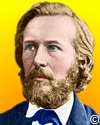 A double feature again today! A double feature again today!On 9 Aug 1919, Ernst Haeckel died, the German naturalist and biologist who separated the animal kingdom into unicellar and multicellular organisms, and was an enthusiastic supporter of Darwin's theories. Not all of Haeckel's published ideas were correct. His article Evolution, from The Library Of Original Sources (1907), must be read with care. Consider it as merely a faulty stepping-stone in the history of biology. Haeckel—as we now know— was in error when he popularized the expression, “Ontogeny recapitulates phylogeny,” meaning that he supposed any animal embryo progresses through all previous evolutionary stages as it develops. Yet as you read, you can appreciate how science is self-correcting, and recognise that one theory leads to another, better one, that replaces it in modern times. Haeckel's understanding may have been mistaken, but he nevertheless brought attention to the subject, and thus contributed to the progress of the discipline. So, read this Haekel's document on Evolution like opening a time-capsule from the 19th century. 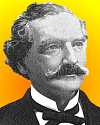 On 9 Aug 1898, Gardner Quincy Colton died. He was an American lecturer who was the first to administer nitrous oxide as an anaesthetic. He gave scientific lectures. Intially, nitrous oxide (laughing gas) was exhibited by Colton as a novelty demonstrating its mirth-provoking effects. It's value as a dental anaesthetic was recognized by Dr. Horace Wells, who adopted its use in his dental practice, though its use did not spread at that time. Eventually, it was Colton, though not a dentist himself, who popularized its use in dentistry to replace the more risky method of using chloroform and ether. Acceptance in the profession was slow, but eventual Colton gained fame from his efforts. An article on Gardner Quincy Colton and Nitrous Oxide Anaesthesia from History of New York City (1884) focusses on this aspect of his life. Yet Colton was known also for more diverse interests. He exhibited a model railway in 1847, using a metallic track in the circuit to supply electricity to the locomotive's motor. He was also a Shakesperean scholar. On 9 Aug 1898, Gardner Quincy Colton died. He was an American lecturer who was the first to administer nitrous oxide as an anaesthetic. He gave scientific lectures. Intially, nitrous oxide (laughing gas) was exhibited by Colton as a novelty demonstrating its mirth-provoking effects. It's value as a dental anaesthetic was recognized by Dr. Horace Wells, who adopted its use in his dental practice, though its use did not spread at that time. Eventually, it was Colton, though not a dentist himself, who popularized its use in dentistry to replace the more risky method of using chloroform and ether. Acceptance in the profession was slow, but eventual Colton gained fame from his efforts. An article on Gardner Quincy Colton and Nitrous Oxide Anaesthesia from History of New York City (1884) focusses on this aspect of his life. Yet Colton was known also for more diverse interests. He exhibited a model railway in 1847, using a metallic track in the circuit to supply electricity to the locomotive's motor. He was also a Shakesperean scholar. |
| Book of the Day | |
| |

| Quotations for Today | |
 | "You don't understand anything until you learn it more than one way." - Marvin Minsky, American cognitive scientist and computer scientist who founded the MIT Artificial Intelligence Project (born 9 Aug 1927)  |
 | "From him (Wilard Bennett) I learned how different a working laboratory is from a student laboratory. The answers are not known!" While an undergraduate, doing experimental measurements in the laboratory of his professor, at Ohio State University. - William Fowler, American astrophysicist, Nobel Prize winner (1983), who spent decades of his life measuring the rates nuclear reactions of astrophysical interest (born 9 Aug 1911) |
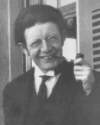 | "To understand is to invent." - Jean Piaget, child psychologist (born 9 Aug 1896) |
| QUIZ | |
| Before you look at today's web page, see if you can answer some of these questions about the events that happened on this day. Some of the names are very familiar. Others will likely stump you. Tickle your curiosity with these questions, then check your answers on today's web page. | |
| Births | |
| |  Jean Piaget, born 9 Aug 1896, was a famous child psychologist and zoologist. By age 15 he was contributing articles on molluscs to journals of zoology, and his doctoral degree (1918) thesis was on the distribution of molluscs in the Valaisian Alps. Thereafter, he turned to researching how mental growth develops in several successive stages from infancy to adulthood - “the embryology of intelligence” - for which he became distinguished. Jean Piaget, born 9 Aug 1896, was a famous child psychologist and zoologist. By age 15 he was contributing articles on molluscs to journals of zoology, and his doctoral degree (1918) thesis was on the distribution of molluscs in the Valaisian Alps. Thereafter, he turned to researching how mental growth develops in several successive stages from infancy to adulthood - “the embryology of intelligence” - for which he became distinguished. What was his nationality? What was his nationality? |
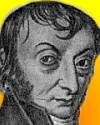 | An Italian chemist and physicist. born 9 Aug 1776, is very well known for his Law that states that under conditions of constant pressure and temperature, there is a direct relationship between the volume and number of moles for an ideal gas. (6.022 x 10²³ units per mole of a substance.)Can you name this scientist? |
| Deaths | |
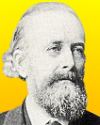 |  An English chemist (1825-1899) was one of the first investigators in the field of structural chemistry, invented the chemical bond, and became known as the father of valency. He studied organometallic compounds - hybrid molecules of the familiar organic non-metallic elements (such as carbon, hydrogen, nitrogen, sulphur, phosphorus) with true metals. By 1850, he had prepared small organic molecules containing such metals as zinc. Subsequently, he devised the theory of valence (announced 10 May 1852), that each type of atom has a fixed capacity for combination with other atoms. For his investigations on water purification and for his services to the government as water analyst, he was knighted in 1897.Can you name this chemist? An English chemist (1825-1899) was one of the first investigators in the field of structural chemistry, invented the chemical bond, and became known as the father of valency. He studied organometallic compounds - hybrid molecules of the familiar organic non-metallic elements (such as carbon, hydrogen, nitrogen, sulphur, phosphorus) with true metals. By 1850, he had prepared small organic molecules containing such metals as zinc. Subsequently, he devised the theory of valence (announced 10 May 1852), that each type of atom has a fixed capacity for combination with other atoms. For his investigations on water purification and for his services to the government as water analyst, he was knighted in 1897.Can you name this chemist? |
| Events | |
 On 9 Aug 1956, the first statewide, state-supported educational television network went on the air in U.S.In which state? On 9 Aug 1956, the first statewide, state-supported educational television network went on the air in U.S.In which state? | |
| On 9 Aug 1945, during WW II, a second atomic bomb was dropped on another Japanese city, by the Americans.What was this second city to be hit with an A-bomb? | |
| Answers |
When you have your answers ready to all the questions above, you'll find all the information to check them, and more, on the August 9 web page of Today in Science History. Or, try this link first for just the brief answers. Fast answers for the previous newsletter for August 8: black holes; cyclotron; jet aircraft engine; mimeograph - stencil duplicator; the decade including the year 1829. |
| Feedback |
 If you enjoy this newsletter, the website, or wish to offer encouragement or ideas, please send feedback by using your mail reader Reply button. If you enjoy this newsletter, the website, or wish to offer encouragement or ideas, please send feedback by using your mail reader Reply button. |

--
If you do not want to receive any more newsletters, this link
To update your preferences and to unsubscribe visit this link
If you do not want to receive any more newsletters, this link
To update your preferences and to unsubscribe visit this link
! !


Δεν υπάρχουν σχόλια:
Δημοσίευση σχολίου