 | TODAY IN SCIENCE HISTORY NEWSLETTER - 10 AUGUST |
| Feature for Today |
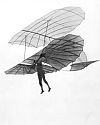 On 10 Aug 1896, Otto Lilienthal died, the German aeronautical engineer and inventor whose pioneering studies formed a foundation for Octave Chanute and the Wright brothers. With his brother, Gustav, Otto designed various gliders and made 2000 flights. On 10 Aug 1896, Otto Lilienthal died, the German aeronautical engineer and inventor whose pioneering studies formed a foundation for Octave Chanute and the Wright brothers. With his brother, Gustav, Otto designed various gliders and made 2000 flights.One of his glider designs featured bat-like wings, which folded for storage in a fashion similar to the bat. You can see illustrations and read a description of this invention in Lilienthal's U.S. Patent 544,816 which was issued on 20 Aug 1895, a year before his death. Although he had survived other crashes from his flights, but on 9 Aug 1896 he took his last fall from 56 feet, broke his spine, and died the following day. 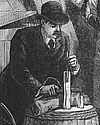 On 10 Aug 1859, the first full-time Inspector of Milk in the U.S. was one appointed by the city of Boston, Massachusetts. Although today, this might seem a quaint official position, in that era, the work of a milk inspector was of life-saving importance. It was a time when “swill milk,” was common, the poor, thin output of cows kept in unsanitary conditions and fed on distillery refuse. Contaminated milk was a serious public health hazard, sometimes deadly to infants. Even milk from healthier cows was often diluted, reducing its nutritional value. The Annual Report of the Boston Inspector of Milk (1871) gives a brief background to the establishment of the office of the Inspector of Milk. The web page includes the full image from which the thumbnail alongside here was taken, showing a milk inspector using a lactometer to test the density of milk to determine its purity. On 10 Aug 1859, the first full-time Inspector of Milk in the U.S. was one appointed by the city of Boston, Massachusetts. Although today, this might seem a quaint official position, in that era, the work of a milk inspector was of life-saving importance. It was a time when “swill milk,” was common, the poor, thin output of cows kept in unsanitary conditions and fed on distillery refuse. Contaminated milk was a serious public health hazard, sometimes deadly to infants. Even milk from healthier cows was often diluted, reducing its nutritional value. The Annual Report of the Boston Inspector of Milk (1871) gives a brief background to the establishment of the office of the Inspector of Milk. The web page includes the full image from which the thumbnail alongside here was taken, showing a milk inspector using a lactometer to test the density of milk to determine its purity. |
| Book of the Day | |
| |

| Quotations for Today | |
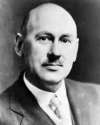 | "There can be no thought of finishing, for aiming at the stars, both literally and figuratively, is the work of generations, but no matter how much progress one makes there is always the thrill of just beginning. " - American physicist, rocket engineer and inventor, in the quiz below (died 10 Aug 1945)  |
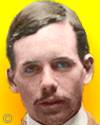 | "The whole subject of the X rays is opening out wonderfully, Bragg has of course got in ahead of us, and so the credit all belongs to him, but that does not make it less interesting. We find that an X ray bulb with a platinum target gives out a sharp line spectrum of five wavelengths which the crystal separates out as if it were a diffraction grating. In this way one can get pure monochromatic X rays. Tomorrow we search for the spectra of other elements. There is here a whole new branch of spectroscopy, which is sure to tell one much about the nature of an atom. " - Henry Moseley, English physicist (died Aug 1911) |
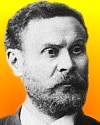 | "Opfer müssen gebracht werden!" "Sacrifices must be made!" Remark made when near death after breaking his spine in an airplane crash in a glider of his design. - Otto Lilienthal, German aeronautical pioneer, engineer and inventor (died 10 Aug 1896) |
| QUIZ | |
| Before you look at today's web page, see if you can answer some of these questions about the events that happened on this day. Some of the names are very familiar. Others will likely stump you. Tickle your curiosity with these questions, then check your answers on today's web page. | |
| Births | |
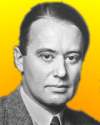 |  Arne Tiselius, born 10 Aug 1902, was a Swedish biochemist who won the Nobel Prize for Chemistry in 1948 for his work on electrophoresis and other new methods of separating and detecting colloids and serum proteins. Using the technique on blood serum Tiselius confirmed the existence of four different groups of proteins - albumins and alpha, beta, and gamma globulins. Arne Tiselius, born 10 Aug 1902, was a Swedish biochemist who won the Nobel Prize for Chemistry in 1948 for his work on electrophoresis and other new methods of separating and detecting colloids and serum proteins. Using the technique on blood serum Tiselius confirmed the existence of four different groups of proteins - albumins and alpha, beta, and gamma globulins.  What is electropheresis? What is electropheresis? |
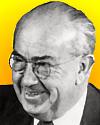 | Charles Darrow, born 10 Aug 1889, invented a classic board game. Can you name this game? |
| Deaths | |
| |  A physicist (1882-1945) became known as the father of modern American rocketry. Can you name this pioneer? A physicist (1882-1945) became known as the father of modern American rocketry. Can you name this pioneer? |
| Events | |
 On 10 Aug 1846, an Act of Congress signed by President James K. Polk established a trust to administer the generous bequest of James Smithson, an amount over $500,000. In 1826, James Smithson, a British scientist, drew up his last will and testament, naming his nephew as beneficiary. He stipulated that, should the nephew die without heirs (as he would in 1835), the estate should go “to the United States of America, to found ... an establishment for the increase and diffusion of knowledge among men.”What name did he specify for this scientific establishment, by which it is known today? On 10 Aug 1846, an Act of Congress signed by President James K. Polk established a trust to administer the generous bequest of James Smithson, an amount over $500,000. In 1826, James Smithson, a British scientist, drew up his last will and testament, naming his nephew as beneficiary. He stipulated that, should the nephew die without heirs (as he would in 1835), the estate should go “to the United States of America, to found ... an establishment for the increase and diffusion of knowledge among men.”What name did he specify for this scientific establishment, by which it is known today? | |
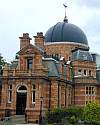 | On 10 Aug of a certain year, King Charles II laid the foundation stone of the Royal Observatory, Greenwich, England.In what century did this take place? |
| Answers |
When you have your answers ready to all the questions above, you'll find all the information to check them, and more, on the August 10 web page of Today in Science History. Or, try this link first for just the brief answers. Fast answers for the previous newsletter for August 9: Swiss; Count Amedeo Avogadro; Sir Edward Frankland; Alabama; Nagasaki. |
| Feedback |
 If you enjoy this newsletter, the website, or wish to offer encouragement or ideas, please send feedback by using your mail reader Reply button. If you enjoy this newsletter, the website, or wish to offer encouragement or ideas, please send feedback by using your mail reader Reply button. |

--
If you do not want to receive any more newsletters, this link
To update your preferences and to unsubscribe visit this link
If you do not want to receive any more newsletters, this link
To update your preferences and to unsubscribe visit this link
! !


Δεν υπάρχουν σχόλια:
Δημοσίευση σχολίου