 | TODAY IN SCIENCE HISTORY NEWSLETTER - 17 AUGUST |
| Feature for Today |
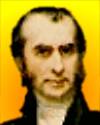 On 17 Aug 1798, Thomas Hodgkin was born, who described (1832) the disease known by his name—Hodgkin's Disease. He was the most prominent British pathologist of his time and a pioneer in preventive medicine. As a social activist, he advocated an end to the exploitation of child labour and the freeing of slaves. On 17 Aug 1798, Thomas Hodgkin was born, who described (1832) the disease known by his name—Hodgkin's Disease. He was the most prominent British pathologist of his time and a pioneer in preventive medicine. As a social activist, he advocated an end to the exploitation of child labour and the freeing of slaves.In a lecture he gave somewhat before 1830—getting on for two centuries ago, he demonstrated his early insights for occupational health. We might claim to be appalled by the environmental conditions and disregard for workers' health of that era, until we consider the child labour and sweat-shop clothing factories that so sadly remain in various less-developed parts of the world, and where protections of law are inadequate. Hodgkin laments that in his time, the consumers of fashion supported and encouraged the evil inhumanity of such manufacturing regimes. Such concern sadly still rings as true nearly two centuries later. As you read this excerpt from the lecture, as later published in The Means of Promoting and Preserving Health (1835), you will sense his passionate feelings against child labour, especially as chimney sweeps. You will also find he had a keen sense of the need for attention to occupational health in a broad selection of trades. |
| Book of the Day | |
| |

| Quotations for Today | |
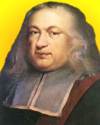 | "Et peut-�tre la posterit� me saura gr� de lui avoir fait conna�tre que les Anciens n’ont pas tout su." "And perhaps, posterity will thank me for having shown that the ancients did not know everything. " - Pierre de Fermat, French mathematician who has been called the founder of the modern theory of numbers; he left Fermat's Last Theorem which remained without recorded solution until 1994 (born 17 Aug 11601)  |
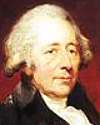 | "I sell here, Sir, what all the world desires to have—POWER." (About his factory.) - Matthew Boulton, British engineer and manufacturer (died 17 Aug 1809) |
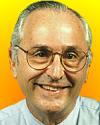 | "Every time we get slapped down, we can say, Thank you Mother Nature, because it means we're about to learn something important." - John N. Bahcall, American astrophysicist who pioneered the development of neutrino astrophysics in the early 1960s. He theorized that neutrinos (subatomic particles that have no charge and exceedingly weak interaction with matter) can be used to understanding how stars shine (died 17 Aug 2005) |
| QUIZ | |
| Before you look at today's web page, see if you can answer some of these questions about the events that happened on this day. Some of the names are very familiar. Others will likely stump you. Tickle your curiosity with these questions, then check your answers on today's web page. | |
| Births | |
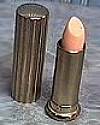 |  Hazel Bishop, born 17 Aug 1906, was a chemist and cosmetic executive who made an indelible mark on the cosmetics industry by inventing a new lipstick. In 1949, after a long series of home experiments, in a kitchen fitted out as a laboratory, she perfected her new lipstick, and began its manufacture and marketing the following year. Hazel Bishop, born 17 Aug 1906, was a chemist and cosmetic executive who made an indelible mark on the cosmetics industry by inventing a new lipstick. In 1949, after a long series of home experiments, in a kitchen fitted out as a laboratory, she perfected her new lipstick, and began its manufacture and marketing the following year. What was new about this lipstick? What was new about this lipstick? |
| | Thomas Hodgkin, born 17 Aug 1798, was an English physician who early described (1832) the disease that bears his name. He was the most prominent British pathologist of his time and a pioneer in preventive medicine. He devoted much of his life to philanthropic causes such as the relief of suffering in under-developed countries and the freeing of slaves.What is affected in Hodkin's Disease? |
| Deaths | |
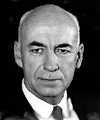 |  Robert Rowe Gilruth (1913-2000) was an American aerospace scientist, engineer, and a pioneer of the Mercury, Gemini, and Apollo space programs. He developed the X-1 plane. Gilruth directed Project Mercury, the initial program for achieving manned space flight. Under his leadership, the first American astronaut orbited the Earth only a little over 3 years after NASA was created.What was the X-1 plane first to accomplish? Robert Rowe Gilruth (1913-2000) was an American aerospace scientist, engineer, and a pioneer of the Mercury, Gemini, and Apollo space programs. He developed the X-1 plane. Gilruth directed Project Mercury, the initial program for achieving manned space flight. Under his leadership, the first American astronaut orbited the Earth only a little over 3 years after NASA was created.What was the X-1 plane first to accomplish? |
| | Matthew Boulton (1728-1809) who British manufacturer and engineer who financed and introduced the steam engine. After meeting the inventor of a practical steam engine, he became fascinated by the development of steam power and produced steam engines which sold all over the world. In 1786, Boulton established the first steam powered coining presses at his mint at Soho, Birmingham.Who was the inventor with whom Boulton made the steam engine widely available to power the Industrial Revolution? |
| Events | |
 On 17 Aug of a certain year, the first pedestrian to be knocked down and killed by a motor vehicle in Britain was Mrs Bridget Driscoll of Croydon, Surrey, who was hit by a car travelling at 4 mph. In what decade did this accident happen? On 17 Aug of a certain year, the first pedestrian to be knocked down and killed by a motor vehicle in Britain was Mrs Bridget Driscoll of Croydon, Surrey, who was hit by a car travelling at 4 mph. In what decade did this accident happen? | |
| On 17 Aug 1877, Asaph Hall discovered a second of Mars. He had discovered the first moon of Mars, Deimos, just six days earlier.Can you name this moon? | |
| Answers |
When you have your answers ready to all the questions above, you'll find all the information to check them, and more, on the August 17 web page of Today in Science History. Or, try this link first for just the brief answers. Fast answers for the previous newsletter for August 16: the first colour photographic plate; to establish a basis for the unit of length in the metric system; helium; spectrum analysis; 16.04 miles; Siam. |
| Feedback |
 If you enjoy this newsletter, the website, or wish to offer encouragement or ideas, please send feedback by using your mail reader Reply button. If you enjoy this newsletter, the website, or wish to offer encouragement or ideas, please send feedback by using your mail reader Reply button. |
--
If you do not want to receive any more newsletters, Unsubscribe
To update your preferences and to unsubscribe visit this link


Δεν υπάρχουν σχόλια:
Δημοσίευση σχολίου