 | TODAY IN SCIENCE HISTORY NEWSLETTER - 13 AUGUST |
| Feature for Today |
A medical triple feature for this newsletter begins with two people who died not quite a half-century apart on this day. But they had something in common—caring about clean bed sheets for their hospital patients. That, and much more, make them both giants in the history of improvement of hospital conditions. A third physician, who also died on this day, introduced a new techique for diagnosis that is a staple for today's doctors, and makes him also worthy of special recognition. You have undoubtedly been touched by his invention.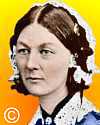 On 13 Aug 1910, Florence Nightingale died, the English nurse and statistician, known as “The Lady With The Lamp,” who tirelessly worked for the improvement of nursing practices following her experience in the Crimean War, and continued to raise respect for nurses as medical professionals. On 13 Aug 1910, Florence Nightingale died, the English nurse and statistician, known as “The Lady With The Lamp,” who tirelessly worked for the improvement of nursing practices following her experience in the Crimean War, and continued to raise respect for nurses as medical professionals.In 1855, she provided the House of Commons Inquiry on Scutari, with a Report upon the State of the Hospitals of the British Army in Crimea and Scutari. In it, she detailed the problems with requisitioning necessary supplies. She continued with information on how she provided the wounded soldiers with clean shirts, and the regimen she introduced for washing clothes, sheets and bandages. A relatively short read, this is an interesting insight into the difficulties she faced and attempted to overcome, all in her own words. 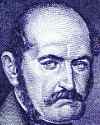 On 13 Aug 1865, Ignaz Semmelweis died, the German physician who greatly reduced deaths from puerperal (“child bed”) fever by introducing antisepsis into medical practice. He insisted on health workers rigorously handwashing between patients, and clean bed sheets. His efforts met with much resistance from a profession of doctors too unwilling to change their habits. But he persisted, and looking back, we know he right and give him more respect for what he accomplished than he received during his lifetime. His struggles, and sad circumstances of his own death, are a stimulating read in this article Pathfinders in Medicine: Semmelweis, the Obstetrician from Medical Review of Reviews (1912). On 13 Aug 1865, Ignaz Semmelweis died, the German physician who greatly reduced deaths from puerperal (“child bed”) fever by introducing antisepsis into medical practice. He insisted on health workers rigorously handwashing between patients, and clean bed sheets. His efforts met with much resistance from a profession of doctors too unwilling to change their habits. But he persisted, and looking back, we know he right and give him more respect for what he accomplished than he received during his lifetime. His struggles, and sad circumstances of his own death, are a stimulating read in this article Pathfinders in Medicine: Semmelweis, the Obstetrician from Medical Review of Reviews (1912).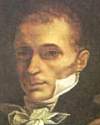 On 13 Aug 1826, René Laënnec died, a French physician whose lasting contribution to medicine is described in an article Laennec And Auscultation, from Pathfinders in Medicine (1912), which also gives you as reader an insight into his life and times. On 13 Aug 1826, René Laënnec died, a French physician whose lasting contribution to medicine is described in an article Laennec And Auscultation, from Pathfinders in Medicine (1912), which also gives you as reader an insight into his life and times. |
| Book of the Day | |
| |

| Quotations for Today | |
| | "But we have reason to think that the annihilation of work is no less a physical impossibility than its creation, that is, than perpetual motion." - Sir George Gabriel Stokes, British theoretical physicist known for his law of viscosity, and for Stokes' theorem, in vector analysis. Stokes also worked in optics, investigated the nature of fluorescence and was a founder of geodesy with his study of variations in gravity (born 13 Aug 1819)  |
| | "Apprehension, uncertainty, waiting, expectation, fear of surprise, do a patient more harm than any exertion. Remember he is face to face with his enemy all the time." - Florence Nightingale, English nurse and statistician (died 13 Aug 1910) |
| | "In my opinion the separation of the c- and ac-stars is the most important advancement in stellar classification since the trials by Vogel and Secchi ... To neglect the c-properties in classifying stellar spectra, I think, is nearly the same thing as if a zoologist, who has detected the deciding differences between a whale and a fish, would continue classifying them together." - Hermann Carl Vogel, German astronomer (died 13 Aug 1907) |
| QUIZ | |
| Before you look at today's web page, see if you can answer some of these questions about the events that happened on this day. Some of the names are very familiar. Others will likely stump you. Tickle your curiosity with these questions, then check your answers on today's web page. | |
| Births | |
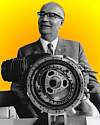 |  Felix Wankel, born 13 Aug 1902, was a German engineer and inventor of the Wankel internal combustion engine. Advantages of the Wankel engine include light weight, few moving parts and compactness. Felix Wankel, born 13 Aug 1902, was a German engineer and inventor of the Wankel internal combustion engine. Advantages of the Wankel engine include light weight, few moving parts and compactness. What was Wankel's novel innovation in his engine? What was Wankel's novel innovation in his engine? |
 | Born 13 Aug 1888, a Scottish inventor and engineer, was a father of TV. In fact, he was the first man to televise pictures of objects in motion.Can you name this man? |
| Deaths | |
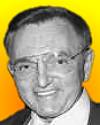 |  Jack Ryan (1926-1991) was an inventor with 1000 patents. Which of the following did he invent: Barbie, Military Missiles, Hot Wheels? Jack Ryan (1926-1991) was an inventor with 1000 patents. Which of the following did he invent: Barbie, Military Missiles, Hot Wheels? |
| | René-Théophile-Hyacinthe Laënnec (1781-1826) was a French physician whose invention means he is generally considered the father of chest medicine. What device did he invent? |
| Events | |
 |  On 13 Aug 1642, Christiaan Huygens discovered a Martian feature.What feature on Mars did he observe? On 13 Aug 1642, Christiaan Huygens discovered a Martian feature.What feature on Mars did he observe? |
| On 13 Aug of a certain year, William Gray of Hartford, Connecticut, received the first U.S. patent for a coin-operated telephone. In what decade was this patent issued? | |
| Answers |
When you have your answers ready to all the questions above, you'll find all the information to check them, and more, on the August 13 web page of Today in Science History. Or, try this link first for just the brief answers. Fast answers for the previous newsletter for August 12: Erwin Schrödinger; roots outwards and stems inwards; transistor; The Rocket; after the spacecraft of the Star Trek TV series; zebra; Joseph Lister. |
| Feedback |
 If you enjoy this newsletter, the website, or wish to offer encouragement or ideas, please send feedback by using your mail reader Reply button. If you enjoy this newsletter, the website, or wish to offer encouragement or ideas, please send feedback by using your mail reader Reply button. |

--
If you do not want to receive any more newsletters, this link
To update your preferences and to unsubscribe visit this link
If you do not want to receive any more newsletters, this link
To update your preferences and to unsubscribe visit this link
! !


Δεν υπάρχουν σχόλια:
Δημοσίευση σχολίου