 | TODAY IN SCIENCE HISTORY NEWSLETTER - 6 SEPTEMBER |
| Feature for Today |
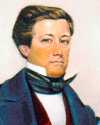 On 6 Sep 1811, James Melville Gilliss was born, the U.S. naval officer and astronomer who founded the Naval Observatory in Washington, D.C., the first U.S. observatory devoted entirely to research. When he started out, he taught himself astronomy, at a time when there was no fixed astronomical observatory in the U.S., and very little formal instruction. In 1838, he became officer-in-charge of the Depot of Charts and Instruments, forerunner of the U. S. Naval Observatory. Accurate star charts were essential for the navigation of ships, since they provided for the measurement of an observer's position. Upon his death, a Biographical Memoir of James Melville Gilliss was presented before the National Academy (1866). As you read it, you can reflect on the extensive, dedicated work required building up the body of knowledge for effective navigation at sea, long before GPS location finding was as available from the nearest cell phone. The name of Gilliss now goes mostly without recognition, but his work was of great significance in his era. On 6 Sep 1811, James Melville Gilliss was born, the U.S. naval officer and astronomer who founded the Naval Observatory in Washington, D.C., the first U.S. observatory devoted entirely to research. When he started out, he taught himself astronomy, at a time when there was no fixed astronomical observatory in the U.S., and very little formal instruction. In 1838, he became officer-in-charge of the Depot of Charts and Instruments, forerunner of the U. S. Naval Observatory. Accurate star charts were essential for the navigation of ships, since they provided for the measurement of an observer's position. Upon his death, a Biographical Memoir of James Melville Gilliss was presented before the National Academy (1866). As you read it, you can reflect on the extensive, dedicated work required building up the body of knowledge for effective navigation at sea, long before GPS location finding was as available from the nearest cell phone. The name of Gilliss now goes mostly without recognition, but his work was of great significance in his era. |
| Book of the Day | |
|
| Quotations for Today | |
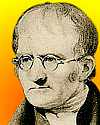 | Chemical analysis and synthesis go no farther than to the separation of particles one from another, and to their reunion. No new creation or destruction of matter is within the reach of chemical agency. We might as well attempt to introduce a new planet into the solar system, or to annihilate one already in existence, as to create or destroy a particle of hydrogen. - John Dalton, English chemist, physicist, meteorologist and teacher (born c. 6 Sep 1766).  |
 | [T]he history of science has proved that fundamental research is the lifeblood of individual progress and that the ideas that lead to spectacular advances spring from it. - Sir Edward Appleton, English physicist (born 6 Sep 1892). |
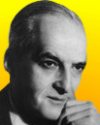 | I might paraphrase Churchill and say: never have I received so much for so little. [Exemplifying humility, upon accepting the Nobel Prize in Chemistry.] - Luis Federico Leloir, Argentinian biochemist (born 6 Sep 1906). |
| Quiz | |
| Before you look at today's web page, see if you can answer some of these questions about the events that happened on this day. Some of the names are very familiar. Others will likely stump you. Tickle your curiosity with these questions, then check your answers on today's web page. | |
| Births | |
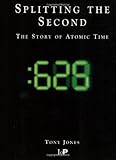
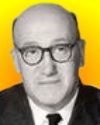 | Louis Essen, born 6 Sep 1908, invented the first practical atomic clock. He built a atomic-beam clock utilizing the natural frequencies of an atom that are inherently stable over time and space to greatly increase the accuracy of time-keeping. The atoms of which element were used in Essen's atomic clock? The atoms of which element were used in Essen's atomic clock? |
| | On 6 Sep 1766, John Dalton, a giant in the history of chemistry was born - an English scientist, known as one of the fathers of modern physical science. What was his notable contribution to chemistry? |
| Deaths | |
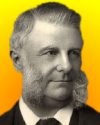 | Sir Frederick Abel (1827-1902) was an English chemist and military explosives specialist who co-invented cordite (1889) to replace gunpowder in weapons What was the advantage of cordite over gunpowder? |
| On 6 Sep 1970, Arthur Herrington died, an American engineer and manufacturer who developed a series of military vehicles. His best known served various functions in World War II, including as a litterbearer, machine gun firing mount, reconnaissance vehicle, pickup truck, front line limousine, ammo bearer, wire-layer and taxi. What was this vehicle? | |
| Events | |
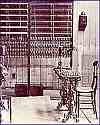 | On 6 Sep of a certain year, the first British telephone exchange opened in Lombard Street, London. What was the decade of this event? |
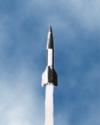 | On 6 Sep 1947, the aircraft-carrier Midway became the first U.S. vessel from which a long-range rocket was launched. It was fired from the flight deck from a position at sea several hundred miles of the east coast of the U.S. the rocket travelled about 6 miles. However, the rocket being observed was not American-made. Why was the rocket used for the first U.S. vessel launch not American-made? |
| Answers |
| When you have your answers ready to all the questions above, you'll find all the information to check them, and more, on the September 6 web page of Today in Science History. Or, try this link first for just the brief answers. Fast answers for the previous newsletter for September 5: canal rays • Euclid • suicide • anthropology • decade of 1887 • estimated seven miles. |
| Feedback |
 If you enjoy this newsletter, the website, or wish to offer encouragement or ideas, please send feedback by using your mail reader Reply button. If you enjoy this newsletter, the website, or wish to offer encouragement or ideas, please send feedback by using your mail reader Reply button. Your click on a StumbleUpon, Google+ or Facebook social button on the site webpages is also a welcome sign of appreciation. Thank you for using them. |
| Copyright |
| To find citations for quotations go to the corresponding webpage by clicking on the “quotes” balloon icon. Sources for the thumbnails appear on today's webpage with the corresponding item. � This newsletter is copyright 2013 by todayinsci.com. Please respect the Webmaster's wishes and do not put copies online of the Newsletter � or any Today in Science History webpage. (If you already have done so, please remove them. Thank you.) Offline use in education is encouraged such as a printout on a bulletin board, or projected for classroom viewing. Online, descriptive links to our pages are welcomed, as these will provide a reader with the most recent revisions, additions and/or corrections of a webpage. For any other copyright questions, please contact the Webmaster by using your mail reader Reply button. |
--
If you do not want to receive any more newsletters, Unsubscribe
To update your preferences and to unsubscribe visit this link


Δεν υπάρχουν σχόλια:
Δημοσίευση σχολίου