 | TODAY IN SCIENCE HISTORY NEWSLETTER - 11 OCTOBER |
| Feature for Today |
 On 11 Oct 1844, Henry John Heinz was born, one of those people whose name is instantly recognizable - in this case because of his famous “57 varieties” of food products. Yet, like a number of those other people, he remains enigmatic - seemingly so well-known - but someone you really don't know. On 11 Oct 1844, Henry John Heinz was born, one of those people whose name is instantly recognizable - in this case because of his famous “57 varieties” of food products. Yet, like a number of those other people, he remains enigmatic - seemingly so well-known - but someone you really don't know. For example, do you know: How did he get started in the business? What did he believe in to create his success? How extensive was his philanthropy? These questions are answered, with more background on this remarkable man, in a chapter on Henry John Heinz from Financial Giants of America (1893). |
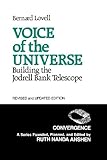
| Book of the Day | ||
|
| Quotations for Today | |
| | To do a common thing uncommonly well brings success. A favorite maxim. - Henry John Heinz, American businessman (born 11 Oct 1844).  |
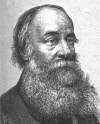 | The animal frame, though destined to fulfill so many other ends, is as a machine more perfect than the best contrived steam-engine�that is, is capable of more work with the same expenditure of fuel. - James Prescott Joule, English physicist (died 11 Oct 1889). |
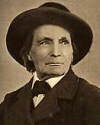 | Permanence of instinct must go with permanence of form...The history of the present must teach us the history of the past. [Referring to studying fossil remains of the weevil, largely unchanged to the present day.] - Jean Henri Fabre, French entomologist and author (died 11 Oct 1915). |
| Quiz | |
| Before you look at today's web page, see if you can answer some of these questions about the events that happened on this day. Some of the names are very familiar. Others will likely stump you. Tickle your curiosity with these questions, then check your answers on today's web page. | |
| Births | |
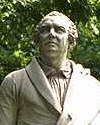 | A German astronomer and physician, born 11 Oct 1758, is known for a paradox which asks “why is the night sky dark if there are so many bright stars all around to light it?” Can you name this scientist? Can you name this scientist? |
| | Fausto Elhuyar, born 11 Oct 1755, was a Spanish chemist and mineralogist who in partnership with his brother Juan Jos� was the first to isolate a new metallic element. (Carl Scheele in 1781 was first to recognize its elemental nature. It was found in a mineral which had been known since about 1758 by a Swedish name meaning “heavy stone.”) Can you name this element? |
| Deaths | |
| | James Prescott Joule (1818-1889) was an English physicist and inventor who established that the various forms of energy - mechanical, electrical, and heat - are basically the same. This knowledge became the basis of which law? |
| Events | |
 | On 11 Oct of a certain year, the last hand-cranked (magneto) telephones in the United States went out of service as 440 telephone customers in Bryant Pond, Maine, were switched to direct-dial service. In what decade was the hand-cranked telephone finally retired in the U.S.? |
 | On 11 Oct of a certain year, at Jodrell Bank, the world's largest radio telescope, designed by Sir Bernard Lovell, began operating. Though the telescope is popularly known for tracking and communicating with man-made satellites, its prime function is the study of the universe by means of radio waves emitted by distatant stars. In which decade did the Jodrell Bank radiotelescope become operational? |
| Answers |
| When you have your answers ready to all the questions above, you'll find all the information to check them, and more, on the October 11 web page of Today in Science History. Or, try this link first for just the brief answers. Fast answers for the previous newsletter for October 10: a beam of electrons scattered by a crystal produces a diffraction pattern • hydrogen • automatic lubrication • the decade containing the year 1933 • celluloid. |
| Feedback |
 If you enjoy this newsletter, the website, or wish to offer encouragement or ideas, please send feedback by using your mail reader Reply button. If you enjoy this newsletter, the website, or wish to offer encouragement or ideas, please send feedback by using your mail reader Reply button. Your click on a StumbleUpon, Google+ or Facebook social button on the site webpages is also a welcome sign of appreciation. Thank you for using them. |
| Copyright |
| To find citations for quotations go to the corresponding webpage by clicking on the “quotes” balloon icon. Sources for the thumbnails appear on today's webpage with the corresponding item. � This newsletter is copyright 2013 by todayinsci.com. Please respect the Webmaster's wishes and do not put copies online of the Newsletter � or any Today in Science History webpage. (If you already have done so, please remove them. Thank you.) Offline use in education is encouraged such as a printout on a bulletin board, or projected for classroom viewing. Online, descriptive links to our pages are welcomed, as these will provide a reader with the most recent revisions, additions and/or corrections of a webpage. For any other copyright questions, please contact the Webmaster by using your mail reader Reply button. |
--
If you do not want to receive any more newsletters, Unsubscribe
To update your preferences and to unsubscribe visit this link


Δεν υπάρχουν σχόλια:
Δημοσίευση σχολίου