 | TODAY IN SCIENCE HISTORY NEWSLETTER - 12 OCTOBER |
| Feature for Today |
| On 12 Oct 1936, the success in making of X-ray moving pictures of internal organs of the human body was reported at the annual meeting of the American Roentgen Ray Society. At the following year's annual meeting of the Society (2 Oct 1937), films of moving X-ray images showing movement of organs of the human body were displayed. Moving X-ray images on a fluorescent screen were captured with a 16-mm home movie camera. You may have read more about how these films were made in the Feature for Today in this month's Newsletter for 2 Oct. Here is a second chance to read this excerpt on X-ray Movies, from Time magazine (1936). |
| Book of the Day | ||
|

| Quotations for Today | |
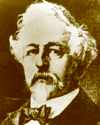 | It has the property of detonating very violently in certain circumstances. On one occasion a small amount of ether solution of pyroglycerin condensed in a glass bowl. ... When the bowl was heated over a spirit lamp, an extremely violent explosion occurred, which shattered it into small fragments. On another occasion a drop was heated in a test-tube, and exploded with such violence that the glass splinters cut deep into my face and hands, and hurt other people who were standing some distance off in the room. [Describing early experiments on his discovery of nitroglycerin.] - Ascanio Sobrero, Italian chemist (born 12 Oct 1812).  |
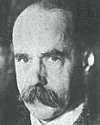 | Science is rooted in the will to truth. With the will to truth it stands or falls. Lower the standard even slightly and science becomes diseased at the core. Not only science, but man. The will to truth, pure and unadulterated, is among the essential conditions of his existence; if the standard is compromised he easily becomes a kind of tragic caricature of himself. - Max Wertheimer, Czech psychologist (died 12 Oct 1943). |
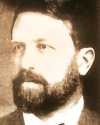 | For it is not cell nuclei, not even individual chromosomes, but certain parts of certain chromosomes from certain cells that must be isolated and collected in enormous quantities for analysis; that would be the precondition for placing the chemist in such a position as would allow him to analyse [the hereditary material] more minutely than [can] the morphologists ... For the morphology of the nucleus has reference at the very least to the gearing of the clock, but at best the chemistry of the nucleus refers only to the metal from which the gears are formed. - Theodor Boveri, German cytologist (born 12 Oct 1862). |
| Quiz | |
| Before you look at today's web page, see if you can answer some of these questions about the events that happened on this day. Some of the names are very familiar. Others will likely stump you. Tickle your curiosity with these questions, then check your answers on today's web page. | |
| Births | |
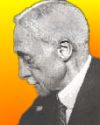 | Elmer Sperry, born 12 Oct 1860, was an American electrical engineer and inventor of the gyrocompass designed expressly for the marine environment. This "spinning wheel" gyro was a significant mprovement over the traditional magnetic compass of the day, and established Sperry as a world leader in the manufacture of military gyrocompasses for the next 80 years. In what decade was this gyro first tested at sea? In what decade was this gyro first tested at sea? |
| | On 12 Oct 1862, Theodor Boveri was born, the German cytologist whose work with roundworm eggs revealed that certain chromosomes were responsible for certain characteristics. Where in the cell are chromosomes found? |
| Deaths | |
 | Paul Hermann M�ller (1899-1965) was a Swiss chemist who received the Nobel Prize for Physiology or Medicine in 1948 for discovering the toxic effects on insects of a subsequently widely used insecticide which was a major factor in increased world food production. What was this insecticide? |
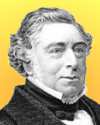 | Robert Stephenson (1803-1859), son of George Stephenson, was also an outstanding English Victorian civil engineer. He built many long-span railroad bridges, most notably the tubular bridge over the Menai Strait in North Wales. What is the name of Stephenson;s bridge over the Menai Strait? |
| Events | |
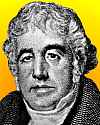 | On 12 Oct 1823, a Scotsman began selling rubberized raincoats. What is the name of this inventor? |
| On 12 Oct 1928, an invention by Philip Drinker was used by its first patient, a young girl paralyzed with polio at the Children's Hospital in Boston. What was this invention, which became widely used by polio victims? | |
| Answers |
| When you have your answers ready to all the questions above, you'll find all the information to check them, and more, on the October 12 web page of Today in Science History. Or, try this link first for just the brief answers. Fast answers for the previous newsletter for October 11: Heinrich Olbers • tungsten • law of conservation of energy (first law of thermodynamics) • the decade containing the year 1983 • the decade containing the year 1957. |
| Feedback |
 If you enjoy this newsletter, the website, or wish to offer encouragement or ideas, please send feedback by using your mail reader Reply button. If you enjoy this newsletter, the website, or wish to offer encouragement or ideas, please send feedback by using your mail reader Reply button. Your click on a StumbleUpon, Google+ or Facebook social button on the site webpages is also a welcome sign of appreciation. Thank you for using them. |
| Copyright |
| To find citations for quotations go to the corresponding webpage by clicking on the “quotes” balloon icon. Sources for the thumbnails appear on today's webpage with the corresponding item. � This newsletter is copyright 2013 by todayinsci.com. Please respect the Webmaster's wishes and do not put copies online of the Newsletter � or any Today in Science History webpage. (If you already have done so, please remove them. Thank you.) Offline use in education is encouraged such as a printout on a bulletin board, or projected for classroom viewing. Online, descriptive links to our pages are welcomed, as these will provide a reader with the most recent revisions, additions and/or corrections of a webpage. For any other copyright questions, please contact the Webmaster by using your mail reader Reply button. |
--
If you do not want to receive any more newsletters, Unsubscribe
To update your preferences and to unsubscribe visit this link


Δεν υπάρχουν σχόλια:
Δημοσίευση σχολίου