 | TODAY IN SCIENCE HISTORY NEWSLETTER - 13 DECEMBER |
| Book of the Day | ||
|

| Quotations for Today | |
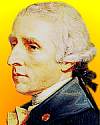 | May not subterraneous fire be considered as the great plough (if I may be allowed the expression) which Nature makes use of to turn up the bowels of the earth? - Sir William Hamilton, English diplomat, archaeologist and geologist (born 13 Dec 1730).  |
 | One is almost tempted to say... at last I can almost see a bond. But that will never be, for a bond does not really exist at all: it is a most convenient fiction which, as we have seen, is convenient both to experimental and theoretical chemists. - Charles Alfred Coulson, British theoretical chemist (born 13 Dec 1910). |
 | On the terrace of the Pepiniere, the 150 pupils of the Institut Chemique talk chemistry as they leave the auditoria and the laboratory. The echoes of the magnificent public garden of the city of Nancy make the words reverberate; coupling, condensation, grignardization. Moreover, their clothes stay impregnated with strong and characteristic odours; we follow the initiates of Hermes by their scent. In such an environment, how is it possible not to be productive? - Victor Grignard, French chemist and corecipient (died 13 Dec 1935). |
| Quiz | |
| Before you look at today's web page, see if you can answer some of these questions about the events that happened on this day. Some of the names are very familiar. Others will likely stump you. Tickle your curiosity with these questions, then check your answers on today's web page. | |
| Births | |
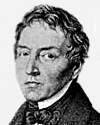 | Johann Wolfgang D�bereiner, born 13 Dec 1780, was a German chemist who made an early observation relating to the eventual development of the Periodic Table. What was this contribution? What was this contribution? |
| Deaths | |
| | Victor Grignard (1871-1935) was a French chemist who spent most of his life working on an important form of reagents he discovered that are useful in various organic syntheses. Grignard reagents are of the form RMX, where X is a halogen, R is an organic group, and M is a certain metal. Which metal did Grignard use in these reagents? |
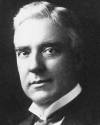 | An American telephone pioneer (1854-1934) worked with Alexander Graham Bell during the experimental period of telephone development and for some years thereafter until it was commercial established. He then turned to shipbuilding and constructed a number of vessels for the U.S. government. Can you name this person who collaborated with Bell? |
| Events | |
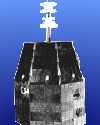 | On 13 Dec of a certain year, Relay I, the first U.S. communications earth satellite to transmit telephone, television, teleprinter and facsimile signals was launched. The first test patterns were not transmitted until 3 Jan 1963, when the solar cells had built up sufficient battery charge. In which decade was this satellite launched? |
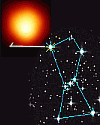 | On 13 Dec 1920, first U.S. measurement of the size of a fixed star was made on the bright red star in the right shoulder of Orion, which was found to be 260 million miles in diameter�150 times greater than the Sun. Dr. Francis G. Pease made the measurement on the 100-inch telescope at the Mount Wilson Observatory using a beam interferometer, a method suitable only for such a large star. What is the name of the star in this measurement? |
| Answers |
| When you have your answers ready to all the questions above, you'll find all the information to check them, and more, on the December 13 web page of Today in Science History. Or, try this link first for just the brief answers. Fast answers for the previous newsletter for December 12: iodine • “iron lung” • NBC • distances of galaxies • 1901 • hovercraft. |
| Feedback |
 If you enjoy this newsletter, the website, or wish to offer encouragement or ideas, please send feedback by using your mail reader Reply button. If you enjoy this newsletter, the website, or wish to offer encouragement or ideas, please send feedback by using your mail reader Reply button. Your click on a StumbleUpon, Google+ or Facebook social button on the site webpages is also a welcome sign of appreciation. Thank you for using them. |
| Copyright |
| To find citations for quotations go to the corresponding webpage by clicking on the “quotes” balloon icon. Sources for the thumbnails appear on today's webpage with the corresponding item. � This newsletter is copyright 2013 by todayinsci.com. Please respect the Webmaster's wishes and do not put copies online of the Newsletter � or any Today in Science History webpage. (If you already have done so, please remove them. Thank you.) Offline use in education is encouraged such as a printout on a bulletin board, or projected for classroom viewing. Online, descriptive links to our pages are welcomed, as these will provide a reader with the most recent revisions, additions and/or corrections of a webpage. For any other copyright questions, please contact the Webmaster by using your mail reader Reply button. |
--
If you do not want to receive any more newsletters, Unsubscribe
To update your preferences and to unsubscribe visit this link


Δεν υπάρχουν σχόλια:
Δημοσίευση σχολίου