 | TODAY IN SCIENCE HISTORY NEWSLETTER - 9 DECEMBER |
| Book of the Day | ||
|
| Quotations for Today | |
 | The field of scientific abstraction encompasses independent kingdoms of ideas and of experiments and within these, rulers whose fame outlasts the centuries. But they are not the only kings in science. He also is a king who guides the spirit of his contemporaries by knowledge and creative work, by teaching and research in the field of applied science, and who conquers for science provinces which have only been raided by craftsmen. - Fritz Haber, German physical chemist (born 9 Dec 1868).  |
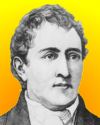 | Neue Phaenomena zu erkl�ren, dieses macht meine Sorgen aus, und wie froh ist der Forscher, wenn er das so fleissig Gesuche findet, eine Erg�tzung wobei das Herz lacht. To explain new phenomena, that is my task; and how happy is the scientist when he finds what he so diligently sought, a pleasure that gladdens the heart. - Carl Wilhelm Scheele, Swedish chemist (born 9 Dec 1742). |
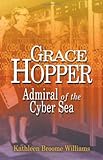
 | Humans are allergic to change. They love to say, “We've always done it this way.” I try to fight that. That's why I have a clock on my wall that runs counter-clockwise. - Grace Hopper, American mathematician and rear admiral (born 9 Dec 1906). |
| Quiz | |
| Before you look at today's web page, see if you can answer some of these questions about the events that happened on this day. Some of the names are very familiar. Others will likely stump you. Tickle your curiosity with these questions, then check your answers on today's web page. | |
| Births | |
| | Grace Murray Hopper, born 9 Dec 1906, was an American mathematician and a pioneer in computer technology, helping to devise Univac I, and military applications for a new computer language. It is said that after finding a dead moth in the wire circuitry of an early computer, she coined the term “bug” to refer to unexplained computer failures. Which computer programming language did she help develop for military applications? Which computer programming language did she help develop for military applications? |
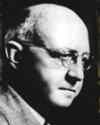 | Clarence Birdseye, born 9 Dec 1886, was the inventor of the deep freezing food method and co-founder of General Foods Corp. His invention was inspired while on Arctic trips as a field naturalist for the United States government. With which food did he begin his commercial processing? |
| Deaths | |
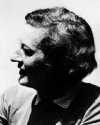 | An English-born paleoanthropologist (1913-1996) made several of the most important fossil finds, and has been called “the woman who found our ancestors.” Her work in East Africa shed new light on human evolution. She made the spectacular find of three trails of fossilised hominid footprints 3.6 million years old, showing man's ancestors were walking upright at a much earlier period than previously believed. Who was this anthropologist? |
 | An English amateur astronomer (1923-2012) was a broadcaster and prolific writer. For a half-century, he was the enthusiastic and knowledgeable presenter of the BBC TV programme The Sky at Night, which he began in 1957. The programme holds the record as the world's longest-running television series by its original presenter. Who was this amateur astronomer? |
| Events | |
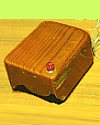 | On 9 Dec 1968, the first demonstration was given of his new invention by Doug Engelbart at a computer conference at Stanford University, California. He displayed its use with a graphical user interface, display editing of integrated text and graphics and hyper-documents. What was the invention being demonstrated? |
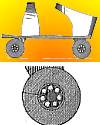 | On 9 Dec of a certain year, the first U.S. patent for ball-bearing roller skates was issued. This design allowed until then unseen speed. In what decade was this patent issued? |
| Answers |
| When you have your answers ready to all the questions above, you'll find all the information to check them, and more, on the December 9 web page of Today in Science History. Or, try this link first for just the brief answers. Fast answers for the previous newsletter for December 8: muskets • photosynthesis • George Boole, Boolean algebra • Roentgenium • President Dwight Eisenhower. |
| Feedback |
 If you enjoy this newsletter, the website, or wish to offer encouragement or ideas, please send feedback by using your mail reader Reply button. If you enjoy this newsletter, the website, or wish to offer encouragement or ideas, please send feedback by using your mail reader Reply button. Your click on a StumbleUpon, Google+ or Facebook social button on the site webpages is also a welcome sign of appreciation. Thank you for using them. |
| Copyright |
| To find citations for quotations go to the corresponding webpage by clicking on the “quotes” balloon icon. Sources for the thumbnails appear on today's webpage with the corresponding item. � This newsletter is copyright 2013 by todayinsci.com. Please respect the Webmaster's wishes and do not put copies online of the Newsletter � or any Today in Science History webpage. (If you already have done so, please remove them. Thank you.) Offline use in education is encouraged such as a printout on a bulletin board, or projected for classroom viewing. Online, descriptive links to our pages are welcomed, as these will provide a reader with the most recent revisions, additions and/or corrections of a webpage. For any other copyright questions, please contact the Webmaster by using your mail reader Reply button. |
--
If you do not want to receive any more newsletters, Unsubscribe
To update your preferences and to unsubscribe visit this link


Δεν υπάρχουν σχόλια:
Δημοσίευση σχολίου