 | TODAY IN SCIENCE HISTORY NEWSLETTER - 14 DECEMBER |
| Feature for Today |
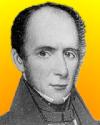 On 14 Dec 1795, John Bloomfield Jervis was born, American civil engineer who became the nation's leading consulting engineer of his time. In the period (1830-60) before the Civil War, he worked on several significant canal projects, railroads and water-supply systems. His obituary in the Proceedings of the American Society of Civil Engineers (1885) details the many projects in which he had been involved. An interesting man with an impressive list of achievements. On 14 Dec 1795, John Bloomfield Jervis was born, American civil engineer who became the nation's leading consulting engineer of his time. In the period (1830-60) before the Civil War, he worked on several significant canal projects, railroads and water-supply systems. His obituary in the Proceedings of the American Society of Civil Engineers (1885) details the many projects in which he had been involved. An interesting man with an impressive list of achievements. |
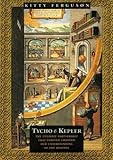
| Book of the Day | ||
|
| Quotations for Today | |
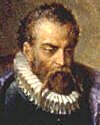 | Those who study the stars have God for a teacher. - Tycho Brahe, Danish astronomer (born 14 Dec 1546).  |
| | No engineer can go upon a new work and not find something peculiar, that will demand his careful reflection, and the deliberate consideration of any advice that he may receive; and nothing so fully reveals his incapacity as a pretentious assumption of knowledge, claiming to understand everything. - John B. Jervis, American civil engineer (born 14 Dec 1795). |
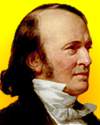 | I cannot afford to waste my time making money. A reply to an offer of a lecture tour. - Louis Agassiz, Swiss-American naturalist and geologist (died 14 Dec 1873). |
| | The world is the geologist's great puzzle-box; he stands before it like the child to whom the separate pieces of his puzzle remain a mystery till he detects their relation and sees where they fit, and then his fragments grow at once into a connected picture beneath his hand. - Louis Agassiz, Swiss-American naturalist and geologist (died 14 Dec 1873). |
| Quiz | |
| Before you look at today's web page, see if you can answer some of these questions about the events that happened on this day. Some of the names are very familiar. Others will likely stump you. Tickle your curiosity with these questions, then check your answers on today's web page. | |
| Births | |
| | Tycho Brahe, born 14 Dec 1546, developed astronomical instruments and made copious measurements fixing the positions of stars, thus paving the way for future discoveries. In 1577, he moved to his own observatory on Hven Island (financed by King Frederick II). In 1599 he moved to Prague, with Kepler as his assistant. What was Tycho Brahe's nationality? What was Tycho Brahe's nationality? |
| | John B. Jervis was an American civil engineer who made outstanding contributions in construction of canals, railroads, and water-supply systems for the expanding United States. Jervis designed the first locomotive to run in America (which was built to his plans in England). What was the name of the first railroad locomotive to run in America? |
| Deaths | |
| | Louis Agassiz (1807-1873) was a Swiss-born U.S. whose teachings made revolutionary contributions to the study of natural science. As a naturalist, he made landmark work on extinct fishes. He is also known as a geologist with landmark work in that field. What was the field of his landmark work in geology? |
 | An American physician and health-food pioneer whose development of dry breakfast cereals was largely responsible for the creation of the flaked-cereal industry. In 1876, at age 24, he became the staff physician at the Battle Creek Sanitarium, a position he would hold for 62 years. There, while developing his view of a healthy diet, he invented the toasted cereal flakes. It was his brother, who sweetened the flakes with malt, and began commercial production. What is the family name of these brothers? |
| Events | |
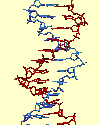 | On 14 Dec of a certain year, the first synthesis of biologically active DNA in a test tube was announced at a press conference by Arthur Kornberg. He and his colleagues had replicated the relatively simple DNA chain of the Phi X174 virus, which infects bacteria (a bacteriophage). It has a single strand of DNA only about 5500 nucleotide building blocks long, and with about 11 genes. In which decade was this DNA synthesized? |
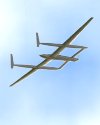 | On 14 Dec 1986, an experimental aircraft piloted by Dick Rutan and Jeana Yeager, took off from Edwards Air Force Base in California on the first non-stop, non-refueled flight around the world. The aircraft's design and light-weight structural materials allowed it to carry an unprecedented amount of fuel. During its 25,000 mile flight, the aircraft flew at an average speed of 115.8 mph. What was the name of this aircraft? |
| Answers |
| When you have your answers ready to all the questions above, you'll find all the information to check them, and more, on the December 14 web page of Today in Science History. Or, try this link first for just the brief answers. Fast answers for the previous newsletter for December 13: certain D�bereiner triads of elements were arranged in order of increasing atomic mass, the mass of the central member was approximately the average of the other two, and intermediate in chemical properties between the other two elements. • magnesium • Thomas Watson • decade containing the year 1962 • Betelgeuse. |
| Feedback |
 If you enjoy this newsletter, the website, or wish to offer encouragement or ideas, please send feedback by using your mail reader Reply button. If you enjoy this newsletter, the website, or wish to offer encouragement or ideas, please send feedback by using your mail reader Reply button. Your click on a StumbleUpon, Google+ or Facebook social button on the site webpages is also a welcome sign of appreciation. Thank you for using them. |
| Copyright |
| To find citations for quotations go to the corresponding webpage by clicking on the “quotes” balloon icon. Sources for the thumbnails appear on today's webpage with the corresponding item. � This newsletter is copyright 2013 by todayinsci.com. Please respect the Webmaster's wishes and do not put copies online of the Newsletter � or any Today in Science History webpage. (If you already have done so, please remove them. Thank you.) Offline use in education is encouraged such as a printout on a bulletin board, or projected for classroom viewing. Online, descriptive links to our pages are welcomed, as these will provide a reader with the most recent revisions, additions and/or corrections of a webpage. For any other copyright questions, please contact the Webmaster by using your mail reader Reply button. |
--
If you do not want to receive any more newsletters, Unsubscribe
To update your preferences and to unsubscribe visit this link


Δεν υπάρχουν σχόλια:
Δημοσίευση σχολίου