 | TODAY IN SCIENCE HISTORY NEWSLETTER - 12 DECEMBER |
| Feature for Today |
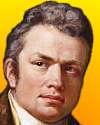 Sir Marc Isambard Brunel (1769-1849) was a French-English engineer and inventor who solved the historic problem of underwater tunneling through water-bearing strata and built the Thames Tunnel, the first tunnel in the world constructed under a navigable waterway. His son, Isambard Kingdom Brunel continued in his father's profession and remains celebrated as one of the most important engineers of the Victorian era. Sir Marc Isambard Brunel (1769-1849) was a French-English engineer and inventor who solved the historic problem of underwater tunneling through water-bearing strata and built the Thames Tunnel, the first tunnel in the world constructed under a navigable waterway. His son, Isambard Kingdom Brunel continued in his father's profession and remains celebrated as one of the most important engineers of the Victorian era. A biography of Sir Mark Isambard Brunel from The Great Triumphs of Great Men (1875) describes the difficulties, dangers and perseverance involved in driving the tunnel under the River Thames. It is a story everyone should know. |
| Book of the Day | ||
|

| Quotations for Today | |
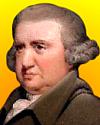 | Such is the condition of organic nature! whose first law might be expressed in the words 'Eat or be eaten!' and which would seem to be one great slaughter-house, one universal scene of rapacity and injustice! - Erasmus Darwin, English physician, poet, philosopher, botanist and naturalist (born 12 Dec 1731).  |
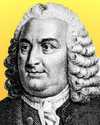 | Nature never jests. - Albrecht von Haller, Swiss physiologist and biologist (died 12 Dec 1777). |
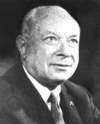 | Freedom is the oxygen without which science cannot breathe. - David Sarnoff, American inventor (died 12 Dec 1971). |
| Quiz | |
| Before you look at today's web page, see if you can answer some of these questions about the events that happened on this day. Some of the names are very familiar. Others will likely stump you. Tickle your curiosity with these questions, then check your answers on today's web page. | |
| Births | |
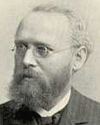 | Eugen Baumann (1846-1896) was a German chemist who discovered that the thyroid gland was rich in an element not known before that to occur naturally in animal tissue, making the thyroid gland unique in being the only tissue to contain this element.  What is this element? What is this element? |
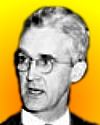 | Philip Drinker, born 12 Dec 1894, was an engineer a device that through the late 1920's and into the 50's, was considered to be state of the art, high tech, life support technology. Such devices were recommended treatment for certain victims of poliomyelitis. Can you name this invention? |
| Deaths | |
| | David Sarnoff (1891-1971) was a pioneer in the development of both radio and television broadcasting. He became a wireless operator and met Marconi in 1906. Foreseeing the multiple possibilities of radio, he became commercial manager of American Marconi in 1917. RCA grew from the Marconi group (1919). In 1926, he founded a television network. Which television network did he establish? |
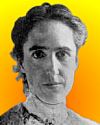 | Henrietta Swan Leavitt (1868-1921) was an American astronomer known for her discovery of the relationship between period and luminosity in Cepheid variables, pulsating stars that vary regularly in brightness. In 1912, she announced what has since become known as the Period-Luminosity. To what measurement is this relationship applied today? |
| Events | |
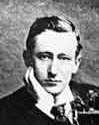 | On 12 Dec of a certain year, Guglielmo Marconi sent the first transatlantic radio signal from Poldhu in Cornwall, which was received by Percy Wright Page in St John's, Newfoundland. In which decade was this radio signal sent across the Atlantic Ocean? |
| On 12 Dec 1955, Christopher Cockerell filed his first patent for the new form of transportation he fathered. What form of transportation did he develop? | |
| Answers |
| When you have your answers ready to all the questions above, you'll find all the information to check them, and more, on the December 12 web page of Today in Science History. Or, try this link first for just the brief answers. Fast answers for the previous newsletter for December 11: James Lewis Kraft • lighthouse lights • pituitary gland • Gene Cernan, Harrison Schmitt • Britain and France. |
| Feedback |
 If you enjoy this newsletter, the website, or wish to offer encouragement or ideas, please send feedback by using your mail reader Reply button. If you enjoy this newsletter, the website, or wish to offer encouragement or ideas, please send feedback by using your mail reader Reply button. Your click on a StumbleUpon, Google+ or Facebook social button on the site webpages is also a welcome sign of appreciation. Thank you for using them. |
| Copyright |
| To find citations for quotations go to the corresponding webpage by clicking on the “quotes” balloon icon. Sources for the thumbnails appear on today's webpage with the corresponding item. � This newsletter is copyright 2013 by todayinsci.com. Please respect the Webmaster's wishes and do not put copies online of the Newsletter � or any Today in Science History webpage. (If you already have done so, please remove them. Thank you.) Offline use in education is encouraged such as a printout on a bulletin board, or projected for classroom viewing. Online, descriptive links to our pages are welcomed, as these will provide a reader with the most recent revisions, additions and/or corrections of a webpage. For any other copyright questions, please contact the Webmaster by using your mail reader Reply button. |
--
If you do not want to receive any more newsletters, Unsubscribe
To update your preferences and to unsubscribe visit this link


Δεν υπάρχουν σχόλια:
Δημοσίευση σχολίου