 | TODAY IN SCIENCE HISTORY NEWSLETTER - 19 AUGUST |
| Feature for Today |
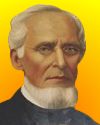 On 19 Aug 1856, Gail Borden was issued a U.S. Patent for his process of making condensed milk. His product was important, because condensed milk could be preserved for long periods of storage, and in this form milk became more readily available in large cities than had been possible before. On 19 Aug 1856, Gail Borden was issued a U.S. Patent for his process of making condensed milk. His product was important, because condensed milk could be preserved for long periods of storage, and in this form milk became more readily available in large cities than had been possible before.His company's advertising slogan “The milk from contented cows” was one of the great American advertising campaigns. The Borden company is today one of the largest dairy product concerns in the world. Not only is the familiar Borden condensed milk named after the real person who founded the company, but Elsie the iconic cartoon cow on the label was modelled on a real cow (though named Lobelia), selected from a group of bovine beauties that represented the Borden company at the 1939 World's Fair. A page of links to articles and patent descriptions for Gail Borden and his Inventions, includes more than his famous milk product. His first invention was a meat biscuit that preserved meat extracts in a form for travellers and sailors, that not only kept in good condition for longer periods of time than fresh meat, but also reduced the size of a month's provisions to fit a small container. |
| Book of the Day | |
| |

| Quotations for Today | |
 | "I work for perfection, for perfection's sake. I don't care what the external reasons are. And it's much more like a ballerina on opening night. You've done what you've got to do. When you go out, the purpose is to turn a perfect turn. You are not thinking about the future of the company, you are not thinking about your future, you're not thinking about the critics, it is you and the perfect turn." (Describing his task of repairing the Hubble Space Telescope.) - Story Musgrave, American surgeon and astronaut who made six flights into space (born 19 Aug 1935)  |
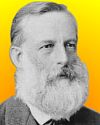 | "That the as yet undivided chemical elements are absolutely irreducible substances, is currently at least very unlikely. Rather it seems, that the atoms of elements are not the final, but only the immediate constituents of the molecules of both the elements and the compounds—the Molekeln or molecule as foremost division of matter, the atoms being considered as second order, in turn consisting of matter particles of a third higher order." (Speculating in 1870, on the existence of subatomic particles, in opening remark of the paper by which he became established as co-discoverer of the Periodic Law.) - Julius Lothar Meyer, German chemist who compared atomic volume to atomic weight, which plotted on a graph, gave a curve that showed the periodicity of the elements. He discovered the Periodic Law at about the same time (1869), but independently of Dmitry Mendeleyev, who developed it more thoroughly. (born 19 Aug 1830) |
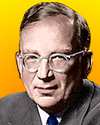 | "It took less than an hour to make the atoms, a few hundred million years to make the stars and planets, but five billion years to make man!" - George Gamow, Russian-American nuclear physicist, cosmologist and writer (died 19 Aug 1968) |
| QUIZ | |
| Before you look at today's web page, see if you can answer some of these questions about the events that happened on this day. Some of the names are very familiar. Others will likely stump you. Tickle your curiosity with these questions, then check your answers on today's web page. | |
| Births | |
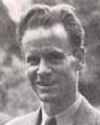 |  Philo T. Farnsworth, born 19 Aug 1906, was the co-inventor of the electronic television set. Philo T. Farnsworth, born 19 Aug 1906, was the co-inventor of the electronic television set. What TV manufacturer was named after him? What TV manufacturer was named after him? |
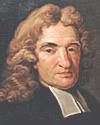 | John Flamsteed, born 19 Aug 1646, was an English astronomer who was one of a group of scientists who convinced King Charles II to build a national observatory. He was appointed the first Astronomer Royal (1675-1719).What national observatory did he help establish? |
| Deaths | |
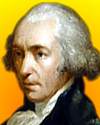 |  The Scottish engineer who invented the steam engine died near Birmingham, England, on 19 Aug 1819.Can you name this man? The Scottish engineer who invented the steam engine died near Birmingham, England, on 19 Aug 1819.Can you name this man? |
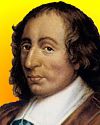 | Blaise Pascal (1623-1662) was a French mathematician, physicist and child prodigy. He invented the first digital calculator to help his father with his work collecting taxes.Which of the following did he also accomplish? Theory of probabilities. Law of pressure. Invented the hydraulic press. |
| Events | |
 |  On 19 Aug 1960, Sputnik 5 was launched into space and was later retrieved with its live animal passengers.What animals were these first to be retrieved after a space journey? On 19 Aug 1960, Sputnik 5 was launched into space and was later retrieved with its live animal passengers.What animals were these first to be retrieved after a space journey? |
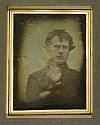 | On 19 Aug 1839, the first process to allow an image to be chemically fixed as a permanent picture was announced.What is the name of this photographic process? |
| Answers |
When you have your answers ready to all the questions above, you'll find all the information to check them, and more, on the August 19 web page of Today in Science History. Or, try this link first for just the brief answers. Fast answers for the previous newsletter for August 18: Cuba; Siemens; paper chromatography; 3000 feet; the decade including 1891; helium. |
| Feedback |
 If you enjoy this newsletter, the website, or wish to offer encouragement or ideas, please send feedback by using your mail reader Reply button. If you enjoy this newsletter, the website, or wish to offer encouragement or ideas, please send feedback by using your mail reader Reply button. |
--
If you do not want to receive any more newsletters, Unsubscribe
To update your preferences and to unsubscribe visit this link


Δεν υπάρχουν σχόλια:
Δημοσίευση σχολίου