 | TODAY IN SCIENCE HISTORY NEWSLETTER - 18 AUGUST |
| Feature for Today |
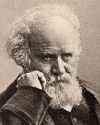 On 18 Aug 1868, while in India, observing a solar eclipse, Pierre Janssen discovered a previously unknown bright yellow line in the spectrum of the chromosphere of the sun. Janssen, an eminent French astronomer, spent a lifetime engaged in the study of the sun and the information that could be gained from its spectrum. He made the first photographs of the granular structure of the Sun's surface. On 18 Aug 1868, while in India, observing a solar eclipse, Pierre Janssen discovered a previously unknown bright yellow line in the spectrum of the chromosphere of the sun. Janssen, an eminent French astronomer, spent a lifetime engaged in the study of the sun and the information that could be gained from its spectrum. He made the first photographs of the granular structure of the Sun's surface.To better observe the light and to reduce the effect of the earth's atmosphere, even late in his life, he resolved to have an observatory built high on Mont Blanc. To overcome the restrictions of his age, to make the climb, he had the physical assistance of a dozen guides. Another problem to overcome was how to establish a two-story structure building on a base of snow. The solution designed, and more details of his accomplishments are given in The Observatory On Top Of Mont Blanc, an article from McClure's Magazine (1894). |
| Book of the Day | |
| |

| Quotations for Today | |
 | "A vast technology has been developed to prevent, reduce, or terminate exhausting labor and physical damage. It is now dedicated to the production of the most trivial conveniences and comfort." - B. F. Skinner, American psychologist (died 18 Aug 1990)  |
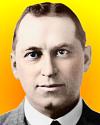 | "The reason so many people never get anywhere in life is because when opportunity knocks, they are out in the backyard looking for four-leaf clovers." - Walter Chrysler, American industrialist and inventor who founded the automobile manufacturer, Chrysler Corporation (died 18 Aug 1904) |
| QUIZ | |
| Before you look at today's web page, see if you can answer some of these questions about the events that happened on this day. Some of the names are very familiar. Others will likely stump you. Tickle your curiosity with these questions, then check your answers on today's web page. | |
| Births | |
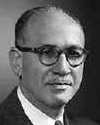 |  Bern Dibner, born 18 Aug 1897, was a Ukrainian-American engineer and historian of science. Dibner worked as an engineer during the electrification of a certain island country. Realizing the need for improved methods of connecting electrical conductors, in 1924, he founded the Burndy Engineering Company. Later, he began collecting books and everything he could find that was related to the history of science. This became a second career as a scholar. Bern Dibner, born 18 Aug 1897, was a Ukrainian-American engineer and historian of science. Dibner worked as an engineer during the electrification of a certain island country. Realizing the need for improved methods of connecting electrical conductors, in 1924, he founded the Burndy Engineering Company. Later, he began collecting books and everything he could find that was related to the history of science. This became a second career as a scholar. In what country was he working as an engineer for its electrification? In what country was he working as an engineer for its electrification? |
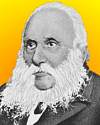 | Pierre-�mile Martin, born 18 Aug 1824, was a French engineer who co-invented the open-hearth process, which produced most of the world's steel until the development of the basic oxygen process.With whom did he coinvent this process, which is known by both their names? |
| Deaths | |
 |  Richard Synge (1914-1994) was a British biochemist who shared the 1952 Nobel Prize for Chemistry with A.J.P. Martin for their development of partition chromatography.What simplest form of chromatography was developed? Richard Synge (1914-1994) was a British biochemist who shared the 1952 Nobel Prize for Chemistry with A.J.P. Martin for their development of partition chromatography.What simplest form of chromatography was developed? |
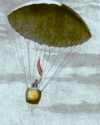 | Andr�-Jacques Garnerin (1769-1823) was a French aeronaut, the first person to use a parachute regularly and successfully. He perfected the parachute and made jumps from greater altitudes than had been possible before. On 22 Oct of a certain year, Garnerin made his first jump above the Parc Monceau in Paris.From what height did he make his first parachute jump? |
| Events | |
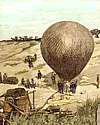 |  On 18 Aug of a certain year, trying to deal with extreme drought, the first rainmaking experiments in the U.S. were conducted near Midland, Texas, paid for by a grant from the U.S. government. Patent attorney Gen. Robert Dyrenforth tried using explosive balloons and artillery to try to make rainclouds develop.In what decade did this take place? On 18 Aug of a certain year, trying to deal with extreme drought, the first rainmaking experiments in the U.S. were conducted near Midland, Texas, paid for by a grant from the U.S. government. Patent attorney Gen. Robert Dyrenforth tried using explosive balloons and artillery to try to make rainclouds develop.In what decade did this take place? |
| | On 18 Aug 1868, Pierre Janssen discovered a previously unknown bright yellow line in the spectrum of the chromosphere of the sun during a solar eclipse he was observing from India. This was an indication of a new element. For over 30 years, it was assumed the element was only present in the sun since the spectral line was not observed in the lab until 1895 when Sir William Ramsay examined a substance from cleveite.What name was given to this new element? |
| Answers |
When you have your answers ready to all the questions above, you'll find all the information to check them, and more, on the August 18 web page of Today in Science History. Or, try this link first for just the brief answers. Fast answers for the previous newsletter for August 17: non-smear (“stays on you not on him”) kissproof lipstick that stayed on the lips longer than any other product then available; malignant disease of lymph tissue; first plane to break the sound barrier; James Watt; the decade including 1896; Phobos. |
| Feedback |
 If you enjoy this newsletter, the website, or wish to offer encouragement or ideas, please send feedback by using your mail reader Reply button. If you enjoy this newsletter, the website, or wish to offer encouragement or ideas, please send feedback by using your mail reader Reply button. |
--
If you do not want to receive any more newsletters, Unsubscribe
To update your preferences and to unsubscribe visit this link


Δεν υπάρχουν σχόλια:
Δημοσίευση σχολίου