 | TODAY IN SCIENCE HISTORY NEWSLETTER - 14 FEBRUARY |
| Feature for Today |
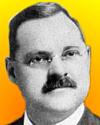 On 14 Feb 1877, Greenleaf Whittier Pickard was born, the American electrical engineer who invented the crystal detector, which opened the frontiers of early radio, and was a precursor of the transistor. On 14 Feb 1877, Greenleaf Whittier Pickard was born, the American electrical engineer who invented the crystal detector, which opened the frontiers of early radio, and was a precursor of the transistor. In the article An Untold Romance of Invention, you can read how Pickard's career began using a kite to collect upper air samples for a data bank to show whether the ice ages were caused by variations in the carbon dioxide content of the atmosphere. (If that sounds familiar, note that his experiments were in 1898!) The article gives you the chain of events that led to his discovery of the crystal detector for radio. Chances are, Pickard's name is unfamiliar to you, but as always, it is fascinating to learn about the background to an invention, described in this article. |
| Book of the Day | ||
|

| Quotations for Today | |
 | I have a good idea every two years. Give me a topic, I will give you the idea! [Reputed to have been a remark made to the head of his department at Caltech.] - Fritz Zwicky, Swiss-American astronomer and physicist (born 14 Feb 1898).  |
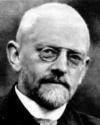 | Geometry is the most complete science. - David Hilbert, German mathematician (died 14 Feb 1943). |
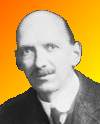
 | To speculate without facts is to attempt to enter a house of which one has not the key, by wandering aimlessly round and round, searching the walls and now and then peeping through the windows. Facts are the key. - Sir Julian Huxley, English biologist and writer (died 14 Feb 1975). |
| Quiz | |
| Before you look at today's web page, see if you can answer some of these questions about the events that happened on this day. Some of the names are very familiar. Others will likely stump you. Tickle your curiosity with these questions, then check your answers on today's web page. | |
| Births | |
| | Fritz Zwicky, born 14 Feb 1898, was a Swiss astronomer and physicist, who made valuable contributions to the theory and understanding to a certain type of star. Which type of stars were the subject of the theory for which he is remembered? Which type of stars were the subject of the theory for which he is remembered? |
 | C.T.R. Wilson, born 14 Feb 1869, was a Scottish physicist who received the Nobel Prize for Physics in 1927 for his invention of the Wilson cloud chamber. It is based upon the formation of clouds, which develop when sufficiently moist air is suddenly expanded, thus dropping the temperature below the dew-point. Thereafter, vapour condenses into small drops, formed around dust particles, but the cloud chamber served another purpose. What is the purpose of the Wilson cloud chamber? |
| Deaths | |
 | Karl Jansky (1905-1950) was an American electrical engineer who found a certain emission came from a specific region on the sky every 23 hours and 56 minutes, from the direction of Sagittarius toward the center of the Milky Way. At the age of 26, he was the first to discover that celestial bodies could emit this type of radiation as well as light waves. What part of the electromagnetic spectrum did Jansky find emitted from space? |
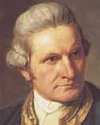 | An English seaman (1728-1779) was one of the first really scientific navigators. While surveying the coast of Newfoundland, he observed a solar eclipse. On the first of three expeditions into the Pacific (1768) he took Joseph Banks as the ship's botanist to study the flora and fauna discovered. (This practice of carrying a naturalist took place some 75 years before Charles Darwin's famous voyage.) In 1769, he observed the transit of Venus from the island of Tahiti. Can you name this Captain? |
| Events | |
 | On 14 Feb 2003, the world's most famous sheep - the first born cloned sheep - was put down. She had been suffering from a progressive lung disease. From her birth, at the Roslin Institute, Edinburgh, Scotland on 5 Jul 1996 fears were expressed about the wisdom of cloning, which were renewed upon her death. What was this sheep named? |
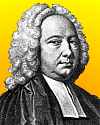 | On 14 Feb 1747, James Bradley read a paper to the Royal Society describing a feature of the Earth's motion for which he coined the name “nutation.” For the word “nutation,” what does it describe, and what the meaning of the Latin word it is based on? |
| Answers |
| When you have your answers ready to all the questions above, you'll find all the information to check them, and more, on the February 14 web page of Today in Science History. Or, try this link first for just the brief answers. Fast answers for the previous newsletter for February 13: decade including the year 1956 • head • France • ENIAC (the Electronic Numerical Integrator and Calculator) • electric charge of an electron • Galileo Galilei. |
| Feedback |
 If you enjoy this newsletter, the website, or wish to offer encouragement or ideas, please send feedback by using your mail reader Reply button. If you enjoy this newsletter, the website, or wish to offer encouragement or ideas, please send feedback by using your mail reader Reply button. Your click on a StumbleUpon, Google+ or Facebook social button on the site webpages is also a welcome sign of appreciation. Thank you for using them. |
| Copyright |
| To find citations for quotations go to the corresponding webpage by clicking on the “quotes” balloon icon. Sources for the thumbnails appear on today's webpage with the corresponding item. � This newsletter is copyright 2014 by todayinsci.com. Please respect the Webmaster's wishes and do not put copies online of the Newsletter � or any Today in Science History webpage. (If you already have done so, please remove them. Thank you.) Offline use in education is encouraged such as a printout on a bulletin board, or projected for classroom viewing. Online, descriptive links to our pages are welcomed, as these will provide a reader with the most recent revisions, additions and/or corrections of a webpage. For any other copyright questions, please contact the Webmaster by using your mail reader Reply button. |
--
If you do not want to receive any more newsletters, Unsubscribe
To update your preferences and to unsubscribe visit this link


Δεν υπάρχουν σχόλια:
Δημοσίευση σχολίου