 | TODAY IN SCIENCE HISTORY NEWSLETTER - 9 FEBRUARY |
| Feature for Today |
 On 9 Feb 1871, Howard Ricketts was born. He lived but 39 years, dying of typhus, the disease he was investigating at the time. But in a career so tragically cut short, he had already made valuable contributions to medical science, and his earlier work on the mode of transmission of another disease (you'll name it in a question below) remains a significant reason to know his name. If you don't, or to know more, read a summary of his life in this Memorial Address. Or, read one of his articles on Rocky Mountain spotted fever. On 9 Feb 1871, Howard Ricketts was born. He lived but 39 years, dying of typhus, the disease he was investigating at the time. But in a career so tragically cut short, he had already made valuable contributions to medical science, and his earlier work on the mode of transmission of another disease (you'll name it in a question below) remains a significant reason to know his name. If you don't, or to know more, read a summary of his life in this Memorial Address. Or, read one of his articles on Rocky Mountain spotted fever. |
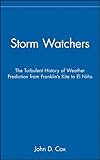
| Book of the Day | ||
|
| Quotations for Today | |
 | Chance alone is at the source of every innovaton, of all creation in the biosphere. Pure chance, only chance, absolute but blind liberty is at the root of the prodigious edifice that is evolution... It today is the sole conceivable hypothesis, the only one that squares with observed and tested fact. Stating life began by the chance collision of particles of nucleic acid in the “prebiotic soup.” - Jacques Monod, French biochemist (born 9 Feb 1910).  |
 | What information consumes is rather obvious: it consumes the attention of its recipients. Hence a wealth of information creates a poverty of attention, and a need to allocate that attention efficiently among the overabundance of information sources that might consume it. - Herbert Alexander Simon, American social scientist (died 9 Feb 2001). |
 | For God�s sake, please give it up. Fear it no less than the sensual passion, because it, too, may take up all your time and deprive you of your health, peace of mind and happiness in life. Having himself spent a lifetime unsuccessfully trying to prove Euclid's postulate that parallel lines do not meet, Farkas discouraged his son J�nos from any further attempt. - Farkas Bolyai, Hungarian mathematician, poet and dramatist (born 9 Feb 1775). |
| Quiz | |
| Before you look at today's web page, see if you can answer some of these questions about the events that happened on this day. Some of the names are very familiar. Others will likely stump you. Tickle your curiosity with these questions, then check your answers on today's web page. | |
| Births | |
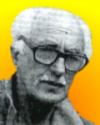 | Alec Zino, born on 9 Feb 1916, was a Portuguese ornithologist and conservationist who gave his name to Europe's rarest breeding bird, which he studied and protected on his native island of Madeira, south-west of Portugal, where this small black and white seabird breeds. What breed of bird is known by Zeno's name? What breed of bird is known by Zeno's name? |
| | Howard T. Ricketts, born 9 Feb 1871, was the American pathologist who discovered that a certain disease is spread by cattle ticks and caused by a blood-borne “bipolar bacillus.” What is the name of this disease that Ricketts studied? |
| Deaths | |
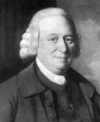 | Nevil Maskelyne (1732-1811) was a British astronomer who made accurate measurements of the transit of Venus on the island of St Helena in 1761. In 1764 he went on a voyage to Barbados for a different purpose. In 1774, he used a plumb line beside a Scottish mountain to determine the Earth's density. What was the purpose on his voyage to Barbados? |
| Events | |
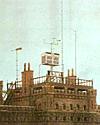 | On 9 Feb of a certain year, the U.S. Weather Bureau (later named the Weather Service) was authorized by Congress, and placed under the direction of the Signal Service. Cleveland Abbe, who had inaugurated a private weather reporting and warning service at Cincinnati (issuing weather reports or bulletins since the previous year) subsequently took a major role in the operation of the U.S. Weather Bureau, and was the first U.S. meterologist. In which decade was the Weather Bureau authorized? |
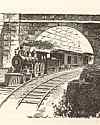 | On 9 Feb 1875, the first train passed through the nearly 5-mile Hoosac Tunnel on the railroad line between Boston and Albany through the Berkshires. It had taken several failed attempts, 200 lives and 20 years to complete the tunnel. Blasting began in 1851, using gunpowder. By 1866, two new tunnelling tools - the compressed air drill and a different explosive - were used in the Hoosac for the first time. What was the explosive first used in the Hoosac Tunnel in 1866? |
| Answers |
| When you have your answers ready to all the questions above, you'll find all the information to check them, and more, on the February 9 web page of Today in Science History. Or, try this link first for just the brief answers. Fast answers for the previous newsletter for February 8: Xerox • lightweight, one-cylinder steam engine • holography • neutrons • Isaac Newton • Gregor Mendel. |
| Feedback |
 If you enjoy this newsletter, the website, or wish to offer encouragement or ideas, please send feedback by using your mail reader Reply button. If you enjoy this newsletter, the website, or wish to offer encouragement or ideas, please send feedback by using your mail reader Reply button. Your click on a StumbleUpon, Google+ or Facebook social button on the site webpages is also a welcome sign of appreciation. Thank you for using them. |
| Copyright |
| To find citations for quotations go to the corresponding webpage by clicking on the “quotes” balloon icon. Sources for the thumbnails appear on today's webpage with the corresponding item. � This newsletter is copyright 2014 by todayinsci.com. Please respect the Webmaster's wishes and do not put copies online of the Newsletter � or any Today in Science History webpage. (If you already have done so, please remove them. Thank you.) Offline use in education is encouraged such as a printout on a bulletin board, or projected for classroom viewing. Online, descriptive links to our pages are welcomed, as these will provide a reader with the most recent revisions, additions and/or corrections of a webpage. For any other copyright questions, please contact the Webmaster by using your mail reader Reply button. |
--
If you do not want to receive any more newsletters, Unsubscribe
To update your preferences and to unsubscribe visit this link


Δεν υπάρχουν σχόλια:
Δημοσίευση σχολίου