 | TODAY IN SCIENCE HISTORY NEWSLETTER - 5 FEBRUARY |
| Feature for Today |
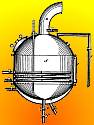 On 5 Feb 1850, Gail Borden was issued a U.S. Patent for his process to produce a biscuit made of meat extracts baked with flour. What makes the product remarkable for its era is that as a form of preserved meat, it filled a need for use as rations by the military, sailors on long voyages, and other travellers. Six years later, he began processing condensed milk, capable of extended storage. He started what is now one of the largest dairy product companies in the world. On 5 Feb 1850, Gail Borden was issued a U.S. Patent for his process to produce a biscuit made of meat extracts baked with flour. What makes the product remarkable for its era is that as a form of preserved meat, it filled a need for use as rations by the military, sailors on long voyages, and other travellers. Six years later, he began processing condensed milk, capable of extended storage. He started what is now one of the largest dairy product companies in the world. Borden’s Condensed Milk is a staple found on supermarket shelves today. His name is so familiar, yet how much of his remarkable life do you know? The Today in Science History site has brought together a number of articles on Borden and his products which you can browse from this Index of Gail Borden and his Inventions. |
| Book of the Day | ||
|

| Quotations for Today | |
 | Religious leaders and men of science have the same ideals; they want to understand and explain the universe of which they are part; they both earnestly desire to solve, if a solution be ever possible, that great riddle: Why are we here? - Sir Arthur Keith, Scottish physical anthropologist and anatomist (born 5 Feb 1866).  |
 | The meaning of geography is as much a sealed book to the person of ordinary intelligence and education as the meaning of a great cathedral would be to a backwoodsman, and yet no cathedral can be more suggestive of past history in its many architectural forms than is the land about us, with its innumerable and marvellously significant geographic forms. It makes one grieve to think of opportunity for mental enjoyment that is last because of the failure of education in this respect. - William Morris Davis, American geomorphologist and geologist (died 5 Feb 1934). |
 | Je me rends parfaitement compte du desagreable effet que produit sur la majorite de l'humanit�, tout ce qui se rapporte, m�me au plus faible d�gr�, � des calculs ou raisonnements mathematiques. I am well aware of the disagreeable effect produced on the majority of humanity, by whatever relates, even at the slightest degree to calculations or mathematical reasonings. - Sir Hiram Maxim, American-English inventor (born 5 Feb 1840). |
| Quiz | |
| Before you look at today's web page, see if you can answer some of these questions about the events that happened on this day. Some of the names are very familiar. Others will likely stump you. Tickle your curiosity with these questions, then check your answers on today's web page. | |
| Births | |
 | John Boyd Dunlop, born 5 Feb 1840, was a Scottish inventor who was a pioneer of the pneumatic tyre. Dunlop first tried fitting rubber air tubes held on to a wooden ring by tacking a linen covering fixed around the wheels. Due to the major improvement in riding comfort, Dunlop continued development, until he patented the idea. For what vehicle did Dunlop make his first attempt at a pneumatic tyre? For what vehicle did Dunlop make his first attempt at a pneumatic tyre? |
| | Sir Hiram Maxim, born 5 Feb 1840, was an American-born prolific inventor whose first patent was for a hair-curling iron (1866), followed by a device for generating illuminating gas and a locomotive headlight. Among hundreds of other patents, he is best known for a particular invention. What is his best-known invention? |
| Deaths | |
| | William Morris Davis (1850-1934) was a U.S. geographer, geologist, and meteorologist who founded the science of geomorphology. What is geomorphology? |
| Events | |
 | On 5 Feb of a certain year, a loop-the-loop centrifugal railway was patented by Edwin Prescott of Arlington, Mass. This patent improved his earlier patented roller coaster design for a true circular loop, which resulted in an uncomfortable shock to passengers as the car entered the loop. The new design was made to offer more comfort by varying the radius of the curve of the loop to be greater at the entry point. In what decade was this new loop-the-loop patented? |
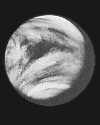 | On 5 Feb 1974, a U.S. space probe returned the first close-up photos of Venus� cloud structure. What was the name of this space probe? |
 | On 5 Feb of a certain year, the Indiana State House legislature unanimously passed Bill No. 246 to in effect define the value of pi as 3.2 exactly. It stated, in part, “the ratio of the diameter and circumference [pi] is as five-fourths to four.” That is (4 divided by 5/4) = 16/5 = 3.2 exactly. Fortunately the Indiana Senate postponed the bill indefinitely. In which decade did the Indiana House legislators demonstrate that they were so mathematically challenged? |
| Answers |
| When you have your answers ready to all the questions above, you'll find all the information to check them, and more, on the February 5 web page of Today in Science History. Or, try this link first for just the brief answers. Fast answers for the previous newsletter for February 4: twenties (age 24) • a “missing link” in the evolution from ape to man • boson • osmosis • Teflon • vitamins. |
| Feedback |
 If you enjoy this newsletter, the website, or wish to offer encouragement or ideas, please send feedback by using your mail reader Reply button. If you enjoy this newsletter, the website, or wish to offer encouragement or ideas, please send feedback by using your mail reader Reply button. Your click on a StumbleUpon, Google+ or Facebook social button on the site webpages is also a welcome sign of appreciation. Thank you for using them. |
| Copyright |
| To find citations for quotations go to the corresponding webpage by clicking on the “quotes” balloon icon. Sources for the thumbnails appear on today's webpage with the corresponding item. � This newsletter is copyright 2014 by todayinsci.com. Please respect the Webmaster's wishes and do not put copies online of the Newsletter � or any Today in Science History webpage. (If you already have done so, please remove them. Thank you.) Offline use in education is encouraged such as a printout on a bulletin board, or projected for classroom viewing. Online, descriptive links to our pages are welcomed, as these will provide a reader with the most recent revisions, additions and/or corrections of a webpage. For any other copyright questions, please contact the Webmaster by using your mail reader Reply button. |
--
If you do not want to receive any more newsletters, Unsubscribe
To update your preferences and to unsubscribe visit this link


Δεν υπάρχουν σχόλια:
Δημοσίευση σχολίου