 | TODAY IN SCIENCE HISTORY NEWSLETTER - 15 FEBRUARY |
| Feature for Today |
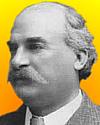 On 15 Feb 1845, Robert Wood Johnson was born, who co-founded the well-known Johnson & Johnson Corporation. In this short profile you can read how this now huge company started with a young man who was an apothecaries' apprentice that started a business making “Benzine” plasters with sleeves rolled up, spreading mush from a pail with a brush! By adopting the antiseptic ideas of Lister, his company expanded greatly by producing packaged, sterilized wound treatments valuable to country doctors and city surgeons alike. This article comes from the Western Druggist (1893). As you sit before your keyboard, you may lament the passing of the typewriter. Although modern computer editing is efficient, there was a satisfying connection to your work in the mechanical clunks of using the rows of typewriter keys that the new generation is missing. But before QWERTY came various efforts to produce a printing machine. James Latham Sholes, listed in yesterday's (14 Feb) births, was not the first to invent, but was the first to create a practical design, and to start production of what he named the “typewriter.” At first it looked nothing like what you recognize as a typewriter! As you read this Early History of the Typewriter, you'll get a first-hand account from the person that suffered through the teething pains of using Sholes' first machine. You'll be amused to read how it was driven by a weight on a string, and the owner's job of inking the ribbon. Some samples of the output of Sholes's machine are included. Did you know he was a Wisconsin Legislator for a while? Sholes did not care to for making great profits from his endeavour. He was content to just provide for his family's needs. When he died, he lay in a grave with nothing more than a cemetery lot marker. In recognition of “The Father of the Typewriter,” some years later, a monument was erected from public subscriptions. Read about that, too, in this Early History of the Typewriter. |
| Book of the Day | |
| |


| Quotations for Today | |
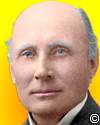 | "Order is not sufficient. What is required, is something much more complex. It is order entering upon novelty; so that the massiveness of order does not degenerate into mere repetition; and so that the novelty is always reflected upon a background of system." - Alfred North Whitehead, English mathematician and philosopher (born 15 Feb 1861). |
 | "I would say here something that was heard from an ecclesiastic of the most eminent degree [Cardinal Baronies (1538-1607)]: 'That the intention of the holy ghost is to teach us how one goes to heaven, not how heaven goes.'" - Galileo Galilee, Italian natural philosopher (born 15 Feb 1564)  |
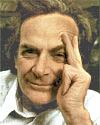 | "All things are made of atoms—little particles that move around in perpetual motion, attracting each other when they are a little distance apart, but repelling upon being squeezed into one another. In that one sentence ... there is an enormous amount of information about the world." (His suggestion that the most valuable information on scientific knowledge in a single sentence using the fewest words is to state the atomic hypothesis.)" - Richard P. Feynman, American theoretical physicist (died 15 Feb 1988) . |
| QUIZ | |
| Before you look at today's web page, see if you can answer some of these questions about the events that happened on this day. Some of the names are very familiar. Others will likely stump you. Tickle your curiosity with these questions, then check your answers on today's web page. | |
| Births | |
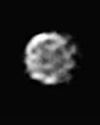 |  William Henry Pickering, born 15 Feb 1858, was an American astronomer who discovered a new moon of Saturn, Phoebe, in 1899. This was the first planetary satellite with retrograde motion to be detected, i.e., with orbital motion directed in an opposite sense to that of the planets. William Henry Pickering, born 15 Feb 1858, was an American astronomer who discovered a new moon of Saturn, Phoebe, in 1899. This was the first planetary satellite with retrograde motion to be detected, i.e., with orbital motion directed in an opposite sense to that of the planets.  How many moons of Saturn were known with this discovery? How many moons of Saturn were known with this discovery? |
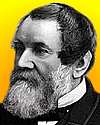 | An American industrialist and inventor, born 15 Feb 1809, is generally credited with the development (from 1831) of the mechanical reaper. Can you name this inventor? |
| | Galileo Galilei, born 15 Feb 1564, was an Italian natural philosopher, astronomer, and mathematician, who applied the new techniques of the scientific method to make significant discoveries in physics and astronomy. His great accomplishments include perfecting (though not inventing) the telescope and consequent contributions to astronomy. He studied the science of motion, inertia, the law of falling bodies, and parabolic trajectories. How many moons of Jupiter did Galileo discover with his telescope? How many can you name? |
| Deaths | |
| |  Richard P. Feynman (1918-1988) was an an American theoretical physicist who was probably the most brilliant, influential, and iconoclastic figure in his field in the post-WW II era. He participated in the Manhattan Project as a group leader in the theoretical division, working on estimating how much uranium would be needed to achieve critical mass for the atomic bomb. His name is remembered in a simple notation he developed, now known as Feynman Diagrams. What is the subject of Feynman Diagrams? Richard P. Feynman (1918-1988) was an an American theoretical physicist who was probably the most brilliant, influential, and iconoclastic figure in his field in the post-WW II era. He participated in the Manhattan Project as a group leader in the theoretical division, working on estimating how much uranium would be needed to achieve critical mass for the atomic bomb. His name is remembered in a simple notation he developed, now known as Feynman Diagrams. What is the subject of Feynman Diagrams? |
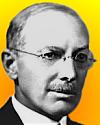 | James Frank Duryea (1869-1967) and his brother Charles Duryea built the first of a certain invention that operated in the United States. What was the invention built by the Duryeas? |
| Events | |
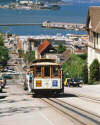 |  On 15 Feb 1942, operation ceased at the landmark eastern terminus of the original San Francisco street cars, first in the world to be propelled by cable. It had been first established by its English inventor, Andrew Smith Halladie (1836-1900), a pioneer manufacturer of wire cables. Since which decade had this cable car terminus been operating? On 15 Feb 1942, operation ceased at the landmark eastern terminus of the original San Francisco street cars, first in the world to be propelled by cable. It had been first established by its English inventor, Andrew Smith Halladie (1836-1900), a pioneer manufacturer of wire cables. Since which decade had this cable car terminus been operating? |
| Answers |
When you have your answers ready to all the questions above, you'll find all the information to check them, and more, on the February 15 web page of Today in Science History. Or, try this link first for just the brief answers. Fast answers for the previous newsletter for February 14: supernovae; rendering visible the tracks (as from a radioactive source) of electrically charged particles, which also cause small droplet condensation; radio waves; Captain James Cook; Dolly. |
| Feedback |
 If you enjoy this newsletter, the website, or wish to offer encouragement or ideas, please send feedback by using your mail reader Reply button. If you enjoy this newsletter, the website, or wish to offer encouragement or ideas, please send feedback by using your mail reader Reply button. |

--
If you do not want to receive any more newsletters, this link
To update your preferences and to unsubscribe visit this link
If you do not want to receive any more newsletters, this link
To update your preferences and to unsubscribe visit this link
! !


Δεν υπάρχουν σχόλια:
Δημοσίευση σχολίου