 | TODAY IN SCIENCE HISTORY NEWSLETTER - 8 FEBRUARY |
| Feature for Today |
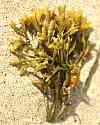 On 8 Feb 1777, Bernard Courtois was born, who discovered—in fact, stumbled upon—a new element (though he lacked the resources to confirm his hunch.) The source was - seaweed! Surely that must make you curious to know more! So this fascinating piece of chemistry history has been added to the site in this article. |
| Book of the Day | |
| |

| Quotations for Today | |
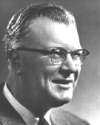 | "We (Chester Carlson and Otto Kornei) pulled down the shade to make the room as dark as possible, then he rubbed the sulphur surface vigorously with a handkerchief to apply an electrostatic charge, laid the slide on the surface and placed the combination under a bright incandescent lamp for a few seconds. The slide was then removed and lycopodium powder was sprinkled on the sulphur surface. By gently blowing on the surface all the loose powder was removed and there was left on the surface a near-perfect duplicate in powder of the notation which had been printed on the glass slide. Both of us repeated the experiment several times to convince ourselves that it was true, then we made some permanent copies by transferring the powder images to wax paper and heating the sheets to melt the wax. Then we went out to lunch and to Fred Zwicky celebrate." - Chester Carlson (born 8 Feb 1906) (source) |
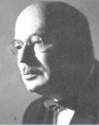 | "Whoever alters a person's expectations changes his behaviour." - Rudolf Dreikurs, American psychiatrist and educator (born 8 Feb 1897) |
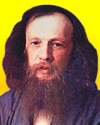 | "It is the function of science to discover the existence of a general reign of order in nature and to find the causes governing this order. And this refers in equal measure to the relations of man - social and political - and to the entire universe as a whole." - Dmitri Mendeleev, Russian chemist who developed the periodic classification of the elements (born 8 Feb 1834)  |
| QUIZ | |
| Before you look at today's web page, see if you can answer some of these questions about the events that happened on this day. Some of the names are very familiar. Others will likely stump you. Tickle your curiosity with these questions, then check your answers on today's web page. | |
| Births | |
| |  Chester Carlson, born 8 Feb 1906, invented a dry-copying process that found applications ranging from office copying to reproducing out-of-print books. In 1947 he sold the commercial rights for his invention to the Haloid Company, a small manufacturer of photographic paper, which later became known by another corporate name. Chester Carlson, born 8 Feb 1906, invented a dry-copying process that found applications ranging from office copying to reproducing out-of-print books. In 1947 he sold the commercial rights for his invention to the Haloid Company, a small manufacturer of photographic paper, which later became known by another corporate name.  What is the present name of the corporation that grew out of the Haloid Company? What is the present name of the corporation that grew out of the Haloid Company? |
| | Bernard Courtois, a French chemist, born 8 Feb 1777, assisted at his father's saltpeter business where the ashes of kelp seaweed were leached for sodium and potassium salts using sulphuric acid. From the mother liquor, he observed an unusual byproduct. He thought this could be a new element, but lacked resources to fully confirm his suspicion. (Image: Kelp seaweed.) Which new element had he in fact detected? |
| Deaths | |
 |  Dennis Gabor (1900-1979) won the 1971 Nobel Prize for Physics for his invention of a a system of lensless, three-dimensional photography that has many applications (1947), which became commercially feasible after the invention of the laser. Can you name this specialized form of photography? Dennis Gabor (1900-1979) won the 1971 Nobel Prize for Physics for his invention of a a system of lensless, three-dimensional photography that has many applications (1947), which became commercially feasible after the invention of the laser. Can you name this specialized form of photography? |
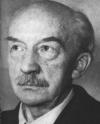 | Walther Bothe (1891-1957) was a German physicist who built Germany's first cyclotron (1943). He observed a strange radiation emitted from beryllium when it was exposed to alpha particles, later identified by Chadwick. What was the emission from beryllium discovered by Bothe and Chadwick? |
| Events | |
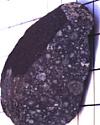 |  In 1969, a large meteorite was recovered in Chihuahua, Mexico. [Image: A tiny sample of the Chihuahua meteorite.] What was the approximate weight of the incoming Chihuahua meteorite before it broke up? In 1969, a large meteorite was recovered in Chihuahua, Mexico. [Image: A tiny sample of the Chihuahua meteorite.] What was the approximate weight of the incoming Chihuahua meteorite before it broke up? |
| Answers |
When you have your answers ready to all the questions above, you'll find all the information to check them, and more, on the February 8 web page of Today in Science History. Or, try this link first for just the brief answers. Fast answers for the previous newsletter for February 7: nitrous oxide; John Deere; Model T Ford; wood; the decade including the year 1931. |
| Feedback |
 If you enjoy this newsletter, the website, or wish to offer encouragement or ideas, please send feedback by using your mail reader Reply button. If you enjoy this newsletter, the website, or wish to offer encouragement or ideas, please send feedback by using your mail reader Reply button. |

--
If you do not want to receive any more newsletters, this link
To update your preferences and to unsubscribe visit this link
If you do not want to receive any more newsletters, this link
To update your preferences and to unsubscribe visit this link
! !


Δεν υπάρχουν σχόλια:
Δημοσίευση σχολίου