 | TODAY IN SCIENCE HISTORY NEWSLETTER - 11 FEBRUARY |
| Feature for Today |
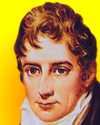 On 11 Feb 1809, Robert Fulton patented his steamboat for the first time in the U.S., although he had already made his first successful steamboat trip on the Clermont between New York City and Albany in 1807. Others had harnessed the power of steam on land, but he applied it for propulsion of water transport of passengers. He opened up American rivers for two-way trips. Fulton's steamboat was one of the most important inventions of his era. To learn more about what was involved in the way of financing, politics and patent litigation, read The First Steamboat. |
| Book of the Day | ||
| ||

| Quotations for Today | |
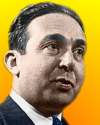 | "When a scientist says something, his colleagues must ask themselves only whether it is true. When a politician says something, his colleagues must first of all ask, 'Why does he say it?'" - Leo Szilard, physicist (born 11 Feb 1898).  |
 | "Genius is two percent inspiration, ninety-eight percent perspiration. " - American inventor (see below) who developed electric power (born 11 Feb 1847). |
 | "If you don't work on important problems, it's not likely that you'll do important work." - Richard Hamming, American computer scientist and mathematician (born 11 Feb 1915). |
| QUIZ | |
| Before you look at today's web page, see if you can answer some of these questions about the events that happened on this day. Some of the names are very familiar. Others will likely stump you. Tickle your curiosity with these questions, then check your answers on today's web page. | |
| Births | |
| |  Leo Szilard, born 11 Feb 1898, was a naturalised American physicist who, with Enrico Fermi, designed the first nuclear reactor that sustained nuclear chain reaction (2 Dec 1942). Leo Szilard, born 11 Feb 1898, was a naturalised American physicist who, with Enrico Fermi, designed the first nuclear reactor that sustained nuclear chain reaction (2 Dec 1942).  What was his nationality at birth? What was his nationality at birth? |
| | An American inventor was born 11 Feb 1847, who, singly or jointly, held a world record 1,093 patents. In addition, he created the world's first industrial research laboratory. He showed an early curiosity for explanations of how everything worked and was especially interested in chemistry. He began selling newspapers on the railroad at age 12, and learned how to operate a telegraph. In 1868, his first invention was an electric vote-recording machine. Can you name this inventor? |
| Deaths | |
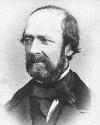 |  Jean-Bernard-Léon Foucault (1819-1868) was a French physicist who introduced and helped develop a technique of measuring the absolute velocity of light with extreme accuracy. Also, a certain pendulum experiment is still known by his name What did his pendulum experiment prove? Jean-Bernard-Léon Foucault (1819-1868) was a French physicist who introduced and helped develop a technique of measuring the absolute velocity of light with extreme accuracy. Also, a certain pendulum experiment is still known by his name What did his pendulum experiment prove? |
| Events | |
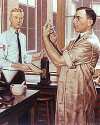 |  On 11 Feb of a certain year, the use of insulin to treat diabetes in a dog was announced in their first paper published on the subject by the Canadian surgeon Frederick Banting and his assistant Charles Best. In what decade was this first paper on insulin published by Banting and Best? On 11 Feb of a certain year, the use of insulin to treat diabetes in a dog was announced in their first paper published on the subject by the Canadian surgeon Frederick Banting and his assistant Charles Best. In what decade was this first paper on insulin published by Banting and Best? |
 | On 11 Feb 1939, the journal Nature published a theoretical paper by Lise Meitner and Otto Fritsch, her nephew, explaining how, when a uranium nucleus was struck by neutrons, barium was produced. What term was coined in their paper for this phenomenon? |
| Answers |
When you have your answers ready to all the questions above, you'll find all the information to check them, and more, on the February 11 web page of Today in Science History. Or, try this link first for just the brief answers. Fast answers for the previous newsletter for February 10: John Bardeen and William B. Shockley; saccharin; Nobel Prize for Physics; Niagara Falls, U.S.; haemophilia. |
| Feedback |
 If you enjoy this newsletter, the website, or wish to offer encouragement or ideas, please send feedback by using your mail reader Reply button. If you enjoy this newsletter, the website, or wish to offer encouragement or ideas, please send feedback by using your mail reader Reply button. |

--
If you do not want to receive any more newsletters, this link
To update your preferences and to unsubscribe visit this link
If you do not want to receive any more newsletters, this link
To update your preferences and to unsubscribe visit this link
! !


Δεν υπάρχουν σχόλια:
Δημοσίευση σχολίου