 | TODAY IN SCIENCE HISTORY NEWSLETTER - 2 FEBRUARY |
| Feature for Today |
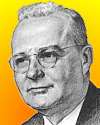 On 2 Feb 1923, gasoline was first sold with an anti-knock additive. That compound turned out to be deadly to some of the manufacturing plant workers from the start, and its health effect in the atmosphere was hotly disputed until it was withdrawn in the 1970s. Today's extended article comes from a radio talk by Charles Kettering in the early 1940s, and enthusiastically commends the discoverer of that compound, making no mention of its hazards. Nevertheless, the research work was - in its own way - a story of dedicated effort. The same inventor also originated the refrigerant known as Freon - another problematical chemical. These two chemicals, with epic unintended consequences, were developed by Thomas Midgley. On 2 Feb 1923, gasoline was first sold with an anti-knock additive. That compound turned out to be deadly to some of the manufacturing plant workers from the start, and its health effect in the atmosphere was hotly disputed until it was withdrawn in the 1970s. Today's extended article comes from a radio talk by Charles Kettering in the early 1940s, and enthusiastically commends the discoverer of that compound, making no mention of its hazards. Nevertheless, the research work was - in its own way - a story of dedicated effort. The same inventor also originated the refrigerant known as Freon - another problematical chemical. These two chemicals, with epic unintended consequences, were developed by Thomas Midgley.Also: a 1922 report on Midgley's discovery of the anti-knock compound, with additional links. |
| Book of the Day | |
| |

| Quotations for Today | |
 | "Do experimental work but keep in mind that other investigators in the same field will consider your discoveries as less than one fourth as important as they seem to you." - attributed to Charles Manning Child, American zoologist (born 2 Feb 1869)  |
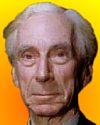 | "The universe may have a purpose, but nothing we know suggests that, if so, this purpose has any similarity to ours." - Bertrand Russell, Welsh mathematical logician and analytical philosopher (died 2 Feb 1970) |
 | "What science sows the people will reap." - Dmitry Mendeleyev (died 2 Feb 1907) |
| QUIZ | |
| Before you look at today's web page, see if you can answer some of these questions about the events that happened on this day. Some of the names are very familiar. Others will likely stump you. Tickle your curiosity with these questions, then check your answers on today's web page. | |
| Births | |
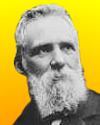 |  François-Alphonse Forel, born 2 Feb 1841, was a Swiss physician, scientist, and founder of limnology, the study of lakes. Forel is credited with the discovery of density currents, which occur in the Alpine lakes because of the cold temperatures of entering glacier-derived streams. He also explained the mechanism of seiches (1901) and studied earthquakes and glaciers. François-Alphonse Forel, born 2 Feb 1841, was a Swiss physician, scientist, and founder of limnology, the study of lakes. Forel is credited with the discovery of density currents, which occur in the Alpine lakes because of the cold temperatures of entering glacier-derived streams. He also explained the mechanism of seiches (1901) and studied earthquakes and glaciers.  What is a seiche? What is a seiche? |
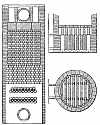 | John Glover, born 2 Feb 1817, was an English chemist who developed the Glover Tower in 1859 to reclaim useful chemicals during the manufacture of a certain acid, the most important industrial chemical. Which acid is the most important industrial chemical? |
| Deaths | |
| |  On 2 Feb 1907, Dmitry Ivanovich Mendeleev, Russian chemist died, who developed the periodic classification of the elements. In his final version of the periodic table (1871) he left gaps, foretelling that they would be filled by elements not then known and predicting the properties of three of those elements. In 1869, Mendeleyev's predicted there would be discovered an element close to aluminium. What name did he give it? On 2 Feb 1907, Dmitry Ivanovich Mendeleev, Russian chemist died, who developed the periodic classification of the elements. In his final version of the periodic table (1871) he left gaps, foretelling that they would be filled by elements not then known and predicting the properties of three of those elements. In 1869, Mendeleyev's predicted there would be discovered an element close to aluminium. What name did he give it? |
| Events | |
 |  On 2 Feb of a certain year, Edwin H. Land gave the first demonstration his invention of instant photography at a meeting of the Optical Society of America, which he applied in his Polaroid Land Camera.In which decade was this form of instant photography first demonstrated? On 2 Feb of a certain year, Edwin H. Land gave the first demonstration his invention of instant photography at a meeting of the Optical Society of America, which he applied in his Polaroid Land Camera.In which decade was this form of instant photography first demonstrated? |
| | On 2 Feb 1923, the first sale was made of gasoline containing a new anti-knock compound, after which this form of gasoline was named. This new formulation of gasoline, discovered by Thomas Midgely, Jr., was the the result of seven years of testing at least 33,000 compounds as additives to control the combustion rate of the fuel. It continued to be used for decades. What was the name of this anti-knock compound? |
| Answers |
When you have your answers ready to all the questions above, you'll find all the information to check them, and more, on the February 2 web page of Today in Science History. Or, try this link first for just the brief answers. Fast answers for the previous newsletter for February 1: antiproton; cytoplasm and nucleoplasm; Werner Heisenberg; $395; integrated circuit. |
| Feedback |
 If you enjoy this newsletter, the website, or wish to offer encouragement or ideas, please send feedback by using your mail reader Reply button. If you enjoy this newsletter, the website, or wish to offer encouragement or ideas, please send feedback by using your mail reader Reply button. |

--
If you do not want to receive any more newsletters, this link
To update your preferences and to unsubscribe visit this link
If you do not want to receive any more newsletters, this link
To update your preferences and to unsubscribe visit this link
! !


Δεν υπάρχουν σχόλια:
Δημοσίευση σχολίου