 | TODAY IN SCIENCE HISTORY NEWSLETTER - 10 FEBRUARY |
| Feature for Today |
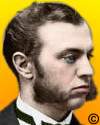 On 10 Feb 1871, Ira Remsen was born. At the end of his term as President of the American Association for the Advancement of Science, in 1903, the address he gave their meeting was titled Scientific Investigation And Progress. Looking at it now is like opening a time capsule, as he gave a surveyed the role of science in that era. As you read it, you'll find your eyebrows getting raised a time or two, or more! Albeit a century ago, he referred to the world food production problem and cautioned about a possible future without sufficient fertilizers. He also asked what energy source would replace coal when supplies were exhausted. He explained why it was thought there would be a practically unlimited supply of petroleum. Well, he was wrong about that, but more on the mark about the future of hydroelectricity. Read about these topics, and a lot more in this article. |
| Book of the Day | ||
| ||

| Quotations for Today | |
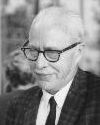 | "(Giving his Nobel prize reception speech) Brattain, practically with tears in his eyes, said, 'I know about this Nobel-Prize effect and I am not going to let it affect me; I am going to remain good old Walter Brattain.' Well I said to myself, 'That is nice.' But in a few weeks I saw it was affecting him. Now he could only work on great problems. When you are famous it is hard to work on small problems." - Richard Hamming about Walter Brattain (born 10 Feb 1910)  |
| | "While reading a textbook of chemistry (as a youth) I came upon the statement, 'nitric acid acts upon copper.' ... I did not know its peculiarities, but ... the spirit of adventure was upon me ... to learn what the words 'act upon' meant ... I was even willing to sacrifice on of the few copper cents in my possession ... poured (nitric acid) on the copper ... and it was no small change either. A greenish blue liquid foamed and fumed over the cent ... the air ... became colored dark red ... disagreeable and suffocating - how should I stop this? I tried to get rid of the objectionable mess by picking it up and throwing it out of the window... I learned another fact - nitric act not only acts upon copper but it acts on fingers. The pain led to another unpremeditated experiment. I drew my fingers across my trousers and another fact was discovered. Nitric acid acts upon trousers. taking everything into consideration, that was the most impressive experiment, and, relatively, probably the most costly experiment I have ever performed. I tell of it even now with interest. It was a revelation to me. It resulted in a desire on my part to learn more about that remarkable kind of action. Plainly the only way to learn about it was to see its results, to experiment, to work in a laboratory." - Ira Remsen, American chemist who codiscovered saccharin (born 10 Feb 1846). (source) |
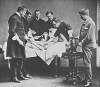 | "But when it has been shown by the researches of Pasteur that the septic property of the atmosphere depended not on the oxygen, or any gaseous constituent, but on minute organisms suspended in it, which owed their energy to their vitality, it occurred to me that decomposition in the injured part might be avoided without excluding the air, by applying as a dressing some material capable of destroying the life of the floating particles. Upon this principle I have based a practice." - Joseph Lister, English surgeon and medical scientist (died 10 Feb 1912) |
| QUIZ | |
| Before you look at today's web page, see if you can answer some of these questions about the events that happened on this day. Some of the names are very familiar. Others will likely stump you. Tickle your curiosity with these questions, then check your answers on today's web page. | |
| Births | |
| |  Walter H. Brattain, born 10 Feb 1902, was an American scientist who won the Nobel Prize for Physics in 1956. Working with the of two other scientists ideas, Brattain's hands built the first electronic replacement for the vacuum tube, the transistor. Walter H. Brattain, born 10 Feb 1902, was an American scientist who won the Nobel Prize for Physics in 1956. Working with the of two other scientists ideas, Brattain's hands built the first electronic replacement for the vacuum tube, the transistor.  Can you name these two scientists who shared the Nobel Prize with Brattain? Can you name these two scientists who shared the Nobel Prize with Brattain? |
| | Ira Remsen, born 10 Feb 1846, was an American chemist who introduced advanced laboratory instruction using teaching methods he had learned in Germany under Fittig. Remsen specialized in the benzene ring and related groups. With a student working under his direction, in 1879, he first synthesized orthobenzoyl sulfimide, which the student accidentally discovered was intensely sweet. By what name is the sweetener now known? |
| Deaths | |
 |  Wilhelm Conrad Röntgen (1845-1923) was a German physicist discovered X rays, which heralded the age of modern physics and revolutionized diagnostic medicine. In 1901 he was the recipient of the first of a new annual prize. What was this prize? Wilhelm Conrad Röntgen (1845-1923) was a German physicist discovered X rays, which heralded the age of modern physics and revolutionized diagnostic medicine. In 1901 he was the recipient of the first of a new annual prize. What was this prize? |
| Events | |
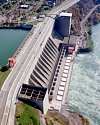 |  On 10 Feb 1961, the largest (at the time) hydroelectric facility in the Western world was officially opened. The first generator, which had been producing current for some days before while undergoing tests, was officially placed in service to supply salable quantities of electricity. The size comparison was based on its designed 2,190 megawatt installed capacity when all 13 generators were brought online in 1963. Where was this hydroelectric project built? On 10 Feb 1961, the largest (at the time) hydroelectric facility in the Western world was officially opened. The first generator, which had been producing current for some days before while undergoing tests, was officially placed in service to supply salable quantities of electricity. The size comparison was based on its designed 2,190 megawatt installed capacity when all 13 generators were brought online in 1963. Where was this hydroelectric project built? |
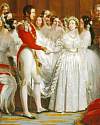 | On 10 Feb 1840, Queen Victoria married Prince Albert. She was the carrier of a gene for a health disorder which appeared among a number of their descendants. Their family tree provided a famous case history in genetics.Which health disorder was genetically transmitted in Queen Victoria's family tree? |
| Answers |
When you have your answers ready to all the questions above, you'll find all the information to check them, and more, on the February 10 web page of Today in Science History. Or, try this link first for just the brief answers. Fast answers for the previous newsletter for February 9: Zino's petrel; Rocky Mountain spotted fever; trials of the time-keeping accuracy of Harrison's marine chronometer; the decade including the year 1870; nitroglycerin. |
| Feedback |
 If you enjoy this newsletter, the website, or wish to offer encouragement or ideas, please send feedback by using your mail reader Reply button. If you enjoy this newsletter, the website, or wish to offer encouragement or ideas, please send feedback by using your mail reader Reply button. |

--
If you do not want to receive any more newsletters, this link
To update your preferences and to unsubscribe visit this link
If you do not want to receive any more newsletters, this link
To update your preferences and to unsubscribe visit this link
! !


Δεν υπάρχουν σχόλια:
Δημοσίευση σχολίου