 | TODAY IN SCIENCE HISTORY NEWSLETTER - 7 FEBRUARY |
| Feature for Today |
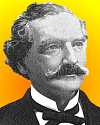 On 7 Feb 1814, the American lecturer Gardner Quincy Colton was born, who introduced an anaesthetic gas into dental use. Yet, he wasn't a dentist. He actually began giving public science lectures. You'll probably be able to name the gas he at first showed as a novelty in his lectures. But, did you know his diverse interests included being a Shakespeare scholar? He also invented a model railway in which he used the metal rails in the electrical circuit to power the locomotive's motor. He is remembered for his contributions to dentistry, and for more background on that, read Gardner Quincy Colton and Anesthesia. For a short account of his model railway, read Early Electric Railways. |
| Book of the Day | |
| |

| Quotations for Today | |
 | "Science is very demanding, you have to be able to think very well and also have a very good memory. You have to really love it. Science is a way of life. I think it all comes from the inside. It really gets to the very core of your existence. It is much like being an artist or a dancer. It's something that demands everything from you that you are capable of." - Ruth Sager, American cellular geneticist (born 7 Feb 1918) (source) |
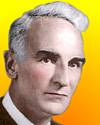 | "The cowboys have a way of trussing up a steer or a pugnacious bronco which fixes the brute so that it can neither move nor think. This is the hog-tie, and it is what Euclid did to geometry" - Eric Temple Bell, Scottish-American mathematician and writer (born 7 Feb 1883)  |
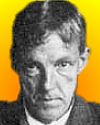 | "In no case may we interpret an action as the outcome of the exercise of a higher psychical faculty, if it can be interpreted as the outcome of the exercise of one which stands lower in the psychological scale." - Godfrey H. Hardy, English mathematician (born 7 Feb 1877) (source) |
| QUIZ | |
| Before you look at today's web page, see if you can answer some of these questions about the events that happened on this day. Some of the names are very familiar. Others will likely stump you. Tickle your curiosity with these questions, then check your answers on today's web page. | |
| Births | |
| |  Gardner Quincy Colton, born 7 Feb 1814, was an American anesthetist and inventor who was among the first to utilize the anesthetic properties of a certain gas in medical practice. After a dentist suggested the use of the gas as an anesthetic, Colton safely used it in extracting thousands of teeth. Gardner Quincy Colton, born 7 Feb 1814, was an American anesthetist and inventor who was among the first to utilize the anesthetic properties of a certain gas in medical practice. After a dentist suggested the use of the gas as an anesthetic, Colton safely used it in extracting thousands of teeth.  What was this anesthetic gas? What was this anesthetic gas? |
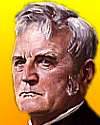 | A pioneer American inventor, born 7 Feb 1804, was a manufacturer of agricultural implements. Beginning as a blacksmith, he found that frequent repairs were necessary when the wood and cast-iron plows of the eastern U.S. were used in the prairie where he set up business. The local soils were heavy and sticky. By 1838 he had produced three plows of his own new design which led to starting his agricultural machine business, which company is still is well known by his his name. Can you name this man, whose company now is also well-known for tractors? |
| Deaths | |
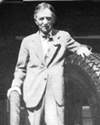 |  Harvey S. Firestone (1868-1938) was an American industrialist who started the Firestone Tire and Rubber Company in 1900. He was responsible for a number of industry innovations, including the production of pneumatic tires, nonskid tire treads, low-pressure balloon tires, and farm tractor tires. By the late 1930's, nearly a quarter of all tires being used in the United States were Firestone tires. On which model car was his straight-side pneumatic tire introduced? Harvey S. Firestone (1868-1938) was an American industrialist who started the Firestone Tire and Rubber Company in 1900. He was responsible for a number of industry innovations, including the production of pneumatic tires, nonskid tire treads, low-pressure balloon tires, and farm tractor tires. By the late 1930's, nearly a quarter of all tires being used in the United States were Firestone tires. On which model car was his straight-side pneumatic tire introduced? |
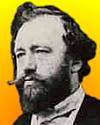 | Antoine-Joseph Sax (1814-1894) who took the name Adolphe, was a Belgian-French maker of musical instruments and inventor of the saxophone, saxtromba, and sax horn. By combining the clarinet's single reed and mouthpiece with a widened oboe's conical bore, Sax created an new instrument with its distinctive, big sound. What material did Sax use for his first saxophones? |
| Events | |
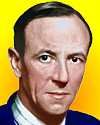 |  On 7 Feb of a certain year, the "neutron" was described in an article in the journal Nature by its discoverer, James Chadwick, who coined the name for this neutral particle present in the nucleus of atoms. In what decade was this article published? On 7 Feb of a certain year, the "neutron" was described in an article in the journal Nature by its discoverer, James Chadwick, who coined the name for this neutral particle present in the nucleus of atoms. In what decade was this article published? |
| Answers |
When you have your answers ready to all the questions above, you'll find all the information to check them, and more, on the February 7 web page of Today in Science History. Or, try this link first for just the brief answers. Fast answers for the previous newsletter for February 6: Louis Leakey; electrical resistance; oxygen; the decade which includes the year 1976; golf. |
| Feedback |
 If you enjoy this newsletter, the website, or wish to offer encouragement or ideas, please send feedback by using your mail reader Reply button. If you enjoy this newsletter, the website, or wish to offer encouragement or ideas, please send feedback by using your mail reader Reply button. |

--
If you do not want to receive any more newsletters, this link
To update your preferences and to unsubscribe visit this link
If you do not want to receive any more newsletters, this link
To update your preferences and to unsubscribe visit this link
! !


Δεν υπάρχουν σχόλια:
Δημοσίευση σχολίου