 | TODAY IN SCIENCE HISTORY NEWSLETTER - 12 FEBRUARY |
| Feature for Today |
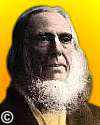 On 12 Feb 1791, Peter Cooper was born, the American inventor who built the "Tom Thumb" locomotive (1830), the first American-built steam locomotive to operate on a common-carrier railroad. He also was issued the first U.S. patent for the manufacture of gelatin (1845), which he sold in 1895 to Pearl B. Wait, a cough-syrup maker. Wait produced the packaged gelatin dessert, Jell-O, which was so-named by his wife. Back to the railway story. Shortly before he died, Cooper's recollections of how he built the "Tom Thumb" were printed in the Boston Sunday Herald (9 Jul 1882). In his own words, you can read how a demonstration ride had to be postponed because the night before, all the copper steam pipes had been stripped from the engine, "doubtless to sell to some junk dealer." (Sound familiar? And that was 180 years ago!) See if you can guess the result of a race between the Tom Thumb locomotive and a stagecoach horse, and check by reading the article on Peter Cooper's Locomotive Yet this accomplishment was a minor sidelight in Peter Cooper's career, whose life work included being a manufacturer and businessman whose philanthropy established the Cooper Union for the Advancement of Science and Art in New York city. It provided free technical education to the working class. He was involved with the laying of the first transatlantic cable, and was so prominent as a civic leader that when he died at age 92, his body lay in state for the general public to pay their respects as the city of New York mourned his passing. His estate was valued at two million dollars. A truly remarkable man, who deserves your attention. |
| Book of the Day | |
| |

| Quotations for Today | |
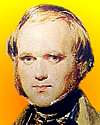 | "...I believe there exists, & I feel within me, an instinct for the truth, or knowledge or discovery, of something of the same nature as the instinct of virtue, & that our having such an instinct is reason enough for scientific researches without any practical results ever ensuing from them." - English naturalist (see below) (born 12 Feb 1809)  |
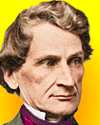 | "Science, while it penetrates deeply the system of things about us, sees everywhere, in the dim limits of vision, the word mystery." - James Dwight Dana, American geologist (born 12 Feb 1813) |
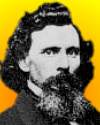 | "The meaning of geography is as much a sealed book to the person of ordinary intelligence and education as the meaning of a great cathedral would be to a backwoodsman, and yet no cathedral can be more suggestive of past history in its many architectural forms than is the land about us, with its innumerable and marvellously significant geographic forms. It makes one grieve to think of opportunity for mental enjoyment that is last because of the failure of education in this respect." - William Morris Davis, American geologist (born 12 Feb 1850) |
| QUIZ | |
| Before you look at today's web page, see if you can answer some of these questions about the events that happened on this day. Some of the names are very familiar. Others will likely stump you. Tickle your curiosity with these questions, then check your answers on today's web page. | |
| Births | |
| |  An English naturalist, born 12 Feb 1809, propounded evolutionary theories, in such works as The Descent of Man, and Selection in Relation to Sex. An English naturalist, born 12 Feb 1809, propounded evolutionary theories, in such works as The Descent of Man, and Selection in Relation to Sex.  Can you name this scientist? Can you name this scientist? |
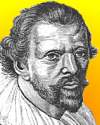 | Jan Swammerdam, born 12 Feb 1637, was a Dutch naturalist, considered the most accurate of classical microscopists. He studies ranged from insects to human anatomy. His ingenious experiments showed that muscles alter in shape but not in size during contraction. Swammerdam was the first to observe and describe a certain of cell in 1658. For which type of cell did Swammerdam give the first description? |
| Deaths | |
 |  Dirk Coster (1889-1950) was a Dutch physicist who co-discovered the element hafnium. He named it from Hafnia, the old Roman name for the well-known city in the Netherlands where he had worked in Niels Bohr's laboratory. What is the modern name of Hafnia? Dirk Coster (1889-1950) was a Dutch physicist who co-discovered the element hafnium. He named it from Hafnia, the old Roman name for the well-known city in the Netherlands where he had worked in Niels Bohr's laboratory. What is the modern name of Hafnia? |
| Events | |
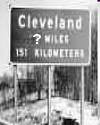 |  On 12 Feb 1973, four metric distance road signs, the first in the U.S., were erected along Interstate 71 in Ohio. They showed the distance in both miles and kilometers between Columbus and Cincinnati, and Columbus and Cleveland. What is this 151 kilometer distance in miles? On 12 Feb 1973, four metric distance road signs, the first in the U.S., were erected along Interstate 71 in Ohio. They showed the distance in both miles and kilometers between Columbus and Cincinnati, and Columbus and Cleveland. What is this 151 kilometer distance in miles? |
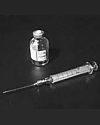 | On 12 Feb of a certain year, the first injection of penicillin into a human test subject was conducted by Ernst Chain and Howard Walter Florey. In which decade was this human test of penicillin done?Who coined the name "penicillin"? |
| Answers |
When you have your answers ready to all the questions above, you'll find all the information to check them, and more, on the February 12 web page of Today in Science History. Or, try this link first for just the brief answers. Fast answers for the previous newsletter for February 11: Hungary; Thomas Alva Edison; that the Earth rotates on its axis; the decade including the year 1922; fission. |
| Feedback |
 If you enjoy this newsletter, the website, or wish to offer encouragement or ideas, please send feedback by using your mail reader Reply button. If you enjoy this newsletter, the website, or wish to offer encouragement or ideas, please send feedback by using your mail reader Reply button. |

--
If you do not want to receive any more newsletters, this link
To update your preferences and to unsubscribe visit this link
If you do not want to receive any more newsletters, this link
To update your preferences and to unsubscribe visit this link
! !


Δεν υπάρχουν σχόλια:
Δημοσίευση σχολίου