 | TODAY IN SCIENCE HISTORY NEWSLETTER - 5 FEBRUARY |
| Feature for Today |
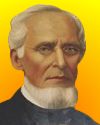 On 5 Feb 1850, Gail Borden was issed a U.S. Patent for his process to produce a biscuit made of meat extracts baked with flour. What makes the product remarkable for its era is that as a form of preserved meat, it filled a need for use as rations by the military, sailors on long voyages, and other travellers. Six years later, he began processing condensed milk, capable of extended storage. He started what is now one of the largest dairy product companies in the world. Borden's Condensed Milk is a staple found on supermarket shelves today. His name is so familiar, yet how much of his remarkable life do you know? The Today in Science History site has brought together a number of articles on Borden and his products which you can browse from this Index of Gail Borden and his Inventions. |
| Book of the Day | |
| |

| Quotations for Today | |
 | "The Nobel Prize is ... an indication that the world thinks the subject of the investigation of small things is an important one. Not only has this subject been long associated with the ideas of thinking men over the ages but its practical importance is attested to by the huge resources of men and material thrown into this type of work" - Robert Hofstadter, American Nobel prize-winning physicist who measured the sizes of the neutron and the proton in the atomic nucleus (born 5 Feb 1915) (source) |
 | "...in neurophysiology we have none of those vast tidal waves of discovery which shake the world to its foundations and which have such incalculable consequences for good or evil. Research in neurophysiology is much more like paddling a small canoe on a mountain river. The river which is fed by many distant springs carries you along all right though often in a peculiar direction. You have to paddle quite hard to keep afloat. And sooner or later some of your ideas are upset and are carried downstream like an upturned canoe." |
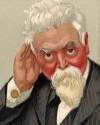 | "But as no two (theoreticians) agree on this (skin friction) or any other subject, some not agreeing today with what they wrote a year ago, I think we might put down all their results, add them together, and then divide by the number of mathematicians, and thus find the average coefficient of error" (1908) - Hiram Maxim, aeronautical designer and inventor (born 5 Feb 1840) (source)  |
| QUIZ | |
| Before you look at today's web page, see if you can answer some of these questions about the events that happened on this day. Some of the names are very familiar. Others will likely stump you. Tickle your curiosity with these questions, then check your answers on today's web page. | |
| Births | |
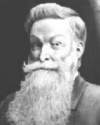 |  John Boyd Dunlop, born 5 Feb 1840, was a Scottish inventor who was a pioneer of the pneumatic tyre. Dunlop first tried fitting rubber air tubes held on to a wooden ring by tacking a linen covering fixed around the wheels. Due to the major improvement in riding comfort, Dunlop continued development, until he patented the idea. (issued on 7 Dec 1889). John Boyd Dunlop, born 5 Feb 1840, was a Scottish inventor who was a pioneer of the pneumatic tyre. Dunlop first tried fitting rubber air tubes held on to a wooden ring by tacking a linen covering fixed around the wheels. Due to the major improvement in riding comfort, Dunlop continued development, until he patented the idea. (issued on 7 Dec 1889). For what vehicle did Dunlop make his first attempt at a pneumatic tyre? For what vehicle did Dunlop make his first attempt at a pneumatic tyre? |
| | Sir Hiram Maxim, born 5 Feb 1840, was an American-born prolific inventor whose first patent was for a hair-curling iron (1866), followed by a device for generating illuminating gas and a locomotive headlight. Among hundreds of other patents, he is best known for a particular invention.What is his best-known invention? |
| Deaths | |
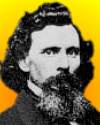 |  William Morris Davis (1850-1934) was a U.S. geographer, geologist, and meteorologist who founded the science of geomorphology. What is geomorphology? William Morris Davis (1850-1934) was a U.S. geographer, geologist, and meteorologist who founded the science of geomorphology. What is geomorphology? |
| Events | |
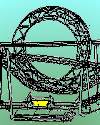 |  On 5 Feb of a certain year, a loop-the-loop centrifugal railway was patented by Edwin Prescott of Arlington, Mass.It had a 75-ft incline and a 20-ft-wide loop. This patent was to improve on his earlier patented roller coaster design which had a purely circular loop and which resulted in an uncomfortable shock to passengers as the car entered the loop. The new design was made to offer more comfort by varying the radius of the curve of the loop to be greater at the entry point, but decreasing radius toward the horizontal diameter of the loop. In what decade was this new loop-the-loop patented? On 5 Feb of a certain year, a loop-the-loop centrifugal railway was patented by Edwin Prescott of Arlington, Mass.It had a 75-ft incline and a 20-ft-wide loop. This patent was to improve on his earlier patented roller coaster design which had a purely circular loop and which resulted in an uncomfortable shock to passengers as the car entered the loop. The new design was made to offer more comfort by varying the radius of the curve of the loop to be greater at the entry point, but decreasing radius toward the horizontal diameter of the loop. In what decade was this new loop-the-loop patented? |
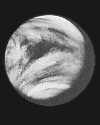 | On 5 Feb 1974, a U.S. space probe returned the first close-up photos of Venus' cloud structure.What was the name of this space probe? |
| Answers |
When you have your answers ready to all the questions above, you'll find all the information to check them, and more, on the February 5 web page of Today in Science History. Or, try this link first for just the brief answers. Fast answers for the previous newsletter for February 4: a rhythmic oscillation of water in a lake or a partially enclosed coastal inlet, such as a bay, gulf, or harbour; sulphuric acid; eka-aluminum; the decade including the year 1947; tetra-ethyl lead. |
| Feedback |
 If you enjoy this newsletter, the website, or wish to offer encouragement or ideas, please send feedback by using your mail reader Reply button. If you enjoy this newsletter, the website, or wish to offer encouragement or ideas, please send feedback by using your mail reader Reply button. |

--
If you do not want to receive any more newsletters, this link
To update your preferences and to unsubscribe visit this link
If you do not want to receive any more newsletters, this link
To update your preferences and to unsubscribe visit this link
! !


Δεν υπάρχουν σχόλια:
Δημοσίευση σχολίου