 | TODAY IN SCIENCE HISTORY NEWSLETTER - 13 FEBRUARY |
| Feature for Today |
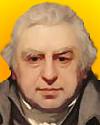 On 13 Feb 1742, Sir Joseph Banks was born, who during over 40 years as president of the Royal Society greatly promoted the advancement of science in his era. Despite this great legacy, he is not widely known today, because he did not himself leave a record of discoveries in science. However, he facilitated the careers of other better-known scientists who made notable discoveries. While you might recollect that as a naturalist, he accompanied Capt. Cook on voyages, you perhaps know nothing of the great adventure or hardships, and seeing lives lost. Read this biography to learn about some of his remarkable experiences. |
| Book of the Day | |
| |

| Quotations for Today | |
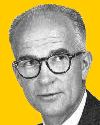 | "If you take a bale of hay and tie it to the tail of a mule and then strike a match and set the bale of hay on fire, and if you then compare the energy expended shortly thereafter by the mule with the energy expended by yourself in the striking of the match, you will understand the concept of amplification." - William Shockley, English-American physicist and engineer (born 13 Feb 1910).  |
| | "I have from my childhood, in conformity with the precepts of a mother void of all imaginary fear, been in the constant habit of taking toads in my hand, and applying them to my nose and face as it may happen. My motive for doing this very frequently is to inculcate the opinion I have held, since I was told by my mother, that the toad is actually a harmless animal; and to whose manner of life man is certainly under some obligation as its food is chiefly those insects which devour his crops and annoy him in various ways." - Sir Joseph Banks, English botanist and explorer (born 13 Feb 1743). |
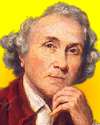 | "Some physiologists will have it that the stomach is a mill; others, that it is a fermenting vat; others, again that it is a stew-pan; but in my view of the matter, it is neither a mill, a fermenting vat nor a stew-pan, but a stomach gentlemen, a stomach." - John Hunter, Scottish surgeon and founder of pathological anatomy in England (born 13 Feb 1728). |
| QUIZ | |
| Before you look at today's web page, see if you can answer some of these questions about the events that happened on this day. Some of the names are very familiar. Others will likely stump you. Tickle your curiosity with these questions, then check your answers on today's web page. | |
| Births | |
| |  William B. Shockley, born 13 Feb 1910 was an English-American engineer and teacher who, with John Bardeen and Walter H. Brattain was awarded the Nobel Prize for Physics for their development of the transistor, a device that largely replaced the bulkier and less-efficient vacuum tube and ushered in the age of microminiature electronics. William B. Shockley, born 13 Feb 1910 was an English-American engineer and teacher who, with John Bardeen and Walter H. Brattain was awarded the Nobel Prize for Physics for their development of the transistor, a device that largely replaced the bulkier and less-efficient vacuum tube and ushered in the age of microminiature electronics.  In which decade was the Nobel Prize awarded for the invention of the transistor? In which decade was the Nobel Prize awarded for the invention of the transistor? |
| Deaths | |
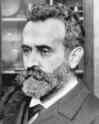 |  Alphonse Bertillon (1853-1914) was a French police chief of criminal identification, whose Bertillon system recorded physical characteristics (eye colour, scars, deformities, etc.) and specified measurements (height, fingertip reach, head length and width, ear, foot, arm and finger length, etc) This information recorded on cards. After two decades this system was replaced by fingerprinting in the early 1900s because Bertillon measurements were difficult to take with uniform exactness, and could change later due to growth or surgery. The Bertillion System cards were classified according to the length of which feature? Alphonse Bertillon (1853-1914) was a French police chief of criminal identification, whose Bertillon system recorded physical characteristics (eye colour, scars, deformities, etc.) and specified measurements (height, fingertip reach, head length and width, ear, foot, arm and finger length, etc) This information recorded on cards. After two decades this system was replaced by fingerprinting in the early 1900s because Bertillon measurements were difficult to take with uniform exactness, and could change later due to growth or surgery. The Bertillion System cards were classified according to the length of which feature? |
| Events | |
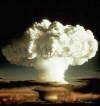 |  On 13 Feb 1960, another country detonated their first plutonium bomb. It was mounted on a 330-foot tower. The same country continued by building up its nuclear capacity with nuclear-armed aircraft, missiles and submarines, in order to assert its independence. Which country detonated their first atom bomb on this day? On 13 Feb 1960, another country detonated their first plutonium bomb. It was mounted on a 330-foot tower. The same country continued by building up its nuclear capacity with nuclear-armed aircraft, missiles and submarines, in order to assert its independence. Which country detonated their first atom bomb on this day? |
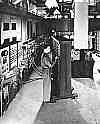 | On 13 Feb 1945, the world's first electronic digital computer was first demonstrated at the Moore School of Electrical Engineering at the University of Pennsylvania, by the late John W. Mauchly and J. Presper Eckert. The machine occupied a room 30 by 50 feet. It was historic because it laid the foundations for the modern electronic computing industry by demonstrating that high-speed digital computing was possible using the vacuum tube technology then available. By what name was this computer known? |
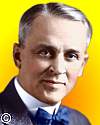 | On 13 Feb 1912, Robert Millikan began collecting data from his famous oil drop experiment. On this day he gathered observations on the first of the 58 drops he ultimately published giving the measurement of a certain fundamental physical constant. He earned the Nobel Prize for Physics in 1923 for his work. What physical constant did Millikan measure? |
| Answers |
When you have your answers ready to all the questions above, you'll find all the information to check them, and more, on the February 13 web page of Today in Science History. Or, try this link first for just the brief answers. Fast answers for the previous newsletter for February 12: Charles Darwin; red blood cell; Copenhagen; 96 miles; the decade including the year 1941; Alexander Fleming. |
| Feedback |
 If you enjoy this newsletter, the website, or wish to offer encouragement or ideas, please send feedback by using your mail reader Reply button. If you enjoy this newsletter, the website, or wish to offer encouragement or ideas, please send feedback by using your mail reader Reply button. |

--
If you do not want to receive any more newsletters, this link
To update your preferences and to unsubscribe visit this link
If you do not want to receive any more newsletters, this link
To update your preferences and to unsubscribe visit this link
! !


Δεν υπάρχουν σχόλια:
Δημοσίευση σχολίου