 | TODAY IN SCIENCE HISTORY NEWSLETTER - 6 FEBRUARY |
| Feature for Today |
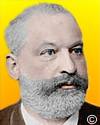 On 6 Feb 1886, the German chemist Clemens Winkler first isolated the new element germanium. Yet a single sentence like that does not do justice to the months of dogged work needed to release the elusive element from a mineral sample. Then its chemical behaviour needs to be documented, and its physical characteristics measured. To have a better idea about what's involved in the discovery of a new element, read Winkler and the Discovery of Germanium. |
| Book of the Day | |
| |


| Quotations for Today | |
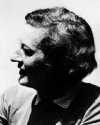 | "No amounts of stone and bone could yield the kinds of information that the paintings gave so freely." - Mary Leakey (born 6 Feb 1913) |
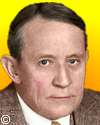 | "As one recalls some of the monstrous situations under which human beings have lived and live their lives, one marvels at man’s meekness and complacency. It can only be explained by the quality of flesh to become calloused to situations that if faced suddenly would provoke blisters and revolt." - George A. Dorsey, American anthropologist (born 6 Feb 1868)  |
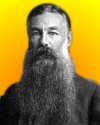 | "In no case may we interpret an action as the outcome of the exercise of a higher psychical faculty, if it can be interpreted as the outcome of the exercise of one which stands lower in the psychological scale." - C. Lloyd Morgan, British zoologist and psychologist (born 6 Feb 1852) |
| QUIZ | |
| Before you look at today's web page, see if you can answer some of these questions about the events that happened on this day. Some of the names are very familiar. Others will likely stump you. Tickle your curiosity with these questions, then check your answers on today's web page. | |
| Births | |
| |  Mary Leakey, an English paleoanthropologist, born 6 Feb 1913, made several of the most important fossil finds concerning the origins of man, subsequently interpreted and publicized by her husband. After his death, she continued making discoveries, including three trails of fossilised hominid footprints 3.6 million years old, which she discovered at Laetoli in Tanzania (1978-9) showing man's ancestors were walking upright at a much earlier period than previously believed. Mary Leakey, an English paleoanthropologist, born 6 Feb 1913, made several of the most important fossil finds concerning the origins of man, subsequently interpreted and publicized by her husband. After his death, she continued making discoveries, including three trails of fossilised hominid footprints 3.6 million years old, which she discovered at Laetoli in Tanzania (1978-9) showing man's ancestors were walking upright at a much earlier period than previously believed.  Can you name her husband? Can you name her husband? |
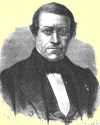 | Sir Charles Wheatstone, born 6 Feb 1802, though he did not invent the Wheatstone Bridge circuit, has been remembered for popularizing its use. Samuel Hunter Christie, came up with the idea of the bridge circuit, but Wheatstone set the precedent for using it in the way in which it has been most commonly used. What is commonly and accurately measured with a Wheatstone Bridge? |
| Deaths | |
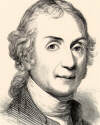 |  Joseph Priestley (1733-1804) was an English clergyman, political theorist, and physical scientist whose work contributed to advances in liberal political and religious thought. He also conducted experimental science whose discoveries included sulphur dioxide, silicon fluoride and ammonia and among his inventions was the pneumatic trough. Joseph Priestley (1733-1804) was an English clergyman, political theorist, and physical scientist whose work contributed to advances in liberal political and religious thought. He also conducted experimental science whose discoveries included sulphur dioxide, silicon fluoride and ammonia and among his inventions was the pneumatic trough. |
| Events | |
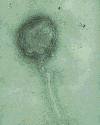 |  On 6 Feb of a certain year, swine flu claimed the life of 19-year-old Pvt. David Lewis, an influenza not seen since the Spanish flu of 1918-19. The next month, following advice from medical experts, the President called for the mass inoculation of the entire U.S. population. No comparable vaccination effort had ever been attempted in the U.S. before. In which decade did this swine flu mass inoculation take place? On 6 Feb of a certain year, swine flu claimed the life of 19-year-old Pvt. David Lewis, an influenza not seen since the Spanish flu of 1918-19. The next month, following advice from medical experts, the President called for the mass inoculation of the entire U.S. population. No comparable vaccination effort had ever been attempted in the U.S. before. In which decade did this swine flu mass inoculation take place? |
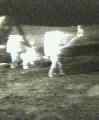 | On 6 Feb 1971, near the end of the second moonwalk, and just before entering the lunar module for the last time, Alan Shepard engaged in a recreational activity common on the Earth, but was the first time on the moon. What was this recreational activity by Shepard on the Moon? |
| Answers |
When you have your answers ready to all the questions above, you'll find all the information to check them, and more, on the February 6 web page of Today in Science History. Or, try this link first for just the brief answers. Fast answers for the previous newsletter for February 5: a rhythmic oscillation of water in a lake or a partially enclosed coastal inlet, such as a bay, gulf, or harbour; sulphuric acid; eka-aluminum; the decade including the year 1947; tetra-ethyl lead. |
| Feedback |
 If you enjoy this newsletter, the website, or wish to offer encouragement or ideas, please send feedback by using your mail reader Reply button. If you enjoy this newsletter, the website, or wish to offer encouragement or ideas, please send feedback by using your mail reader Reply button. |

--
If you do not want to receive any more newsletters, this link
To update your preferences and to unsubscribe visit this link
If you do not want to receive any more newsletters, this link
To update your preferences and to unsubscribe visit this link
! !


Δεν υπάρχουν σχόλια:
Δημοσίευση σχολίου