 | TODAY IN SCIENCE HISTORY NEWSLETTER - 8 FEBRUARY |
| Feature for Today |
 On 8 Feb 1777, Bernard Courtois was born, who discovered—in fact, stumbled upon—a new element (though he lacked the resources to confirm his hunch.) The source was seaweed! Surely that must make you curious to know more! Read more about this fascinating piece of chemistry history in this article on Iodine. On 8 Feb 1777, Bernard Courtois was born, who discovered—in fact, stumbled upon—a new element (though he lacked the resources to confirm his hunch.) The source was seaweed! Surely that must make you curious to know more! Read more about this fascinating piece of chemistry history in this article on Iodine. |
| Book of the Day | ||
|

| Quotations for Today | |
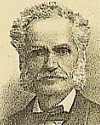 | ... on these expanded membranes [butterfly wings] Nature writes, as on a tablet, the story of the modifications of species, so truly do all changes of the organisation register themselves thereon. Moreover, the same colour-patterns of the wings generally show, with great regularity, the degrees of blood-relationship of the species. As the laws of nature must be the same for all beings, the conclusions furnished by this group of insects must be applicable to the whole world. - H. W. Bates, English naturalist and explorer (born 8 Feb 1825).  |
| There is no philosophy which is not founded upon knowledge of the phenomena, but to get any profit from this knowledge it is absolutely necessary to be a mathematician. - Daniel Bernoulli, Swiss mathematician (born 8 Feb 1700). | |
| We may observe in some of the abrupt grounds we meet with, sections of great masses of strata, where it is as easy to read the history of the sea, as it is to read the history of Man in the archives of any nation. - Jean Andr� Deluc, Swiss-English geologist and meteorologist (born 8 Feb 1727). | |
| Quiz | |
| Before you look at today's web page, see if you can answer some of these questions about the events that happened on this day. Some of the names are very familiar. Others will likely stump you. Tickle your curiosity with these questions, then check your answers on today's web page. | |
| Births | |
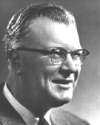 | Chester Carlson, born 8 Feb 1906, invented a dry-copying process that found applications ranging from office copying to reproducing out-of-print books. In 1947 he sold the commercial rights for his invention to the Haloid Company, a small manufacturer of photographic paper, which later became known by another corporate name. What is the present name of the corporation that grew out of the Haloid Company? What is the present name of the corporation that grew out of the Haloid Company? |
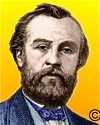 | On 8 Feb 1825, Henri Giffard was born, a French engineer who built the first successful airship. On 24 Sep 1852, he travelled from Paris in his airship 28 km (17 miles) to Trappes, at a top speed of 8 km/hr (5 mph). His cigar-shaped balloon was driven by a large propeller. What did Giffard use to turn the propeller on this balloon trip? |
| Deaths | |
 | Dennis Gabor (1900-1979) won the 1971 Nobel Prize for Physics for his invention of a a system of lensless, three-dimensional photography that has many applications (1947), which became commercially feasible after the invention of the laser. Can you name this specialized form of photography? |
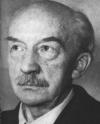 | Walther Bothe (1891-1957) was a German physicist who built Germany�s first cyclotron (1943). He observed a strange radiation emitted from beryllium when it was exposed to alpha particles, later identified by Chadwick. What was the emission from beryllium discovered by Bothe and Chadwick? |
| Events | |
| On 8 Feb 1672, a scientist read his first optics paper before the Royal Society, London. He had been elected only one month earlier, in recognition of his original design of the first reflecting telescope. Who was this scientist? | |
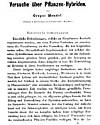 | On 8 Feb 1865, a 42-year-old scientist read his first paper to the Br�nn Society for the study of Natural Sciences in Moravia. He described his investigations with pea plants. Although he sent 40 reprints of his article (1866) to prominent biologists, only one was interested enough to reply. It gained recognition only 18 years after his death. Who was this scientist? |
| Answers |
| When you have your answers ready to all the questions above, you'll find all the information to check them, and more, on the February 8 web page of Today in Science History. Or, try this link first for just the brief answers. Fast answers for the previous newsletter for February 7: nitrous oxide • John Deere • Model T Ford • wood • decade including the year 1931 • Monopoly. |
| Feedback |
 If you enjoy this newsletter, the website, or wish to offer encouragement or ideas, please send feedback by using your mail reader Reply button. If you enjoy this newsletter, the website, or wish to offer encouragement or ideas, please send feedback by using your mail reader Reply button. Your click on a StumbleUpon, Google+ or Facebook social button on the site webpages is also a welcome sign of appreciation. Thank you for using them. |
| Copyright |
| To find citations for quotations go to the corresponding webpage by clicking on the “quotes” balloon icon. Sources for the thumbnails appear on today's webpage with the corresponding item. � This newsletter is copyright 2014 by todayinsci.com. Please respect the Webmaster's wishes and do not put copies online of the Newsletter � or any Today in Science History webpage. (If you already have done so, please remove them. Thank you.) Offline use in education is encouraged such as a printout on a bulletin board, or projected for classroom viewing. Online, descriptive links to our pages are welcomed, as these will provide a reader with the most recent revisions, additions and/or corrections of a webpage. For any other copyright questions, please contact the Webmaster by using your mail reader Reply button. |
--
If you do not want to receive any more newsletters, Unsubscribe
To update your preferences and to unsubscribe visit this link


Δεν υπάρχουν σχόλια:
Δημοσίευση σχολίου